
Clinical Research and Public HealthHematologyImmunologyOncology
Open Access |  10.1172/jci.insight.210272
Vorinostat for graft-versus-host disease prevention in pediatric and young adult patients with hematologic malignancies
Nicolas Parnell,1 Xiao Cao,1 Jan H. Beumer,2 Thomas M. Braun,3 Yilei Cui,4,5 Gary J. Fisher,4,5 Guoqing Hou,6 Julianne Holleran,7 Tracey Churay,8 Michelle Rozwadowski,1 Luna Heider,1 Mark T. Vander Lugt,1,5 Carrie L. Kitko,9 April L. Rahrig,10 Ed Peres,11 Kirsten M. Williams,12 Julie-An Talano,13 Vanessa A. Fabrizio,14 Ghada Abusin,1,5 Gregory A. Yanik,1,5 John Magenau,5,8 Mary Riwes,5,8 Marcus J. Geer,5,8 Sarah Anand,5,8 Monalisa Ghosh,5,8 Attaphol Pawarode,5,8 Kristen Votruba,15 Pavan Reddy,16 and Sung Won Choi1,5
1Department of Pediatrics, Division of Pediatric Hematology/Oncology/Blood and Marrow Transplantation, University of Michigan, Ann Arbor, Michigan, USA.
2Analytical Pharmacology Shared Resource, The Sidney Kimmel Cancer Center, Johns Hopkins, Baltimore, Maryland, USA.
3Department of Biostatistics, School of Public Health,
4Department of Dermatology,
5Rogel Cancer Center, and
6Department of Internal Medicine, Division of Gastroenterology and Hepatology, University of Michigan, Ann Arbor, Michigan, USA.
7Cancer Therapeutics Program, UPMC Hillman Cancer Center, Pittsburgh, Pennsylvania, USA.
8Department of Internal Medicine, Division of Hematology/Oncology/Blood and Marrow Transplantation, University of Michigan, Ann Arbor, Michigan, USA.
9Department of Pediatrics, Division of Pediatric Hematology/Oncology/Blood and Marrow Transplantation, Vanderbilt Children’s Hospital, Nashville, Tennessee, USA.
10Department of Pediatrics, Division of Pediatric Hematology/Oncology/Stem Cell Transplant, Riley Children’s Health, Indianapolis, Indiana, USA.
11Department of Internal Medicine, Division of Hematology/Oncology/Blood and Marrow Transplantation, Henry Ford Health, Detroit, Michigan, USA.
12Aflac Cancer and Blood Disorders Center, Children’s Healthcare of Atlanta, Pediatric Hematopoietic Cellular Therapy, Department of Pediatrics, Emory University, Atlanta, Georgia, USA.
13Department of Pediatrics, Division of Pediatric Hematology/Oncology/Blood and Marrow Transplantation, Medical College of Wisconsin, Milwaukee, Wisconsin, USA.
14Department of Pediatrics, Division of Pediatric Hematology/Oncology/Blood and Marrow Transplantation, Children’s Hospital Colorado, Aurora, Colorado, USA.
15Department of Psychiatry, Neuropsychology Program, University of Michigan, Ann Arbor, Michigan, USA.
16Dan L. Duncan Comprehensive Cancer Center, Houston, Texas, USA.
Address for correspondence. Sung Won Choi, 1500 E. Medical Center Drive, D4115 Medical Professional Building, Ann Arbor, Michigan 48109, USA. Email: sungchoi@med.umich.edu.
Find articles by Parnell, N. in: PubMed | Google Scholar
1Department of Pediatrics, Division of Pediatric Hematology/Oncology/Blood and Marrow Transplantation, University of Michigan, Ann Arbor, Michigan, USA.
2Analytical Pharmacology Shared Resource, The Sidney Kimmel Cancer Center, Johns Hopkins, Baltimore, Maryland, USA.
3Department of Biostatistics, School of Public Health,
4Department of Dermatology,
5Rogel Cancer Center, and
6Department of Internal Medicine, Division of Gastroenterology and Hepatology, University of Michigan, Ann Arbor, Michigan, USA.
7Cancer Therapeutics Program, UPMC Hillman Cancer Center, Pittsburgh, Pennsylvania, USA.
8Department of Internal Medicine, Division of Hematology/Oncology/Blood and Marrow Transplantation, University of Michigan, Ann Arbor, Michigan, USA.
9Department of Pediatrics, Division of Pediatric Hematology/Oncology/Blood and Marrow Transplantation, Vanderbilt Children’s Hospital, Nashville, Tennessee, USA.
10Department of Pediatrics, Division of Pediatric Hematology/Oncology/Stem Cell Transplant, Riley Children’s Health, Indianapolis, Indiana, USA.
11Department of Internal Medicine, Division of Hematology/Oncology/Blood and Marrow Transplantation, Henry Ford Health, Detroit, Michigan, USA.
12Aflac Cancer and Blood Disorders Center, Children’s Healthcare of Atlanta, Pediatric Hematopoietic Cellular Therapy, Department of Pediatrics, Emory University, Atlanta, Georgia, USA.
13Department of Pediatrics, Division of Pediatric Hematology/Oncology/Blood and Marrow Transplantation, Medical College of Wisconsin, Milwaukee, Wisconsin, USA.
14Department of Pediatrics, Division of Pediatric Hematology/Oncology/Blood and Marrow Transplantation, Children’s Hospital Colorado, Aurora, Colorado, USA.
15Department of Psychiatry, Neuropsychology Program, University of Michigan, Ann Arbor, Michigan, USA.
16Dan L. Duncan Comprehensive Cancer Center, Houston, Texas, USA.
Address for correspondence. Sung Won Choi, 1500 E. Medical Center Drive, D4115 Medical Professional Building, Ann Arbor, Michigan 48109, USA. Email: sungchoi@med.umich.edu.
Find articles by Cao, X. in: PubMed | Google Scholar
1Department of Pediatrics, Division of Pediatric Hematology/Oncology/Blood and Marrow Transplantation, University of Michigan, Ann Arbor, Michigan, USA.
2Analytical Pharmacology Shared Resource, The Sidney Kimmel Cancer Center, Johns Hopkins, Baltimore, Maryland, USA.
3Department of Biostatistics, School of Public Health,
4Department of Dermatology,
5Rogel Cancer Center, and
6Department of Internal Medicine, Division of Gastroenterology and Hepatology, University of Michigan, Ann Arbor, Michigan, USA.
7Cancer Therapeutics Program, UPMC Hillman Cancer Center, Pittsburgh, Pennsylvania, USA.
8Department of Internal Medicine, Division of Hematology/Oncology/Blood and Marrow Transplantation, University of Michigan, Ann Arbor, Michigan, USA.
9Department of Pediatrics, Division of Pediatric Hematology/Oncology/Blood and Marrow Transplantation, Vanderbilt Children’s Hospital, Nashville, Tennessee, USA.
10Department of Pediatrics, Division of Pediatric Hematology/Oncology/Stem Cell Transplant, Riley Children’s Health, Indianapolis, Indiana, USA.
11Department of Internal Medicine, Division of Hematology/Oncology/Blood and Marrow Transplantation, Henry Ford Health, Detroit, Michigan, USA.
12Aflac Cancer and Blood Disorders Center, Children’s Healthcare of Atlanta, Pediatric Hematopoietic Cellular Therapy, Department of Pediatrics, Emory University, Atlanta, Georgia, USA.
13Department of Pediatrics, Division of Pediatric Hematology/Oncology/Blood and Marrow Transplantation, Medical College of Wisconsin, Milwaukee, Wisconsin, USA.
14Department of Pediatrics, Division of Pediatric Hematology/Oncology/Blood and Marrow Transplantation, Children’s Hospital Colorado, Aurora, Colorado, USA.
15Department of Psychiatry, Neuropsychology Program, University of Michigan, Ann Arbor, Michigan, USA.
16Dan L. Duncan Comprehensive Cancer Center, Houston, Texas, USA.
Address for correspondence. Sung Won Choi, 1500 E. Medical Center Drive, D4115 Medical Professional Building, Ann Arbor, Michigan 48109, USA. Email: sungchoi@med.umich.edu.
Find articles by Beumer, J. in: PubMed | Google Scholar
1Department of Pediatrics, Division of Pediatric Hematology/Oncology/Blood and Marrow Transplantation, University of Michigan, Ann Arbor, Michigan, USA.
2Analytical Pharmacology Shared Resource, The Sidney Kimmel Cancer Center, Johns Hopkins, Baltimore, Maryland, USA.
3Department of Biostatistics, School of Public Health,
4Department of Dermatology,
5Rogel Cancer Center, and
6Department of Internal Medicine, Division of Gastroenterology and Hepatology, University of Michigan, Ann Arbor, Michigan, USA.
7Cancer Therapeutics Program, UPMC Hillman Cancer Center, Pittsburgh, Pennsylvania, USA.
8Department of Internal Medicine, Division of Hematology/Oncology/Blood and Marrow Transplantation, University of Michigan, Ann Arbor, Michigan, USA.
9Department of Pediatrics, Division of Pediatric Hematology/Oncology/Blood and Marrow Transplantation, Vanderbilt Children’s Hospital, Nashville, Tennessee, USA.
10Department of Pediatrics, Division of Pediatric Hematology/Oncology/Stem Cell Transplant, Riley Children’s Health, Indianapolis, Indiana, USA.
11Department of Internal Medicine, Division of Hematology/Oncology/Blood and Marrow Transplantation, Henry Ford Health, Detroit, Michigan, USA.
12Aflac Cancer and Blood Disorders Center, Children’s Healthcare of Atlanta, Pediatric Hematopoietic Cellular Therapy, Department of Pediatrics, Emory University, Atlanta, Georgia, USA.
13Department of Pediatrics, Division of Pediatric Hematology/Oncology/Blood and Marrow Transplantation, Medical College of Wisconsin, Milwaukee, Wisconsin, USA.
14Department of Pediatrics, Division of Pediatric Hematology/Oncology/Blood and Marrow Transplantation, Children’s Hospital Colorado, Aurora, Colorado, USA.
15Department of Psychiatry, Neuropsychology Program, University of Michigan, Ann Arbor, Michigan, USA.
16Dan L. Duncan Comprehensive Cancer Center, Houston, Texas, USA.
Address for correspondence. Sung Won Choi, 1500 E. Medical Center Drive, D4115 Medical Professional Building, Ann Arbor, Michigan 48109, USA. Email: sungchoi@med.umich.edu.
Find articles by Braun, T. in: PubMed | Google Scholar
1Department of Pediatrics, Division of Pediatric Hematology/Oncology/Blood and Marrow Transplantation, University of Michigan, Ann Arbor, Michigan, USA.
2Analytical Pharmacology Shared Resource, The Sidney Kimmel Cancer Center, Johns Hopkins, Baltimore, Maryland, USA.
3Department of Biostatistics, School of Public Health,
4Department of Dermatology,
5Rogel Cancer Center, and
6Department of Internal Medicine, Division of Gastroenterology and Hepatology, University of Michigan, Ann Arbor, Michigan, USA.
7Cancer Therapeutics Program, UPMC Hillman Cancer Center, Pittsburgh, Pennsylvania, USA.
8Department of Internal Medicine, Division of Hematology/Oncology/Blood and Marrow Transplantation, University of Michigan, Ann Arbor, Michigan, USA.
9Department of Pediatrics, Division of Pediatric Hematology/Oncology/Blood and Marrow Transplantation, Vanderbilt Children’s Hospital, Nashville, Tennessee, USA.
10Department of Pediatrics, Division of Pediatric Hematology/Oncology/Stem Cell Transplant, Riley Children’s Health, Indianapolis, Indiana, USA.
11Department of Internal Medicine, Division of Hematology/Oncology/Blood and Marrow Transplantation, Henry Ford Health, Detroit, Michigan, USA.
12Aflac Cancer and Blood Disorders Center, Children’s Healthcare of Atlanta, Pediatric Hematopoietic Cellular Therapy, Department of Pediatrics, Emory University, Atlanta, Georgia, USA.
13Department of Pediatrics, Division of Pediatric Hematology/Oncology/Blood and Marrow Transplantation, Medical College of Wisconsin, Milwaukee, Wisconsin, USA.
14Department of Pediatrics, Division of Pediatric Hematology/Oncology/Blood and Marrow Transplantation, Children’s Hospital Colorado, Aurora, Colorado, USA.
15Department of Psychiatry, Neuropsychology Program, University of Michigan, Ann Arbor, Michigan, USA.
16Dan L. Duncan Comprehensive Cancer Center, Houston, Texas, USA.
Address for correspondence. Sung Won Choi, 1500 E. Medical Center Drive, D4115 Medical Professional Building, Ann Arbor, Michigan 48109, USA. Email: sungchoi@med.umich.edu.
Find articles by Cui, Y. in: PubMed | Google Scholar
1Department of Pediatrics, Division of Pediatric Hematology/Oncology/Blood and Marrow Transplantation, University of Michigan, Ann Arbor, Michigan, USA.
2Analytical Pharmacology Shared Resource, The Sidney Kimmel Cancer Center, Johns Hopkins, Baltimore, Maryland, USA.
3Department of Biostatistics, School of Public Health,
4Department of Dermatology,
5Rogel Cancer Center, and
6Department of Internal Medicine, Division of Gastroenterology and Hepatology, University of Michigan, Ann Arbor, Michigan, USA.
7Cancer Therapeutics Program, UPMC Hillman Cancer Center, Pittsburgh, Pennsylvania, USA.
8Department of Internal Medicine, Division of Hematology/Oncology/Blood and Marrow Transplantation, University of Michigan, Ann Arbor, Michigan, USA.
9Department of Pediatrics, Division of Pediatric Hematology/Oncology/Blood and Marrow Transplantation, Vanderbilt Children’s Hospital, Nashville, Tennessee, USA.
10Department of Pediatrics, Division of Pediatric Hematology/Oncology/Stem Cell Transplant, Riley Children’s Health, Indianapolis, Indiana, USA.
11Department of Internal Medicine, Division of Hematology/Oncology/Blood and Marrow Transplantation, Henry Ford Health, Detroit, Michigan, USA.
12Aflac Cancer and Blood Disorders Center, Children’s Healthcare of Atlanta, Pediatric Hematopoietic Cellular Therapy, Department of Pediatrics, Emory University, Atlanta, Georgia, USA.
13Department of Pediatrics, Division of Pediatric Hematology/Oncology/Blood and Marrow Transplantation, Medical College of Wisconsin, Milwaukee, Wisconsin, USA.
14Department of Pediatrics, Division of Pediatric Hematology/Oncology/Blood and Marrow Transplantation, Children’s Hospital Colorado, Aurora, Colorado, USA.
15Department of Psychiatry, Neuropsychology Program, University of Michigan, Ann Arbor, Michigan, USA.
16Dan L. Duncan Comprehensive Cancer Center, Houston, Texas, USA.
Address for correspondence. Sung Won Choi, 1500 E. Medical Center Drive, D4115 Medical Professional Building, Ann Arbor, Michigan 48109, USA. Email: sungchoi@med.umich.edu.
Find articles by Fisher, G. in: PubMed | Google Scholar
1Department of Pediatrics, Division of Pediatric Hematology/Oncology/Blood and Marrow Transplantation, University of Michigan, Ann Arbor, Michigan, USA.
2Analytical Pharmacology Shared Resource, The Sidney Kimmel Cancer Center, Johns Hopkins, Baltimore, Maryland, USA.
3Department of Biostatistics, School of Public Health,
4Department of Dermatology,
5Rogel Cancer Center, and
6Department of Internal Medicine, Division of Gastroenterology and Hepatology, University of Michigan, Ann Arbor, Michigan, USA.
7Cancer Therapeutics Program, UPMC Hillman Cancer Center, Pittsburgh, Pennsylvania, USA.
8Department of Internal Medicine, Division of Hematology/Oncology/Blood and Marrow Transplantation, University of Michigan, Ann Arbor, Michigan, USA.
9Department of Pediatrics, Division of Pediatric Hematology/Oncology/Blood and Marrow Transplantation, Vanderbilt Children’s Hospital, Nashville, Tennessee, USA.
10Department of Pediatrics, Division of Pediatric Hematology/Oncology/Stem Cell Transplant, Riley Children’s Health, Indianapolis, Indiana, USA.
11Department of Internal Medicine, Division of Hematology/Oncology/Blood and Marrow Transplantation, Henry Ford Health, Detroit, Michigan, USA.
12Aflac Cancer and Blood Disorders Center, Children’s Healthcare of Atlanta, Pediatric Hematopoietic Cellular Therapy, Department of Pediatrics, Emory University, Atlanta, Georgia, USA.
13Department of Pediatrics, Division of Pediatric Hematology/Oncology/Blood and Marrow Transplantation, Medical College of Wisconsin, Milwaukee, Wisconsin, USA.
14Department of Pediatrics, Division of Pediatric Hematology/Oncology/Blood and Marrow Transplantation, Children’s Hospital Colorado, Aurora, Colorado, USA.
15Department of Psychiatry, Neuropsychology Program, University of Michigan, Ann Arbor, Michigan, USA.
16Dan L. Duncan Comprehensive Cancer Center, Houston, Texas, USA.
Address for correspondence. Sung Won Choi, 1500 E. Medical Center Drive, D4115 Medical Professional Building, Ann Arbor, Michigan 48109, USA. Email: sungchoi@med.umich.edu.
Find articles by Hou, G. in: PubMed | Google Scholar
1Department of Pediatrics, Division of Pediatric Hematology/Oncology/Blood and Marrow Transplantation, University of Michigan, Ann Arbor, Michigan, USA.
2Analytical Pharmacology Shared Resource, The Sidney Kimmel Cancer Center, Johns Hopkins, Baltimore, Maryland, USA.
3Department of Biostatistics, School of Public Health,
4Department of Dermatology,
5Rogel Cancer Center, and
6Department of Internal Medicine, Division of Gastroenterology and Hepatology, University of Michigan, Ann Arbor, Michigan, USA.
7Cancer Therapeutics Program, UPMC Hillman Cancer Center, Pittsburgh, Pennsylvania, USA.
8Department of Internal Medicine, Division of Hematology/Oncology/Blood and Marrow Transplantation, University of Michigan, Ann Arbor, Michigan, USA.
9Department of Pediatrics, Division of Pediatric Hematology/Oncology/Blood and Marrow Transplantation, Vanderbilt Children’s Hospital, Nashville, Tennessee, USA.
10Department of Pediatrics, Division of Pediatric Hematology/Oncology/Stem Cell Transplant, Riley Children’s Health, Indianapolis, Indiana, USA.
11Department of Internal Medicine, Division of Hematology/Oncology/Blood and Marrow Transplantation, Henry Ford Health, Detroit, Michigan, USA.
12Aflac Cancer and Blood Disorders Center, Children’s Healthcare of Atlanta, Pediatric Hematopoietic Cellular Therapy, Department of Pediatrics, Emory University, Atlanta, Georgia, USA.
13Department of Pediatrics, Division of Pediatric Hematology/Oncology/Blood and Marrow Transplantation, Medical College of Wisconsin, Milwaukee, Wisconsin, USA.
14Department of Pediatrics, Division of Pediatric Hematology/Oncology/Blood and Marrow Transplantation, Children’s Hospital Colorado, Aurora, Colorado, USA.
15Department of Psychiatry, Neuropsychology Program, University of Michigan, Ann Arbor, Michigan, USA.
16Dan L. Duncan Comprehensive Cancer Center, Houston, Texas, USA.
Address for correspondence. Sung Won Choi, 1500 E. Medical Center Drive, D4115 Medical Professional Building, Ann Arbor, Michigan 48109, USA. Email: sungchoi@med.umich.edu.
Find articles by Holleran, J. in: PubMed | Google Scholar
1Department of Pediatrics, Division of Pediatric Hematology/Oncology/Blood and Marrow Transplantation, University of Michigan, Ann Arbor, Michigan, USA.
2Analytical Pharmacology Shared Resource, The Sidney Kimmel Cancer Center, Johns Hopkins, Baltimore, Maryland, USA.
3Department of Biostatistics, School of Public Health,
4Department of Dermatology,
5Rogel Cancer Center, and
6Department of Internal Medicine, Division of Gastroenterology and Hepatology, University of Michigan, Ann Arbor, Michigan, USA.
7Cancer Therapeutics Program, UPMC Hillman Cancer Center, Pittsburgh, Pennsylvania, USA.
8Department of Internal Medicine, Division of Hematology/Oncology/Blood and Marrow Transplantation, University of Michigan, Ann Arbor, Michigan, USA.
9Department of Pediatrics, Division of Pediatric Hematology/Oncology/Blood and Marrow Transplantation, Vanderbilt Children’s Hospital, Nashville, Tennessee, USA.
10Department of Pediatrics, Division of Pediatric Hematology/Oncology/Stem Cell Transplant, Riley Children’s Health, Indianapolis, Indiana, USA.
11Department of Internal Medicine, Division of Hematology/Oncology/Blood and Marrow Transplantation, Henry Ford Health, Detroit, Michigan, USA.
12Aflac Cancer and Blood Disorders Center, Children’s Healthcare of Atlanta, Pediatric Hematopoietic Cellular Therapy, Department of Pediatrics, Emory University, Atlanta, Georgia, USA.
13Department of Pediatrics, Division of Pediatric Hematology/Oncology/Blood and Marrow Transplantation, Medical College of Wisconsin, Milwaukee, Wisconsin, USA.
14Department of Pediatrics, Division of Pediatric Hematology/Oncology/Blood and Marrow Transplantation, Children’s Hospital Colorado, Aurora, Colorado, USA.
15Department of Psychiatry, Neuropsychology Program, University of Michigan, Ann Arbor, Michigan, USA.
16Dan L. Duncan Comprehensive Cancer Center, Houston, Texas, USA.
Address for correspondence. Sung Won Choi, 1500 E. Medical Center Drive, D4115 Medical Professional Building, Ann Arbor, Michigan 48109, USA. Email: sungchoi@med.umich.edu.
Find articles by Churay, T. in: PubMed | Google Scholar
1Department of Pediatrics, Division of Pediatric Hematology/Oncology/Blood and Marrow Transplantation, University of Michigan, Ann Arbor, Michigan, USA.
2Analytical Pharmacology Shared Resource, The Sidney Kimmel Cancer Center, Johns Hopkins, Baltimore, Maryland, USA.
3Department of Biostatistics, School of Public Health,
4Department of Dermatology,
5Rogel Cancer Center, and
6Department of Internal Medicine, Division of Gastroenterology and Hepatology, University of Michigan, Ann Arbor, Michigan, USA.
7Cancer Therapeutics Program, UPMC Hillman Cancer Center, Pittsburgh, Pennsylvania, USA.
8Department of Internal Medicine, Division of Hematology/Oncology/Blood and Marrow Transplantation, University of Michigan, Ann Arbor, Michigan, USA.
9Department of Pediatrics, Division of Pediatric Hematology/Oncology/Blood and Marrow Transplantation, Vanderbilt Children’s Hospital, Nashville, Tennessee, USA.
10Department of Pediatrics, Division of Pediatric Hematology/Oncology/Stem Cell Transplant, Riley Children’s Health, Indianapolis, Indiana, USA.
11Department of Internal Medicine, Division of Hematology/Oncology/Blood and Marrow Transplantation, Henry Ford Health, Detroit, Michigan, USA.
12Aflac Cancer and Blood Disorders Center, Children’s Healthcare of Atlanta, Pediatric Hematopoietic Cellular Therapy, Department of Pediatrics, Emory University, Atlanta, Georgia, USA.
13Department of Pediatrics, Division of Pediatric Hematology/Oncology/Blood and Marrow Transplantation, Medical College of Wisconsin, Milwaukee, Wisconsin, USA.
14Department of Pediatrics, Division of Pediatric Hematology/Oncology/Blood and Marrow Transplantation, Children’s Hospital Colorado, Aurora, Colorado, USA.
15Department of Psychiatry, Neuropsychology Program, University of Michigan, Ann Arbor, Michigan, USA.
16Dan L. Duncan Comprehensive Cancer Center, Houston, Texas, USA.
Address for correspondence. Sung Won Choi, 1500 E. Medical Center Drive, D4115 Medical Professional Building, Ann Arbor, Michigan 48109, USA. Email: sungchoi@med.umich.edu.
Find articles by Rozwadowski, M. in: PubMed | Google Scholar
1Department of Pediatrics, Division of Pediatric Hematology/Oncology/Blood and Marrow Transplantation, University of Michigan, Ann Arbor, Michigan, USA.
2Analytical Pharmacology Shared Resource, The Sidney Kimmel Cancer Center, Johns Hopkins, Baltimore, Maryland, USA.
3Department of Biostatistics, School of Public Health,
4Department of Dermatology,
5Rogel Cancer Center, and
6Department of Internal Medicine, Division of Gastroenterology and Hepatology, University of Michigan, Ann Arbor, Michigan, USA.
7Cancer Therapeutics Program, UPMC Hillman Cancer Center, Pittsburgh, Pennsylvania, USA.
8Department of Internal Medicine, Division of Hematology/Oncology/Blood and Marrow Transplantation, University of Michigan, Ann Arbor, Michigan, USA.
9Department of Pediatrics, Division of Pediatric Hematology/Oncology/Blood and Marrow Transplantation, Vanderbilt Children’s Hospital, Nashville, Tennessee, USA.
10Department of Pediatrics, Division of Pediatric Hematology/Oncology/Stem Cell Transplant, Riley Children’s Health, Indianapolis, Indiana, USA.
11Department of Internal Medicine, Division of Hematology/Oncology/Blood and Marrow Transplantation, Henry Ford Health, Detroit, Michigan, USA.
12Aflac Cancer and Blood Disorders Center, Children’s Healthcare of Atlanta, Pediatric Hematopoietic Cellular Therapy, Department of Pediatrics, Emory University, Atlanta, Georgia, USA.
13Department of Pediatrics, Division of Pediatric Hematology/Oncology/Blood and Marrow Transplantation, Medical College of Wisconsin, Milwaukee, Wisconsin, USA.
14Department of Pediatrics, Division of Pediatric Hematology/Oncology/Blood and Marrow Transplantation, Children’s Hospital Colorado, Aurora, Colorado, USA.
15Department of Psychiatry, Neuropsychology Program, University of Michigan, Ann Arbor, Michigan, USA.
16Dan L. Duncan Comprehensive Cancer Center, Houston, Texas, USA.
Address for correspondence. Sung Won Choi, 1500 E. Medical Center Drive, D4115 Medical Professional Building, Ann Arbor, Michigan 48109, USA. Email: sungchoi@med.umich.edu.
Find articles by Heider, L. in: PubMed | Google Scholar
1Department of Pediatrics, Division of Pediatric Hematology/Oncology/Blood and Marrow Transplantation, University of Michigan, Ann Arbor, Michigan, USA.
2Analytical Pharmacology Shared Resource, The Sidney Kimmel Cancer Center, Johns Hopkins, Baltimore, Maryland, USA.
3Department of Biostatistics, School of Public Health,
4Department of Dermatology,
5Rogel Cancer Center, and
6Department of Internal Medicine, Division of Gastroenterology and Hepatology, University of Michigan, Ann Arbor, Michigan, USA.
7Cancer Therapeutics Program, UPMC Hillman Cancer Center, Pittsburgh, Pennsylvania, USA.
8Department of Internal Medicine, Division of Hematology/Oncology/Blood and Marrow Transplantation, University of Michigan, Ann Arbor, Michigan, USA.
9Department of Pediatrics, Division of Pediatric Hematology/Oncology/Blood and Marrow Transplantation, Vanderbilt Children’s Hospital, Nashville, Tennessee, USA.
10Department of Pediatrics, Division of Pediatric Hematology/Oncology/Stem Cell Transplant, Riley Children’s Health, Indianapolis, Indiana, USA.
11Department of Internal Medicine, Division of Hematology/Oncology/Blood and Marrow Transplantation, Henry Ford Health, Detroit, Michigan, USA.
12Aflac Cancer and Blood Disorders Center, Children’s Healthcare of Atlanta, Pediatric Hematopoietic Cellular Therapy, Department of Pediatrics, Emory University, Atlanta, Georgia, USA.
13Department of Pediatrics, Division of Pediatric Hematology/Oncology/Blood and Marrow Transplantation, Medical College of Wisconsin, Milwaukee, Wisconsin, USA.
14Department of Pediatrics, Division of Pediatric Hematology/Oncology/Blood and Marrow Transplantation, Children’s Hospital Colorado, Aurora, Colorado, USA.
15Department of Psychiatry, Neuropsychology Program, University of Michigan, Ann Arbor, Michigan, USA.
16Dan L. Duncan Comprehensive Cancer Center, Houston, Texas, USA.
Address for correspondence. Sung Won Choi, 1500 E. Medical Center Drive, D4115 Medical Professional Building, Ann Arbor, Michigan 48109, USA. Email: sungchoi@med.umich.edu.
Find articles by Vander Lugt, M. in: PubMed | Google Scholar
1Department of Pediatrics, Division of Pediatric Hematology/Oncology/Blood and Marrow Transplantation, University of Michigan, Ann Arbor, Michigan, USA.
2Analytical Pharmacology Shared Resource, The Sidney Kimmel Cancer Center, Johns Hopkins, Baltimore, Maryland, USA.
3Department of Biostatistics, School of Public Health,
4Department of Dermatology,
5Rogel Cancer Center, and
6Department of Internal Medicine, Division of Gastroenterology and Hepatology, University of Michigan, Ann Arbor, Michigan, USA.
7Cancer Therapeutics Program, UPMC Hillman Cancer Center, Pittsburgh, Pennsylvania, USA.
8Department of Internal Medicine, Division of Hematology/Oncology/Blood and Marrow Transplantation, University of Michigan, Ann Arbor, Michigan, USA.
9Department of Pediatrics, Division of Pediatric Hematology/Oncology/Blood and Marrow Transplantation, Vanderbilt Children’s Hospital, Nashville, Tennessee, USA.
10Department of Pediatrics, Division of Pediatric Hematology/Oncology/Stem Cell Transplant, Riley Children’s Health, Indianapolis, Indiana, USA.
11Department of Internal Medicine, Division of Hematology/Oncology/Blood and Marrow Transplantation, Henry Ford Health, Detroit, Michigan, USA.
12Aflac Cancer and Blood Disorders Center, Children’s Healthcare of Atlanta, Pediatric Hematopoietic Cellular Therapy, Department of Pediatrics, Emory University, Atlanta, Georgia, USA.
13Department of Pediatrics, Division of Pediatric Hematology/Oncology/Blood and Marrow Transplantation, Medical College of Wisconsin, Milwaukee, Wisconsin, USA.
14Department of Pediatrics, Division of Pediatric Hematology/Oncology/Blood and Marrow Transplantation, Children’s Hospital Colorado, Aurora, Colorado, USA.
15Department of Psychiatry, Neuropsychology Program, University of Michigan, Ann Arbor, Michigan, USA.
16Dan L. Duncan Comprehensive Cancer Center, Houston, Texas, USA.
Address for correspondence. Sung Won Choi, 1500 E. Medical Center Drive, D4115 Medical Professional Building, Ann Arbor, Michigan 48109, USA. Email: sungchoi@med.umich.edu.
Find articles by Kitko, C. in: PubMed | Google Scholar
1Department of Pediatrics, Division of Pediatric Hematology/Oncology/Blood and Marrow Transplantation, University of Michigan, Ann Arbor, Michigan, USA.
2Analytical Pharmacology Shared Resource, The Sidney Kimmel Cancer Center, Johns Hopkins, Baltimore, Maryland, USA.
3Department of Biostatistics, School of Public Health,
4Department of Dermatology,
5Rogel Cancer Center, and
6Department of Internal Medicine, Division of Gastroenterology and Hepatology, University of Michigan, Ann Arbor, Michigan, USA.
7Cancer Therapeutics Program, UPMC Hillman Cancer Center, Pittsburgh, Pennsylvania, USA.
8Department of Internal Medicine, Division of Hematology/Oncology/Blood and Marrow Transplantation, University of Michigan, Ann Arbor, Michigan, USA.
9Department of Pediatrics, Division of Pediatric Hematology/Oncology/Blood and Marrow Transplantation, Vanderbilt Children’s Hospital, Nashville, Tennessee, USA.
10Department of Pediatrics, Division of Pediatric Hematology/Oncology/Stem Cell Transplant, Riley Children’s Health, Indianapolis, Indiana, USA.
11Department of Internal Medicine, Division of Hematology/Oncology/Blood and Marrow Transplantation, Henry Ford Health, Detroit, Michigan, USA.
12Aflac Cancer and Blood Disorders Center, Children’s Healthcare of Atlanta, Pediatric Hematopoietic Cellular Therapy, Department of Pediatrics, Emory University, Atlanta, Georgia, USA.
13Department of Pediatrics, Division of Pediatric Hematology/Oncology/Blood and Marrow Transplantation, Medical College of Wisconsin, Milwaukee, Wisconsin, USA.
14Department of Pediatrics, Division of Pediatric Hematology/Oncology/Blood and Marrow Transplantation, Children’s Hospital Colorado, Aurora, Colorado, USA.
15Department of Psychiatry, Neuropsychology Program, University of Michigan, Ann Arbor, Michigan, USA.
16Dan L. Duncan Comprehensive Cancer Center, Houston, Texas, USA.
Address for correspondence. Sung Won Choi, 1500 E. Medical Center Drive, D4115 Medical Professional Building, Ann Arbor, Michigan 48109, USA. Email: sungchoi@med.umich.edu.
Find articles by Rahrig, A. in: PubMed | Google Scholar
1Department of Pediatrics, Division of Pediatric Hematology/Oncology/Blood and Marrow Transplantation, University of Michigan, Ann Arbor, Michigan, USA.
2Analytical Pharmacology Shared Resource, The Sidney Kimmel Cancer Center, Johns Hopkins, Baltimore, Maryland, USA.
3Department of Biostatistics, School of Public Health,
4Department of Dermatology,
5Rogel Cancer Center, and
6Department of Internal Medicine, Division of Gastroenterology and Hepatology, University of Michigan, Ann Arbor, Michigan, USA.
7Cancer Therapeutics Program, UPMC Hillman Cancer Center, Pittsburgh, Pennsylvania, USA.
8Department of Internal Medicine, Division of Hematology/Oncology/Blood and Marrow Transplantation, University of Michigan, Ann Arbor, Michigan, USA.
9Department of Pediatrics, Division of Pediatric Hematology/Oncology/Blood and Marrow Transplantation, Vanderbilt Children’s Hospital, Nashville, Tennessee, USA.
10Department of Pediatrics, Division of Pediatric Hematology/Oncology/Stem Cell Transplant, Riley Children’s Health, Indianapolis, Indiana, USA.
11Department of Internal Medicine, Division of Hematology/Oncology/Blood and Marrow Transplantation, Henry Ford Health, Detroit, Michigan, USA.
12Aflac Cancer and Blood Disorders Center, Children’s Healthcare of Atlanta, Pediatric Hematopoietic Cellular Therapy, Department of Pediatrics, Emory University, Atlanta, Georgia, USA.
13Department of Pediatrics, Division of Pediatric Hematology/Oncology/Blood and Marrow Transplantation, Medical College of Wisconsin, Milwaukee, Wisconsin, USA.
14Department of Pediatrics, Division of Pediatric Hematology/Oncology/Blood and Marrow Transplantation, Children’s Hospital Colorado, Aurora, Colorado, USA.
15Department of Psychiatry, Neuropsychology Program, University of Michigan, Ann Arbor, Michigan, USA.
16Dan L. Duncan Comprehensive Cancer Center, Houston, Texas, USA.
Address for correspondence. Sung Won Choi, 1500 E. Medical Center Drive, D4115 Medical Professional Building, Ann Arbor, Michigan 48109, USA. Email: sungchoi@med.umich.edu.
Find articles by Peres, E. in: PubMed | Google Scholar
1Department of Pediatrics, Division of Pediatric Hematology/Oncology/Blood and Marrow Transplantation, University of Michigan, Ann Arbor, Michigan, USA.
2Analytical Pharmacology Shared Resource, The Sidney Kimmel Cancer Center, Johns Hopkins, Baltimore, Maryland, USA.
3Department of Biostatistics, School of Public Health,
4Department of Dermatology,
5Rogel Cancer Center, and
6Department of Internal Medicine, Division of Gastroenterology and Hepatology, University of Michigan, Ann Arbor, Michigan, USA.
7Cancer Therapeutics Program, UPMC Hillman Cancer Center, Pittsburgh, Pennsylvania, USA.
8Department of Internal Medicine, Division of Hematology/Oncology/Blood and Marrow Transplantation, University of Michigan, Ann Arbor, Michigan, USA.
9Department of Pediatrics, Division of Pediatric Hematology/Oncology/Blood and Marrow Transplantation, Vanderbilt Children’s Hospital, Nashville, Tennessee, USA.
10Department of Pediatrics, Division of Pediatric Hematology/Oncology/Stem Cell Transplant, Riley Children’s Health, Indianapolis, Indiana, USA.
11Department of Internal Medicine, Division of Hematology/Oncology/Blood and Marrow Transplantation, Henry Ford Health, Detroit, Michigan, USA.
12Aflac Cancer and Blood Disorders Center, Children’s Healthcare of Atlanta, Pediatric Hematopoietic Cellular Therapy, Department of Pediatrics, Emory University, Atlanta, Georgia, USA.
13Department of Pediatrics, Division of Pediatric Hematology/Oncology/Blood and Marrow Transplantation, Medical College of Wisconsin, Milwaukee, Wisconsin, USA.
14Department of Pediatrics, Division of Pediatric Hematology/Oncology/Blood and Marrow Transplantation, Children’s Hospital Colorado, Aurora, Colorado, USA.
15Department of Psychiatry, Neuropsychology Program, University of Michigan, Ann Arbor, Michigan, USA.
16Dan L. Duncan Comprehensive Cancer Center, Houston, Texas, USA.
Address for correspondence. Sung Won Choi, 1500 E. Medical Center Drive, D4115 Medical Professional Building, Ann Arbor, Michigan 48109, USA. Email: sungchoi@med.umich.edu.
Find articles by Williams, K. in: PubMed | Google Scholar
1Department of Pediatrics, Division of Pediatric Hematology/Oncology/Blood and Marrow Transplantation, University of Michigan, Ann Arbor, Michigan, USA.
2Analytical Pharmacology Shared Resource, The Sidney Kimmel Cancer Center, Johns Hopkins, Baltimore, Maryland, USA.
3Department of Biostatistics, School of Public Health,
4Department of Dermatology,
5Rogel Cancer Center, and
6Department of Internal Medicine, Division of Gastroenterology and Hepatology, University of Michigan, Ann Arbor, Michigan, USA.
7Cancer Therapeutics Program, UPMC Hillman Cancer Center, Pittsburgh, Pennsylvania, USA.
8Department of Internal Medicine, Division of Hematology/Oncology/Blood and Marrow Transplantation, University of Michigan, Ann Arbor, Michigan, USA.
9Department of Pediatrics, Division of Pediatric Hematology/Oncology/Blood and Marrow Transplantation, Vanderbilt Children’s Hospital, Nashville, Tennessee, USA.
10Department of Pediatrics, Division of Pediatric Hematology/Oncology/Stem Cell Transplant, Riley Children’s Health, Indianapolis, Indiana, USA.
11Department of Internal Medicine, Division of Hematology/Oncology/Blood and Marrow Transplantation, Henry Ford Health, Detroit, Michigan, USA.
12Aflac Cancer and Blood Disorders Center, Children’s Healthcare of Atlanta, Pediatric Hematopoietic Cellular Therapy, Department of Pediatrics, Emory University, Atlanta, Georgia, USA.
13Department of Pediatrics, Division of Pediatric Hematology/Oncology/Blood and Marrow Transplantation, Medical College of Wisconsin, Milwaukee, Wisconsin, USA.
14Department of Pediatrics, Division of Pediatric Hematology/Oncology/Blood and Marrow Transplantation, Children’s Hospital Colorado, Aurora, Colorado, USA.
15Department of Psychiatry, Neuropsychology Program, University of Michigan, Ann Arbor, Michigan, USA.
16Dan L. Duncan Comprehensive Cancer Center, Houston, Texas, USA.
Address for correspondence. Sung Won Choi, 1500 E. Medical Center Drive, D4115 Medical Professional Building, Ann Arbor, Michigan 48109, USA. Email: sungchoi@med.umich.edu.
Find articles by Talano, J. in: PubMed | Google Scholar
1Department of Pediatrics, Division of Pediatric Hematology/Oncology/Blood and Marrow Transplantation, University of Michigan, Ann Arbor, Michigan, USA.
2Analytical Pharmacology Shared Resource, The Sidney Kimmel Cancer Center, Johns Hopkins, Baltimore, Maryland, USA.
3Department of Biostatistics, School of Public Health,
4Department of Dermatology,
5Rogel Cancer Center, and
6Department of Internal Medicine, Division of Gastroenterology and Hepatology, University of Michigan, Ann Arbor, Michigan, USA.
7Cancer Therapeutics Program, UPMC Hillman Cancer Center, Pittsburgh, Pennsylvania, USA.
8Department of Internal Medicine, Division of Hematology/Oncology/Blood and Marrow Transplantation, University of Michigan, Ann Arbor, Michigan, USA.
9Department of Pediatrics, Division of Pediatric Hematology/Oncology/Blood and Marrow Transplantation, Vanderbilt Children’s Hospital, Nashville, Tennessee, USA.
10Department of Pediatrics, Division of Pediatric Hematology/Oncology/Stem Cell Transplant, Riley Children’s Health, Indianapolis, Indiana, USA.
11Department of Internal Medicine, Division of Hematology/Oncology/Blood and Marrow Transplantation, Henry Ford Health, Detroit, Michigan, USA.
12Aflac Cancer and Blood Disorders Center, Children’s Healthcare of Atlanta, Pediatric Hematopoietic Cellular Therapy, Department of Pediatrics, Emory University, Atlanta, Georgia, USA.
13Department of Pediatrics, Division of Pediatric Hematology/Oncology/Blood and Marrow Transplantation, Medical College of Wisconsin, Milwaukee, Wisconsin, USA.
14Department of Pediatrics, Division of Pediatric Hematology/Oncology/Blood and Marrow Transplantation, Children’s Hospital Colorado, Aurora, Colorado, USA.
15Department of Psychiatry, Neuropsychology Program, University of Michigan, Ann Arbor, Michigan, USA.
16Dan L. Duncan Comprehensive Cancer Center, Houston, Texas, USA.
Address for correspondence. Sung Won Choi, 1500 E. Medical Center Drive, D4115 Medical Professional Building, Ann Arbor, Michigan 48109, USA. Email: sungchoi@med.umich.edu.
Find articles by Fabrizio, V. in: PubMed | Google Scholar
1Department of Pediatrics, Division of Pediatric Hematology/Oncology/Blood and Marrow Transplantation, University of Michigan, Ann Arbor, Michigan, USA.
2Analytical Pharmacology Shared Resource, The Sidney Kimmel Cancer Center, Johns Hopkins, Baltimore, Maryland, USA.
3Department of Biostatistics, School of Public Health,
4Department of Dermatology,
5Rogel Cancer Center, and
6Department of Internal Medicine, Division of Gastroenterology and Hepatology, University of Michigan, Ann Arbor, Michigan, USA.
7Cancer Therapeutics Program, UPMC Hillman Cancer Center, Pittsburgh, Pennsylvania, USA.
8Department of Internal Medicine, Division of Hematology/Oncology/Blood and Marrow Transplantation, University of Michigan, Ann Arbor, Michigan, USA.
9Department of Pediatrics, Division of Pediatric Hematology/Oncology/Blood and Marrow Transplantation, Vanderbilt Children’s Hospital, Nashville, Tennessee, USA.
10Department of Pediatrics, Division of Pediatric Hematology/Oncology/Stem Cell Transplant, Riley Children’s Health, Indianapolis, Indiana, USA.
11Department of Internal Medicine, Division of Hematology/Oncology/Blood and Marrow Transplantation, Henry Ford Health, Detroit, Michigan, USA.
12Aflac Cancer and Blood Disorders Center, Children’s Healthcare of Atlanta, Pediatric Hematopoietic Cellular Therapy, Department of Pediatrics, Emory University, Atlanta, Georgia, USA.
13Department of Pediatrics, Division of Pediatric Hematology/Oncology/Blood and Marrow Transplantation, Medical College of Wisconsin, Milwaukee, Wisconsin, USA.
14Department of Pediatrics, Division of Pediatric Hematology/Oncology/Blood and Marrow Transplantation, Children’s Hospital Colorado, Aurora, Colorado, USA.
15Department of Psychiatry, Neuropsychology Program, University of Michigan, Ann Arbor, Michigan, USA.
16Dan L. Duncan Comprehensive Cancer Center, Houston, Texas, USA.
Address for correspondence. Sung Won Choi, 1500 E. Medical Center Drive, D4115 Medical Professional Building, Ann Arbor, Michigan 48109, USA. Email: sungchoi@med.umich.edu.
Find articles by Abusin, G. in: PubMed | Google Scholar
1Department of Pediatrics, Division of Pediatric Hematology/Oncology/Blood and Marrow Transplantation, University of Michigan, Ann Arbor, Michigan, USA.
2Analytical Pharmacology Shared Resource, The Sidney Kimmel Cancer Center, Johns Hopkins, Baltimore, Maryland, USA.
3Department of Biostatistics, School of Public Health,
4Department of Dermatology,
5Rogel Cancer Center, and
6Department of Internal Medicine, Division of Gastroenterology and Hepatology, University of Michigan, Ann Arbor, Michigan, USA.
7Cancer Therapeutics Program, UPMC Hillman Cancer Center, Pittsburgh, Pennsylvania, USA.
8Department of Internal Medicine, Division of Hematology/Oncology/Blood and Marrow Transplantation, University of Michigan, Ann Arbor, Michigan, USA.
9Department of Pediatrics, Division of Pediatric Hematology/Oncology/Blood and Marrow Transplantation, Vanderbilt Children’s Hospital, Nashville, Tennessee, USA.
10Department of Pediatrics, Division of Pediatric Hematology/Oncology/Stem Cell Transplant, Riley Children’s Health, Indianapolis, Indiana, USA.
11Department of Internal Medicine, Division of Hematology/Oncology/Blood and Marrow Transplantation, Henry Ford Health, Detroit, Michigan, USA.
12Aflac Cancer and Blood Disorders Center, Children’s Healthcare of Atlanta, Pediatric Hematopoietic Cellular Therapy, Department of Pediatrics, Emory University, Atlanta, Georgia, USA.
13Department of Pediatrics, Division of Pediatric Hematology/Oncology/Blood and Marrow Transplantation, Medical College of Wisconsin, Milwaukee, Wisconsin, USA.
14Department of Pediatrics, Division of Pediatric Hematology/Oncology/Blood and Marrow Transplantation, Children’s Hospital Colorado, Aurora, Colorado, USA.
15Department of Psychiatry, Neuropsychology Program, University of Michigan, Ann Arbor, Michigan, USA.
16Dan L. Duncan Comprehensive Cancer Center, Houston, Texas, USA.
Address for correspondence. Sung Won Choi, 1500 E. Medical Center Drive, D4115 Medical Professional Building, Ann Arbor, Michigan 48109, USA. Email: sungchoi@med.umich.edu.
Find articles by Yanik, G. in: PubMed | Google Scholar
1Department of Pediatrics, Division of Pediatric Hematology/Oncology/Blood and Marrow Transplantation, University of Michigan, Ann Arbor, Michigan, USA.
2Analytical Pharmacology Shared Resource, The Sidney Kimmel Cancer Center, Johns Hopkins, Baltimore, Maryland, USA.
3Department of Biostatistics, School of Public Health,
4Department of Dermatology,
5Rogel Cancer Center, and
6Department of Internal Medicine, Division of Gastroenterology and Hepatology, University of Michigan, Ann Arbor, Michigan, USA.
7Cancer Therapeutics Program, UPMC Hillman Cancer Center, Pittsburgh, Pennsylvania, USA.
8Department of Internal Medicine, Division of Hematology/Oncology/Blood and Marrow Transplantation, University of Michigan, Ann Arbor, Michigan, USA.
9Department of Pediatrics, Division of Pediatric Hematology/Oncology/Blood and Marrow Transplantation, Vanderbilt Children’s Hospital, Nashville, Tennessee, USA.
10Department of Pediatrics, Division of Pediatric Hematology/Oncology/Stem Cell Transplant, Riley Children’s Health, Indianapolis, Indiana, USA.
11Department of Internal Medicine, Division of Hematology/Oncology/Blood and Marrow Transplantation, Henry Ford Health, Detroit, Michigan, USA.
12Aflac Cancer and Blood Disorders Center, Children’s Healthcare of Atlanta, Pediatric Hematopoietic Cellular Therapy, Department of Pediatrics, Emory University, Atlanta, Georgia, USA.
13Department of Pediatrics, Division of Pediatric Hematology/Oncology/Blood and Marrow Transplantation, Medical College of Wisconsin, Milwaukee, Wisconsin, USA.
14Department of Pediatrics, Division of Pediatric Hematology/Oncology/Blood and Marrow Transplantation, Children’s Hospital Colorado, Aurora, Colorado, USA.
15Department of Psychiatry, Neuropsychology Program, University of Michigan, Ann Arbor, Michigan, USA.
16Dan L. Duncan Comprehensive Cancer Center, Houston, Texas, USA.
Address for correspondence. Sung Won Choi, 1500 E. Medical Center Drive, D4115 Medical Professional Building, Ann Arbor, Michigan 48109, USA. Email: sungchoi@med.umich.edu.
Find articles by Magenau, J. in: PubMed | Google Scholar
1Department of Pediatrics, Division of Pediatric Hematology/Oncology/Blood and Marrow Transplantation, University of Michigan, Ann Arbor, Michigan, USA.
2Analytical Pharmacology Shared Resource, The Sidney Kimmel Cancer Center, Johns Hopkins, Baltimore, Maryland, USA.
3Department of Biostatistics, School of Public Health,
4Department of Dermatology,
5Rogel Cancer Center, and
6Department of Internal Medicine, Division of Gastroenterology and Hepatology, University of Michigan, Ann Arbor, Michigan, USA.
7Cancer Therapeutics Program, UPMC Hillman Cancer Center, Pittsburgh, Pennsylvania, USA.
8Department of Internal Medicine, Division of Hematology/Oncology/Blood and Marrow Transplantation, University of Michigan, Ann Arbor, Michigan, USA.
9Department of Pediatrics, Division of Pediatric Hematology/Oncology/Blood and Marrow Transplantation, Vanderbilt Children’s Hospital, Nashville, Tennessee, USA.
10Department of Pediatrics, Division of Pediatric Hematology/Oncology/Stem Cell Transplant, Riley Children’s Health, Indianapolis, Indiana, USA.
11Department of Internal Medicine, Division of Hematology/Oncology/Blood and Marrow Transplantation, Henry Ford Health, Detroit, Michigan, USA.
12Aflac Cancer and Blood Disorders Center, Children’s Healthcare of Atlanta, Pediatric Hematopoietic Cellular Therapy, Department of Pediatrics, Emory University, Atlanta, Georgia, USA.
13Department of Pediatrics, Division of Pediatric Hematology/Oncology/Blood and Marrow Transplantation, Medical College of Wisconsin, Milwaukee, Wisconsin, USA.
14Department of Pediatrics, Division of Pediatric Hematology/Oncology/Blood and Marrow Transplantation, Children’s Hospital Colorado, Aurora, Colorado, USA.
15Department of Psychiatry, Neuropsychology Program, University of Michigan, Ann Arbor, Michigan, USA.
16Dan L. Duncan Comprehensive Cancer Center, Houston, Texas, USA.
Address for correspondence. Sung Won Choi, 1500 E. Medical Center Drive, D4115 Medical Professional Building, Ann Arbor, Michigan 48109, USA. Email: sungchoi@med.umich.edu.
Find articles by Riwes, M. in: PubMed | Google Scholar
1Department of Pediatrics, Division of Pediatric Hematology/Oncology/Blood and Marrow Transplantation, University of Michigan, Ann Arbor, Michigan, USA.
2Analytical Pharmacology Shared Resource, The Sidney Kimmel Cancer Center, Johns Hopkins, Baltimore, Maryland, USA.
3Department of Biostatistics, School of Public Health,
4Department of Dermatology,
5Rogel Cancer Center, and
6Department of Internal Medicine, Division of Gastroenterology and Hepatology, University of Michigan, Ann Arbor, Michigan, USA.
7Cancer Therapeutics Program, UPMC Hillman Cancer Center, Pittsburgh, Pennsylvania, USA.
8Department of Internal Medicine, Division of Hematology/Oncology/Blood and Marrow Transplantation, University of Michigan, Ann Arbor, Michigan, USA.
9Department of Pediatrics, Division of Pediatric Hematology/Oncology/Blood and Marrow Transplantation, Vanderbilt Children’s Hospital, Nashville, Tennessee, USA.
10Department of Pediatrics, Division of Pediatric Hematology/Oncology/Stem Cell Transplant, Riley Children’s Health, Indianapolis, Indiana, USA.
11Department of Internal Medicine, Division of Hematology/Oncology/Blood and Marrow Transplantation, Henry Ford Health, Detroit, Michigan, USA.
12Aflac Cancer and Blood Disorders Center, Children’s Healthcare of Atlanta, Pediatric Hematopoietic Cellular Therapy, Department of Pediatrics, Emory University, Atlanta, Georgia, USA.
13Department of Pediatrics, Division of Pediatric Hematology/Oncology/Blood and Marrow Transplantation, Medical College of Wisconsin, Milwaukee, Wisconsin, USA.
14Department of Pediatrics, Division of Pediatric Hematology/Oncology/Blood and Marrow Transplantation, Children’s Hospital Colorado, Aurora, Colorado, USA.
15Department of Psychiatry, Neuropsychology Program, University of Michigan, Ann Arbor, Michigan, USA.
16Dan L. Duncan Comprehensive Cancer Center, Houston, Texas, USA.
Address for correspondence. Sung Won Choi, 1500 E. Medical Center Drive, D4115 Medical Professional Building, Ann Arbor, Michigan 48109, USA. Email: sungchoi@med.umich.edu.
Find articles by Geer, M. in: PubMed | Google Scholar
1Department of Pediatrics, Division of Pediatric Hematology/Oncology/Blood and Marrow Transplantation, University of Michigan, Ann Arbor, Michigan, USA.
2Analytical Pharmacology Shared Resource, The Sidney Kimmel Cancer Center, Johns Hopkins, Baltimore, Maryland, USA.
3Department of Biostatistics, School of Public Health,
4Department of Dermatology,
5Rogel Cancer Center, and
6Department of Internal Medicine, Division of Gastroenterology and Hepatology, University of Michigan, Ann Arbor, Michigan, USA.
7Cancer Therapeutics Program, UPMC Hillman Cancer Center, Pittsburgh, Pennsylvania, USA.
8Department of Internal Medicine, Division of Hematology/Oncology/Blood and Marrow Transplantation, University of Michigan, Ann Arbor, Michigan, USA.
9Department of Pediatrics, Division of Pediatric Hematology/Oncology/Blood and Marrow Transplantation, Vanderbilt Children’s Hospital, Nashville, Tennessee, USA.
10Department of Pediatrics, Division of Pediatric Hematology/Oncology/Stem Cell Transplant, Riley Children’s Health, Indianapolis, Indiana, USA.
11Department of Internal Medicine, Division of Hematology/Oncology/Blood and Marrow Transplantation, Henry Ford Health, Detroit, Michigan, USA.
12Aflac Cancer and Blood Disorders Center, Children’s Healthcare of Atlanta, Pediatric Hematopoietic Cellular Therapy, Department of Pediatrics, Emory University, Atlanta, Georgia, USA.
13Department of Pediatrics, Division of Pediatric Hematology/Oncology/Blood and Marrow Transplantation, Medical College of Wisconsin, Milwaukee, Wisconsin, USA.
14Department of Pediatrics, Division of Pediatric Hematology/Oncology/Blood and Marrow Transplantation, Children’s Hospital Colorado, Aurora, Colorado, USA.
15Department of Psychiatry, Neuropsychology Program, University of Michigan, Ann Arbor, Michigan, USA.
16Dan L. Duncan Comprehensive Cancer Center, Houston, Texas, USA.
Address for correspondence. Sung Won Choi, 1500 E. Medical Center Drive, D4115 Medical Professional Building, Ann Arbor, Michigan 48109, USA. Email: sungchoi@med.umich.edu.
Find articles by Anand, S. in: PubMed | Google Scholar
1Department of Pediatrics, Division of Pediatric Hematology/Oncology/Blood and Marrow Transplantation, University of Michigan, Ann Arbor, Michigan, USA.
2Analytical Pharmacology Shared Resource, The Sidney Kimmel Cancer Center, Johns Hopkins, Baltimore, Maryland, USA.
3Department of Biostatistics, School of Public Health,
4Department of Dermatology,
5Rogel Cancer Center, and
6Department of Internal Medicine, Division of Gastroenterology and Hepatology, University of Michigan, Ann Arbor, Michigan, USA.
7Cancer Therapeutics Program, UPMC Hillman Cancer Center, Pittsburgh, Pennsylvania, USA.
8Department of Internal Medicine, Division of Hematology/Oncology/Blood and Marrow Transplantation, University of Michigan, Ann Arbor, Michigan, USA.
9Department of Pediatrics, Division of Pediatric Hematology/Oncology/Blood and Marrow Transplantation, Vanderbilt Children’s Hospital, Nashville, Tennessee, USA.
10Department of Pediatrics, Division of Pediatric Hematology/Oncology/Stem Cell Transplant, Riley Children’s Health, Indianapolis, Indiana, USA.
11Department of Internal Medicine, Division of Hematology/Oncology/Blood and Marrow Transplantation, Henry Ford Health, Detroit, Michigan, USA.
12Aflac Cancer and Blood Disorders Center, Children’s Healthcare of Atlanta, Pediatric Hematopoietic Cellular Therapy, Department of Pediatrics, Emory University, Atlanta, Georgia, USA.
13Department of Pediatrics, Division of Pediatric Hematology/Oncology/Blood and Marrow Transplantation, Medical College of Wisconsin, Milwaukee, Wisconsin, USA.
14Department of Pediatrics, Division of Pediatric Hematology/Oncology/Blood and Marrow Transplantation, Children’s Hospital Colorado, Aurora, Colorado, USA.
15Department of Psychiatry, Neuropsychology Program, University of Michigan, Ann Arbor, Michigan, USA.
16Dan L. Duncan Comprehensive Cancer Center, Houston, Texas, USA.
Address for correspondence. Sung Won Choi, 1500 E. Medical Center Drive, D4115 Medical Professional Building, Ann Arbor, Michigan 48109, USA. Email: sungchoi@med.umich.edu.
Find articles by Ghosh, M. in: PubMed | Google Scholar
1Department of Pediatrics, Division of Pediatric Hematology/Oncology/Blood and Marrow Transplantation, University of Michigan, Ann Arbor, Michigan, USA.
2Analytical Pharmacology Shared Resource, The Sidney Kimmel Cancer Center, Johns Hopkins, Baltimore, Maryland, USA.
3Department of Biostatistics, School of Public Health,
4Department of Dermatology,
5Rogel Cancer Center, and
6Department of Internal Medicine, Division of Gastroenterology and Hepatology, University of Michigan, Ann Arbor, Michigan, USA.
7Cancer Therapeutics Program, UPMC Hillman Cancer Center, Pittsburgh, Pennsylvania, USA.
8Department of Internal Medicine, Division of Hematology/Oncology/Blood and Marrow Transplantation, University of Michigan, Ann Arbor, Michigan, USA.
9Department of Pediatrics, Division of Pediatric Hematology/Oncology/Blood and Marrow Transplantation, Vanderbilt Children’s Hospital, Nashville, Tennessee, USA.
10Department of Pediatrics, Division of Pediatric Hematology/Oncology/Stem Cell Transplant, Riley Children’s Health, Indianapolis, Indiana, USA.
11Department of Internal Medicine, Division of Hematology/Oncology/Blood and Marrow Transplantation, Henry Ford Health, Detroit, Michigan, USA.
12Aflac Cancer and Blood Disorders Center, Children’s Healthcare of Atlanta, Pediatric Hematopoietic Cellular Therapy, Department of Pediatrics, Emory University, Atlanta, Georgia, USA.
13Department of Pediatrics, Division of Pediatric Hematology/Oncology/Blood and Marrow Transplantation, Medical College of Wisconsin, Milwaukee, Wisconsin, USA.
14Department of Pediatrics, Division of Pediatric Hematology/Oncology/Blood and Marrow Transplantation, Children’s Hospital Colorado, Aurora, Colorado, USA.
15Department of Psychiatry, Neuropsychology Program, University of Michigan, Ann Arbor, Michigan, USA.
16Dan L. Duncan Comprehensive Cancer Center, Houston, Texas, USA.
Address for correspondence. Sung Won Choi, 1500 E. Medical Center Drive, D4115 Medical Professional Building, Ann Arbor, Michigan 48109, USA. Email: sungchoi@med.umich.edu.
Find articles by
Pawarode, A.
in:
PubMed
|
Google Scholar
|

1Department of Pediatrics, Division of Pediatric Hematology/Oncology/Blood and Marrow Transplantation, University of Michigan, Ann Arbor, Michigan, USA.
2Analytical Pharmacology Shared Resource, The Sidney Kimmel Cancer Center, Johns Hopkins, Baltimore, Maryland, USA.
3Department of Biostatistics, School of Public Health,
4Department of Dermatology,
5Rogel Cancer Center, and
6Department of Internal Medicine, Division of Gastroenterology and Hepatology, University of Michigan, Ann Arbor, Michigan, USA.
7Cancer Therapeutics Program, UPMC Hillman Cancer Center, Pittsburgh, Pennsylvania, USA.
8Department of Internal Medicine, Division of Hematology/Oncology/Blood and Marrow Transplantation, University of Michigan, Ann Arbor, Michigan, USA.
9Department of Pediatrics, Division of Pediatric Hematology/Oncology/Blood and Marrow Transplantation, Vanderbilt Children’s Hospital, Nashville, Tennessee, USA.
10Department of Pediatrics, Division of Pediatric Hematology/Oncology/Stem Cell Transplant, Riley Children’s Health, Indianapolis, Indiana, USA.
11Department of Internal Medicine, Division of Hematology/Oncology/Blood and Marrow Transplantation, Henry Ford Health, Detroit, Michigan, USA.
12Aflac Cancer and Blood Disorders Center, Children’s Healthcare of Atlanta, Pediatric Hematopoietic Cellular Therapy, Department of Pediatrics, Emory University, Atlanta, Georgia, USA.
13Department of Pediatrics, Division of Pediatric Hematology/Oncology/Blood and Marrow Transplantation, Medical College of Wisconsin, Milwaukee, Wisconsin, USA.
14Department of Pediatrics, Division of Pediatric Hematology/Oncology/Blood and Marrow Transplantation, Children’s Hospital Colorado, Aurora, Colorado, USA.
15Department of Psychiatry, Neuropsychology Program, University of Michigan, Ann Arbor, Michigan, USA.
16Dan L. Duncan Comprehensive Cancer Center, Houston, Texas, USA.
Address for correspondence. Sung Won Choi, 1500 E. Medical Center Drive, D4115 Medical Professional Building, Ann Arbor, Michigan 48109, USA. Email: sungchoi@med.umich.edu.
Find articles by Votruba, K. in: PubMed | Google Scholar
1Department of Pediatrics, Division of Pediatric Hematology/Oncology/Blood and Marrow Transplantation, University of Michigan, Ann Arbor, Michigan, USA.
2Analytical Pharmacology Shared Resource, The Sidney Kimmel Cancer Center, Johns Hopkins, Baltimore, Maryland, USA.
3Department of Biostatistics, School of Public Health,
4Department of Dermatology,
5Rogel Cancer Center, and
6Department of Internal Medicine, Division of Gastroenterology and Hepatology, University of Michigan, Ann Arbor, Michigan, USA.
7Cancer Therapeutics Program, UPMC Hillman Cancer Center, Pittsburgh, Pennsylvania, USA.
8Department of Internal Medicine, Division of Hematology/Oncology/Blood and Marrow Transplantation, University of Michigan, Ann Arbor, Michigan, USA.
9Department of Pediatrics, Division of Pediatric Hematology/Oncology/Blood and Marrow Transplantation, Vanderbilt Children’s Hospital, Nashville, Tennessee, USA.
10Department of Pediatrics, Division of Pediatric Hematology/Oncology/Stem Cell Transplant, Riley Children’s Health, Indianapolis, Indiana, USA.
11Department of Internal Medicine, Division of Hematology/Oncology/Blood and Marrow Transplantation, Henry Ford Health, Detroit, Michigan, USA.
12Aflac Cancer and Blood Disorders Center, Children’s Healthcare of Atlanta, Pediatric Hematopoietic Cellular Therapy, Department of Pediatrics, Emory University, Atlanta, Georgia, USA.
13Department of Pediatrics, Division of Pediatric Hematology/Oncology/Blood and Marrow Transplantation, Medical College of Wisconsin, Milwaukee, Wisconsin, USA.
14Department of Pediatrics, Division of Pediatric Hematology/Oncology/Blood and Marrow Transplantation, Children’s Hospital Colorado, Aurora, Colorado, USA.
15Department of Psychiatry, Neuropsychology Program, University of Michigan, Ann Arbor, Michigan, USA.
16Dan L. Duncan Comprehensive Cancer Center, Houston, Texas, USA.
Address for correspondence. Sung Won Choi, 1500 E. Medical Center Drive, D4115 Medical Professional Building, Ann Arbor, Michigan 48109, USA. Email: sungchoi@med.umich.edu.
Find articles by
Reddy, P.
in:
PubMed
|
Google Scholar
|
1Department of Pediatrics, Division of Pediatric Hematology/Oncology/Blood and Marrow Transplantation, University of Michigan, Ann Arbor, Michigan, USA.
2Analytical Pharmacology Shared Resource, The Sidney Kimmel Cancer Center, Johns Hopkins, Baltimore, Maryland, USA.
3Department of Biostatistics, School of Public Health,
4Department of Dermatology,
5Rogel Cancer Center, and
6Department of Internal Medicine, Division of Gastroenterology and Hepatology, University of Michigan, Ann Arbor, Michigan, USA.
7Cancer Therapeutics Program, UPMC Hillman Cancer Center, Pittsburgh, Pennsylvania, USA.
8Department of Internal Medicine, Division of Hematology/Oncology/Blood and Marrow Transplantation, University of Michigan, Ann Arbor, Michigan, USA.
9Department of Pediatrics, Division of Pediatric Hematology/Oncology/Blood and Marrow Transplantation, Vanderbilt Children’s Hospital, Nashville, Tennessee, USA.
10Department of Pediatrics, Division of Pediatric Hematology/Oncology/Stem Cell Transplant, Riley Children’s Health, Indianapolis, Indiana, USA.
11Department of Internal Medicine, Division of Hematology/Oncology/Blood and Marrow Transplantation, Henry Ford Health, Detroit, Michigan, USA.
12Aflac Cancer and Blood Disorders Center, Children’s Healthcare of Atlanta, Pediatric Hematopoietic Cellular Therapy, Department of Pediatrics, Emory University, Atlanta, Georgia, USA.
13Department of Pediatrics, Division of Pediatric Hematology/Oncology/Blood and Marrow Transplantation, Medical College of Wisconsin, Milwaukee, Wisconsin, USA.
14Department of Pediatrics, Division of Pediatric Hematology/Oncology/Blood and Marrow Transplantation, Children’s Hospital Colorado, Aurora, Colorado, USA.
15Department of Psychiatry, Neuropsychology Program, University of Michigan, Ann Arbor, Michigan, USA.
16Dan L. Duncan Comprehensive Cancer Center, Houston, Texas, USA.
Address for correspondence. Sung Won Choi, 1500 E. Medical Center Drive, D4115 Medical Professional Building, Ann Arbor, Michigan 48109, USA. Email: sungchoi@med.umich.edu.
Find articles by
Choi, S.
in:
PubMed
|
Google Scholar
|
Published September 24, 2026 - More info
JCI Insight. 2026;11(21):e210272. https://doi.org/10.1172/jci.insight.210272.
© 2026 Parnell et al. This work is licensed under the Creative Commons Attribution 4.0 International License. To view a copy of this license, visit http://creativecommons.org/licenses/by/4.0/.
Received: June 23, 2026; Accepted: September 15, 2026

-
Results
Patient characteristics.
Between February 2020 and April 2025, 43 patients were enrolled across 6 centers. All patients were evaluable for safety and for primary, secondary, and exploratory endpoints. Six patients enrolled in phase I; per protocol, the first 3 patients received dose level 0 (45 mg/m2). In the absence of dose-limiting toxicities, 3 subsequently received dose level 1 (60 mg/m2), which was established as the RP2D. An additional 37 patients were enrolled in phase II at the RP2D.
Baseline demographics and clinical characteristics are summarized in Table 1. The findings are reported for the total treated cohort unless otherwise specified. Median age was 19 years (IQR, 9.5–30.5) with 21 participants under 19 years of age and 22 participants 19 years of age or older (Supplemental Table 1; supplemental material available online with this article; https://doi.org/10.1172/jci.insight.210272DS1). Female participants comprised 62.8% of the cohort and 37.2% were male. Most participants reported race as White (83.7%) and ethnicity as non-Hispanic (86%). Underlying diagnoses were primarily acute leukemias. The median infused CD34+ cell dose was 4.55 × 10⁶ cells/kg (IQR, 3.2–6.0). Median donor age was 25 years (IQR, 17.5–28.0), and donors were 60.5% male and 39.5% female. Thirty-two transplants (74%) were HLA-matched and 11 (26%) were haploidentical.
Safety and drug compliance.
No deaths or unexpected serious AEs (SAEs) were considered related to vorinostat. The most frequent SAEs were grade 3 or higher Common Terminology Criteria for Adverse Events version 5.0 (CTCAE v5.0) infection, followed by fever and diarrhea (Supplemental Table 2). AEs were graded and coded per CTCAE v5.0 by System Organ Classes and collected through day 180 (Supplemental Table 3). The most common AEs were due to metabolism and nutrition disorders (e.g., hypomagnesemia, hypoalbuminemia, hypophosphatemia), followed by Investigations (e.g., decrease in platelets, increase in hemoglobin, increase in creatinine) and gastrointestinal disorders (e.g., diarrhea, nausea, abdominal pain). Four patients received less than 50% of planned doses and permanently discontinued because of infection, sinusoidal obstruction syndrome, acute kidney injury, or acute GVHD. Eight additional patients received a median of 63% of planned doses (range, 51.2–78.1), most commonly due to gastrointestinal toxicity. The remaining 31 patients received more than 80% planned doses, with a median of 98% (range, 85.2–100).
Engraftment and graft failure.
Engraftment outcomes are shown in Table 2. Median time to neutrophil engraftment was 14 days (range: 9–25). The cumulative incidence of neutrophil engraftment was 100% by day 28 (95% CI, 91.8%–100%). Median time to platelet engraftment (≥20,000/mm3) was 18 days (range: 6–106). The cumulative incidence of platelet recovery was 72.1% by day 28 (95% CI, 53.9%–82.8%) and 95.3% by day 100 (95% CI, 84.2%–99.4%). Across donor types, neutrophil recovery was uniformly high by day 100, with shorter median time to engraftment in MUD recipients compared with MRD and haploidentical recipients. Platelet recovery showed slower recovery in MRD recipients compared with haploidentical and MUD recipients (Supplemental Table 4). There were no primary graft failures, and engraftment outcomes did not differ notably by age (<19 or ≥19 years; Supplemental Table 5).
Acute and chronic GVHD.
Acute and chronic GVHD outcomes are shown in Table 2 and Figure 1. The prespecified phase II primary endpoint was met in the RP2D expansion cohort. Among the 37 phase 2 participants, the day +100 cumulative incidence of grade II–IV acute GVHD was 16% (95% CI, 6.5%–30%), below the benchmark of 50% used for trial design. The corresponding incidence was similar in the total treated cohort at 14% (95% CI, 5.6%–26%) with 4 cases of grade 2 acute GVHD, isolated to upper gastrointestinal tract involvement only. Severe acute GVHD was uncommon with only 1 case of grade 3 lower gastrointestinal tract and 1 case of grade 4 skin involvement. There was no liver involvement. Grade 2–4 acute GVHD primarily occurred in haploidentical at 9.1% (95% CI, 0.44%–35%) and MUD recipients at 20% (95% CI, 7.1%–38%), and was not observed among MRD recipients (Supplemental Table 4). The incidence was also higher in older participants (≥19 years; 23%; 95% CI, 8%–42%) compared with younger participants (<19 years; 4.5%; 95% CI, 0.3%–20%; Supplemental Table 5).
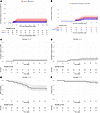 Figure 1
Clinical outcomes. One-year cumulative incidence (%) of (A) acute graft-versus-host disease (GVHD), (B) chronic GVHD, (C) non-relapse mortality (NRM), (D) relapse, (E) GVHD-free, relapse-free survival (GRFS), and (F) overall survival (OS). Cumulative incidence functions were used for acute GVHD, chronic GVHD, NRM, and relapse (A–D), accounting for competing risks; relapse and NRM were treated as competing risks for each other, and relapse and death without prior GVHD were treated as competing risks for GVHD outcomes. GRFS and OS (E and F) were estimated using the Kaplan-Meier method. Shaded areas represent 95% CIs. No formal hypothesis tests were performed for these outcomes.
The cumulative incidence of chronic GVHD requiring immunosuppression therapy (IST) was 9.3% at 6 months (95% CI, 2.9%–20%) and 23% at 1 year (95% CI, 12%–37%), with a median onset at day 185.5 (range, 139–225). This was predominantly observed among MUD recipients (36%; 95% CI, 18%–55%) compared with haploidentical (9.1%; 95% CI, 0.44%–35%), with no cases among MRD recipients (Supplemental Table 4). Rates were similarly higher among older participants (45%; 95% CI, 24%–65%; Supplemental Table 5). Severe chronic GVHD was infrequent (2.3% at 6 months and 1 year; 95% CI, 0.18%–11%) and moderate-to-severe cases occurred in 4.7% by 6 months (95% CI, 0.82%–14%) and 14% by 1 year (95% CI, 5.6%–26%).
Survival, relapse, and GRFS.
Survival and disease outcomes are shown in Table 3 and Figure 1. At 1 year, overall survival (OS) was 88.4% (95% CI, 79.3%–98.5%). Causes of death included relapse (n = 3), pulmonary infection (n = 1), and multiorgan dysfunction (n = 1). There were no deaths related to GVHD. The 1-year GVHD-free, relapse-free survival (GRFS) was 55.8% (95% CI, 42.8%–72.8%). Non-relapse mortality (NRM) was low and stable over time at 4.7% at day 100, 6 months, and 1 year (95% CI, 0.8%–14.0% for each). The cumulative incidence of relapse was 14% at 1 year (95% CI, 5.6%–26.0%). Two of the 7 relapses occurred in MRD recipients (29%; 95% CI, 2.9%–64%) compared with rates of 12% in MUD (95% CI, 2.9%–28%) and 9.1% in haploidentical recipients (95% CI, 0.44%–35%; Supplemental Table 6). While OS was similar across age groups, 1-year GRFS was lower in older participants (40.9%; 95% CI, 24,8%–67.7% vs. 71.4%; 95% CI, 54.5%–93.6%), whereas relapse was higher in younger participants (19%; 95% CI, 5.7%–38% vs. 9.1%; 95% CI, 1.5%–26%; Supplemental Table 7).
PK studies.
Vorinostat PK data were available for 37 patients across both dose levels 0 and 1 and transplant types (Table 4 and Figure 2). One participant with severe renal dysfunction and multiorgan dysfunction was excluded from summary analyses (details provided in Supplemental Figure 2). Because dosing was capped at 100 mg orally twice daily (BID), PK groups were defined according to actual delivered body surface area–normalized (BSA-normalized) dose. Among HLA-matched recipients, vorinostat exposure increased with dose escalation from 45 to 60 mg/m2, with area under the curve (AUC) increasing from 326 to 419 μg/L•h and an apparent clearance of approximately 145 L/h/m2. In contrast, AUC for vorinostat glucuronide and 4-anilino-4-oxobutanoic acid showed minimal change with dose (Supplemental Tables 8–9 and Supplemental Figure 3). In HLA-matched patients, vorinostat clearance variability appeared somewhat lower when normalized to BSA rather than when expressed in absolute terms (coefficient of variation [CV] 41.5% vs. 56.0%, Supplemental Table 10). The exposure for patients with high BSA values appeared to be lower than patients with low BSA values (Supplemental Figure 4).
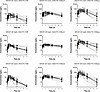 Figure 2
Pharmacokinetic data. Geometric mean and standard deviation (SD) by analyte (vorinostat, glucuronide metabolite, acid metabolite, from left to right), dose level (45 mg/m2, 60 mg/m2), and donor type (HLA-matched or haploidentical) with individual data (open circles).
Compared with HLA-matched recipients, haploidentical recipients had similar dose-normalized vorinostat Cmax but higher half-life and AUC. Dose-normalized metabolite Cmax values were lower and metabolite half-lives were prolonged. However, metabolite AUCs were similar overall, resulting in lower metabolic ratios in haploidentical recipients (Supplemental Tables 8 and 9, and Supplemental Figures 3, 5, and 6).
PD studies.
PD analyses supported target engagement. Acetylated H4–to–total H4 ratios were significantly higher in vorinostat-treated patients than in historical controls, whereas acetylated H3–to–total H3 ratios were higher but not statistically significant (Figure 3). Vorinostat-treated patients also had lower day 30 plasma concentrations of IL-2, IL-4, IL-6, IL-10, Reg3α, HGF, TNFR1, and TNF-α compared with historical controls (Figure 4). Concentrations of IFN-γ, GM-CSF, IL-12p70, ST2, and CD25 did not differ significantly between groups (data not shown). Additionally, the absolute counts and percentages of CD4+, CD8+, CD4+CD25hiCD127–, and FoxP3+CD4+CD25hiCD127– lymphocytes were not different between the groups (Supplemental Figures 7 and 8).
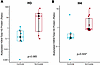 Figure 3
Histone H3 and H4 levels at baseline and day 30 after HCT in historical controls and vorinostat-treated patients. Scatter plots represent ratios of individual patient values for acetylated histone H3 (H3K9)/total H3 (A) and acetylated histone H4 (H3K4)/total H4 (B) proteins measured in PBMCs on day 30 after HCT comparing historical controls (blue) and vorinostat-treated patients (red). Between-group comparisons were performed using 2-sided Wilcoxon rank-sum tests. P values are shown in each panel. Box bonds: 75% quantiles, median, 25% quantiles. The whiskers are observed values. No outliers as it is log transformed
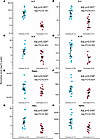 Figure 4
Plasma cytokines on day 30 after transplantation. All measurements were obtained on day 30 after transplantation. Blue squares denote historical controls (similarly treated patients who did not receive vorinostat) and red circles denote patients who received vorinostat. Horizontal black lines indicate the median and error bars depict the IQR; sample sizes are shown beneath each group. Panels show plasma concentrations of (A) IL-2, (B) IL-4, (C) IL-6, (D) IL-10, (E) Reg3α, (F) HGF, (G) TNF-α, and (H) TNFR1, assessed by multiplex (Luminex) immunoassay. Between-group comparisons on day 30 were performed using analysis of covariance (ANCOVA) on log-transformed biomarker levels, with treatment group as the primary predictor and the corresponding baseline biomarker level included as a covariate. Adjusted fold changes (Adj FC) were obtained by exponentiating the treatment-group coefficients; adjusted P values are shown in each.


