
Endocrinology
Abstract
Activation of the mechanistic target of rapamycin (mTOR) complex1 (mTORC1) promotes muscle protein synthesis, mass, and function. Muscle mTORC1 can be activated by feeding and contraction. Here, muscle mTORC1 signaling, protein synthesis, mass, and function are characterized in a genetic mouse model that separates these two major modes of muscle mTORC1 regulation. AKT signaling is required for feeding-induced muscle mTORC1 signaling and protein synthesis, and mice expressing a mutant of tuberous sclerosis complex 2 (TSC2) that cannot be phosphorylated by AKT specifically in skeletal muscle (SkM-TSC2-5A) attenuate these effects of feeding. Despite this loss of postprandial protein synthesis, SkM-TSC2-5A mice have similar muscle and myofiber size compared to SkM-TSC2-WT mice. SkM-TSC2-5A mice maintain normal muscle mTORC1 activation in response to contraction and exhibit no differences in atrophy-related gene expression or ribosomal content. SkM-TSC2-5A mice exhibit improved maximal endurance capacity without changes in muscle contractile function. This phenotype occurs without alterations in muscle glycogen content or myofiber type but does coincide with a modest increase in muscle mitochondrial content. Therefore, AKT-mediated phosphorylation of TSC2 is required for postprandial mTORC1 activation and the induction of protein synthesis; however, these are dispensable for the development and maintenance of muscle mass in sedentary mice.
Authors
Samuel C. Lapp, Krystle C. Kalafut, Madi Y. Cissé, Khaled Tighanimine, Dean M. Rosenthal, Will Doxsey, Sheng Hui, Karen E. Inouye, Claire E. Morrow, Yann Cormerais, Brendan D. Manning
Abstract
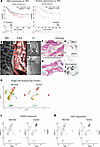
Estrogen can promote aggressive tumor phenotypes in estrogen receptor–positive (ER+) breast cancer; however, ER– cell lines are not widely considered estrogen responsive. Noncanonical estrogen-stimulated pathways such as the membrane-bound G protein–coupled estrogen receptor (GPR30) can mediate migratory and proliferative phenotypes in breast cancer and are postulated to promote resistance to aromatase therapies. Moreover, dysregulation of UDP-glucose 6-dehydrogenase (UGDH), a ubiquitously expressed enzyme critical to the metabolism of UDP-glucuronic acid into extracellular matrix precursors and hormone regulation, is associated with tumorigenesis. Here, we illustrated the impact of estrogen stimulation on tumor phenotypes in ER+ and ER– cell models in vitro and in vivo. We then demonstrated UGDH’s association with metastatic breast cancer via single-cell sequencing of patient specimens. Genetic knockdown of UGDH blunted estrogen-stimulated tumor phenotypes in vitro, ex vivo, and in vivo using both ER+ and ER– breast cancer lines. Finally, we demonstrated that UGDH knockdown blunted noncanonical estrogen stimulation through GPR30. Ultimately, our study validated prior studies demonstrating estrogen-responsive malignant phenotypes in ER– breast cancer and demonstrated that estrogen-stimulated breast cancer progression can be mediated through noncanonical pathways (e.g., UGDH/GPR30), regardless of ER status.
Authors
Meghan J. Price, Annee D. Nguyen, Corinne H. Strawser, Trupti Trivedi, Cesar C.D. Baeta, Catherine Lavau, Jovita K. Byemerwa, Debarati Mukherjee, Suzanne E. Wardell, Sandeep Artham, Vardhman Kumar, Shyni Varghese, C. Rory. Goodwin
Abstract
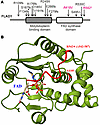
The FLAD1 gene codes for flavin adenine dinucleotide (FAD) synthase. FAD is a cofactor for many redox enzymes involved in vital processes from respiration to signal transduction. In this work, we described a clinical case of 2 siblings carrying compound heterozygous mutations in the FLAD1 gene resulting in the substitutions A418V and R542* at the protein level. The patients demonstrate adrenal insufficiency, which has not previously been associated with FLAD1 protein defects. To verify that adrenal insufficiency is caused by FLAD1 mutations, we created a personalized mouse model carrying the mutations found in the patients. The mutation in the FLAD1 gene, leading to the A418V substitution, appeared viable in the homozygous state, with minimal difference from the WT. The FLAD1 gene mutation leading to the R542* truncation is lethal when homozygous. The mouse model of the compound heterozygous FLAD1A418V/R542* mutations recapitulated the physiological, biochemical, and endocrine manifestations of FLAD1 mutations in patients. The mouse model created demonstrates the causal effect of FLAD1 mutations on the described pathology and potentially paves the way for understanding the disease’s molecular mechanism and developing better therapies.
Authors
Olga A. Averina, Natalia Yu. Kalinchenko, Vitaly A. Ioutsi, Andrey V. Pirogov, Alexander V. Bogachev, Oleg A. Permyakov, Vitaly S. Buev, Ekaterina A. Guseva, Anastasia V. Priymak, Olga A. Bazhanova, Mariia A. Emelianova, Olga O. Grigoryeva, Galina V. Baydakova, Maxim A. Abakumov, Vasily N. Manskikh, Olga A. Dontsova, Petr V. Sergiev, Anatoly N. Tiulpakov
Abstract
Autoimmune Addison’s disease (AD) is a rare but life-threatening disorder caused by immune-mediated destruction of the adrenal cortex, and progress in therapy has been limited by insufficient mechanistic insight. Here, we establish a model of Experimental Autoimmune Adrenalitis (EAA) that recapitulates key features of AD and reveals sex-dependent differences in disease manifestation within the model. Immunization with peptides derived from the adrenal self-antigen CYP11A1 induces corticosterone insufficiency. We show that autoimmune adrenalitis is driven by IFNG produced by self-reactive CD4+ T cells, promoting granulomatous inflammation in the adrenal cortex. Together, these findings identify IFNG as a central effector of autoimmune adrenalitis and suggest that targeting the IFNG pathway may represent a potential therapeutic strategy for AD.
Authors
Arina Andreyeva, Juraj Michalik, Veronika Niederlova, Veronika Cimermanova, Ales Drobek, Radislav Sedlacek, Jan Prochazka, Juraj Labaj, Olha Fedosieieva, Waldemar Kanczkowski, Peter Draber, André Sulen, Ondrej Stepanek, Aleš Neuwirth
Abstract
Locally produced nonpituitary growth hormone (npGH) promotes DNA damage accumulation and epithelial-mesenchymal transition (EMT) in aging human colon epithelium. GH receptor (GHR) and npGH are expressed in normal human prostate and benign prostatic hyperplasia (BPH) prevalence increases with age. We hypothesized that local prostate GH action may promote EMT and contribute to BPH pathogenesis. We show here that the number of patients expressing npGH increases >10-fold after age 60, concordant with increased γH2AX, a marker of DNA damage, and EMT activation. GH-treated human primary prostate epithelial cells, normal prostate cells, and primary cell cultures derived from resected BPH specimens exhibited enhanced DNA damage and activated EMT, with induced TWIST2 and suppressed E-cadherin, as well as increased Ki67, cell motility, and proliferation. In mice, prostate tissue adjacent to allografted GH-expressing fibroblasts showed increased γH2AX, TWIST2, and Ki67 compared to controls, along with morphological changes consistent with BPH. While GH and GH-induced IGF-1 both activated EMT, GH triggered DNA damage independent of IGF-1. These results elucidate a novel role for local npGH in aging prostate tissue, whereby npGH increases DNA damage and promotes EMT to enable a microenvironment favoring BPH development. Prostate GHR signaling may be an attractive therapeutic target for BPH.
Authors
Masaki Ryuzaki, Svetlana Zonis, Neil A. Bhowmick, Sandrine Billet, Saravana Kumar Kailasam Mani, Stephen J. Freedland, Hyung L. Kim, Vera Chesnokova, Shlomo Melmed
Abstract
The hypothalamic changes that occur after the loss of ovarian estrogen remain poorly characterized. Here, we performed a comprehensive temporal characterization of the mouse hypothalamus following ovariectomy (OVX), combining physiological measurements with bulk RNA-sequencing of the posterior hypothalamus (PH) and preoptic area (POA) at short-term (14 days) and long-term (4 months) post-OVX. Serum LH levels rose progressively and then declined, while core temperature peaked early and subsequently normalized, recapitulating the endocrine and thermoregulatory dynamics of reproductive aging in humans. Transcriptomic analysis revealed time-dependent activation of inflammatory pathways, glial markers, and KNDy neuron-related gene networks, with the most pronounced changes emerging at 4 months post-OVX, particularly in the PH. Immunofluorescence confirmed increased NKB release, declining KNDy neuronal activity, and heightened astrocytic reactivity in the arcuate nucleus after prolonged estrogen withdrawal. To contextualize these findings, we analyzed publicly available human hypothalamic RNA-seq data across chronological age. Age-related transcriptomic patterns in women, including progressive inflammatory signaling, glial activation, and altered KNDy gene expression, showed significant correlation with the OVX mouse model, particularly at the pathway level. These findings establish a temporal framework for hypothalamic molecular changes after estrogen withdrawal, identify conserved neuroinflammatory signatures across species, and provide a preclinical platform for testing interventions targeting menopausal-associated hypothalamic dysfunction.
Authors
Jordana C.B. Bloom, Encarnación Torres, Sidney A. Pereira, Liliana Arvizu-Sanchez, Audrey N. Fontes, Hadine Joffe, David C. Page, Victor M. Navarro
Abstract
Adults with type 2 diabetes mellitus (T2DM) are at increased risk for stroke, myocardial infarction, and cardiovascular death, yet individual risk is heterogeneous and incompletely captured by clinical models. In the Exenatide Study of Cardiovascular Event Lowering (EXSCEL), adults with T2DM were randomized to a GLP-1 RA (exenatide) or placebo and followed longitudinally for major adverse cardiovascular events (MACE). High-throughoput discovery proteomics was done in plasma collected at baseline and 12-months. Proteins associated with time-to-MACE were identified using multivariable regression and incorporated into supervised machine learning models. A multi-protein score was developed and externally validated in two independent population-based and trial cohorts, Cardiovascular Health Study and the Prospective Multicentre Imaging Study for Evaluation of Chest Pain (PROMISE). The proteomic score showed incremental improvement in cardiovascular risk discrimination beyond clinical factors alone, and several proteins were consistently prioritized across modeling approaches. The protein score and a top-ranked protein, tetranectin, were modified by GLP-1 RA treatment, and a decrease in the protein score was associated with improved outcomes, supporting modifiability of MACE risk. External validation confirmed generalizability across cohorts with and without diabetes. Together, these findings demonstrate that plasma proteomic signatures can enhance cardiovascular risk stratification and identify treatment-responsive biomarkers in T2DM, supporting their potential role in precision prevention strategies.
Authors
Kristin M. Corey, Maggie Nguyen, Michael Y. Mi, Megan E. Ramaker, Ilya Zhbannikov, Harald Sourij, G. Michael Felker, Naveed Sattar, Jennifer B. Green, Pamela S. Douglas, Robert E. Gerszten, Robert J. Mentz, Adrian F. Hernandez, Rury R. Holman, Bruce M. Psaty, James S. Floyd, Svati H. Shah
Abstract
Given the central role of peroxisomes in lipid metabolism and redox homeostasis, we hypothesized that peroxisomal activity is critical for sustaining β cell function and identity. Pex5 deletion models were employed to investigate loss of peroxisomal function on glucose-stimulated insulin secretion (GSIS), oxidative stress, and β cell maturity markers. Peroxisome deficiency in male mice resulted in elevated GSIS. Glucose intolerance developed despite increased insulin secretion. Ion mobility mass spectrometry revealed oxidation of insulin proteins, and a truncated insulin 2-derived peptide, in islets from mice with a tissue-specific deficiency in peroxisomes. Peroxisome loss of function increased multiple markers of oxidative stress, including altered metabolite profiles, lipid peroxidation, and protein carbonylation. These findings reveal that increased secretion of oxidized insulin protein is insufficient to regulate whole-body glucose homeostasis. Peroxisome deficiency also reduced markers of β cell maturity. Based on these outcomes, we identified the peroxisome organelle as a key regulatory component of glucose homeostasis by protecting insulin from oxidative modification and degradation and by supporting maintenance of mature β cells.
Authors
J. Jason Collier, Caroline R. Cothern, Maggie P. Ducote, Thomas M. Martin, Melissa A. Linden, Robert C. Noland, David H. Burk, Samuel D. Dupuy, Michael D. Karlstad, Krisztian Stadler, Sarah S. Hirschbeck, Thanh D. Do, Anastasia Coldren, Marcela Brissova, Teayoun Kim, Kirk M. Habegger, Sujoy Ghosh, Zane A. Vickery, Qudus Sarumi, Shawn R. Campagna, Susan J. Burke
Abstract
BACKGROUND. Despite antiretroviral therapy (ART), people with HIV (PWH) are at heightened risk for insulin resistance (IR) and type 2 diabetes (T2D). Subcutaneous adipose tissue (SAT) fibrosis contributes to metabolic disease, but its role in IR among PWH is unknown. We investigated the relationship between SAT fibrosis and IR in PWH, along with transcriptional signatures to distinguish it from SAT fibrosis due to obesity. METHODS. We analyzed body composition and SAT fibrosis (hydroxyproline) in 46 PWH and 74 people without HIV (PWoH), excluding individuals with T2D. We examined fibrosis-related gene transcription in the SAT using a targeted panel and measured plasma endotrophin, a marker of extracellular matrix (ECM) remodeling. RESULTS. PWH had substantially more SAT fibrosis than PWoH, notably in non-obese individuals. Moreover, SAT fibrosis in these PWH was strongly associated with IR, independently of prior legacy ART or ongoing integrase strand inhibitor treatment. This SAT fibrosis was highlighted by a distinct transcriptional pattern marked by upregulation of COL14A1, key immune-related genes (e.g., CCL4, NLRP3), and pathways governing ECM remodeling and immune activation, as well as downregulation of thermogenic, lipid metabolic, and insulin signaling pathways. Plasma endotrophin levels were also elevated in PWH and correlated independently with SAT fibrosis. CONCLUSION. SAT fibrosis was associated with IR independent of obesity in PWH and was mirrored by circulating endotrophin levels, offering a plausible noninvasive biomarker for early intervention. The distinct transcriptional signature of HIV-associated SAT fibrosis highlights candidate mechanisms that may underlie metabolic risk and offer therapeutic avenues in this population.
Authors
Diana L. Alba, Alaa Abdellatif, Moon K. Choi, Stephen M. Brown Mayfield, Thuy An T. Pham, David I. Berrios, Antonio E. Rodriguez, Marin Ewing, Tony R. Figueroa, Judy Gonzalez-Vargas, Ningyan Zhang, Zhiqiang An, Dawei Bu, Steven G. Deeks, Philipp E. Scherer, Peter W. Hunt, Suneil K. Koliwad
Abstract
Cellular senescence is an irreversible stress response, which leads to loss of cellular function and remodelling of the cellular secretory profile. In humans, pancreatic β-cells undergo cellular senescence during the progression to type 2 diabetes (T2D). However, the mechanism linking β-cell senescence to islet dysfunction remains unknown and thus, the therapeutic potential of targeting senescent cells in T2D is not established. Herein, we identified a subpopulation of senescent β-cells expressing p21, which emerged early in the progression of T2D in humans and mice. Spatial transcriptomics, and proteomics analyses confirmed senescence and loss of cellular identity in this subpopulation in humans. Functional analysis revealed lack of glucose responsiveness, high basal insulin secretion, and transcription of senescence-associated secretory phenotype (SASP) factors. SASP factors from p21+ β-cells induced secondary senescence in neighbouring cells, characterized by dysfunction and loss of identity. Janus kinase inhibitors (JAKi) counteracted the induction of secondary senescence and restored β-cell function in islets from humans with T2D and in high-fat diet-fed mice. These findings reveal the critical role of p21+ β-cells in T2D pathogenesis and the therapeutic potential of targeting this pathophysiological process.
Authors
Kanako Iwasaki, Priscila Carapeto, Cristian Abarca, Francesko Hela, Stephanie Sanjines, Sebastian Pena, Sandra Le, Hui Pan, Maya Jackson, Christopher Cahill, Ayush Midha, Juliana Alcoforado Diniz, Dylan Baker, Sergii Domanskyi, Sara Espinoza, Alejandro Pena, Francisco G. Cigarroa, Jillian L. Woodworth, Jeffrey H. Chuang, Vesna D. Garovic, James L. Kirkland, Tamara Tchkonia, Nicolas Musi, George A. Kuchel, Paul Robson, Cristina Aguayo-Mazzucato
No posts were found with this tag.


