
Inflammation

Abstract
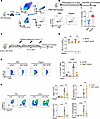
Foxp3 deficiency causes a profound loss of immune tolerance, unleashing autoreactive T and B cells, lymphoproliferation, cytokine-driven inflammation, and autoantibody production. This autoimmune pathology is fueled by increased glutamine usage, but it remains unresolved whether glutamine is necessary to produce energy or for intermediate metabolite biosynthesis responsible for immunomodulation. Here, we demonstrate that glutamine utilization for biosynthetic pathways supported autoimmune inflammation in the settings of Foxp3 deficiency and dextran sodium sulfate–induced colitis. By employing a model of autoimmunity driven by Treg-specific loss of Foxp3, we showed that this effect is independent of pathogenic Foxp3-deficient Treg reprogramming. Mechanistically, glutamine biosynthetic pathways sustained conventional T cell activation and proinflammatory cytokine production by preventing inosine accumulation and signaling, thus implicating adenosine pathway modulation in autoreactive T cell dysregulation. Conversely, autoreactive B cell activation and autoantibody production relied on glutamine-dependent asparagine availability, which we identified as a targetable vulnerability for autoantibody formation. These findings highlighted glutamine-driven biosynthetic processes as critical drivers of autoimmunity and revealed distinct metabolic vulnerabilities in autoreactive T and B cells that could be targeted for therapeutic intervention.
Authors
Mohammad Adeel Zafar, Charlotte N. Hill Machado, Jyotirmaya Behera, Yuelin Zhong, Xiao Li, Shakchhi Joshi, Yassine El Fazaa, Virginia Camacho, Peter Georgiev, Kiran Kurmi, Marcia Haigis, Louis-Marie Charbonnier
Abstract
The cholinergic antiinflammatory pathway attenuates lung inflammation via the α7 nicotinic acetylcholine receptor (α7 nAChR) on immune cells. However, the role of α7 nAChR on lung megakaryocytes (Mks) in allergic airway inflammation remains unknown. In this study, allergen-challenged mouse models were used with conditional Mk-specific Chrna7 knockout, pharmacological activation (GTS-21), and Mk reconstitution. IL-33 expression and p38 MAPK signaling were assessed. We found that allergen challenge upregulated α7 nAChR specifically in lung Mks. Mk-specific Chrna7 deletion significantly alleviated allergic airway inflammation, whereas GTS-21 exacerbated inflammation via an Mk-dependent mechanism. Reconstitution with α7 nAChR+ Mks restored airway inflammatory responses. Mechanistically, α7 nAChR activation promoted Mk IL-33 synthesis and secretion through p38 MAPK signaling. Taken together, our results show that α7 nAChR on lung Mks plays a proinflammatory role in allergic airway inflammation, challenging its classical antiinflammatory paradigm and revealing pathogenic mechanisms.
Authors
Hang Wu, Rujia Tao, Shitao Xie, Yao Zhou, Jin-Fu Xu, Zhenwei Xia, Xiao Su
Abstract
Autoimmune kidney diseases can cause glomerulonephritis and tubulointerstitial nephritis, which if unresolved, lead to progressive glomerulosclerosis and tubulointerstitial fibrosis. The IL-1 receptor (IL-1R1) is known to have divergent and cell-specific effects in kidney injury. We hypothesized that IL-1R1 would dampen pro-inflammatory activation of myeloid cells such that deletion of myeloid cell IL-1R1 would exacerbate autoimmune nephritis. Mice with myeloid cell-specific deletion of IL-1R1 (LysMCre(+) / Il1r1fl/fl - MKO) and littermate controls (LysMCre(-) / Il1r1fl/fl - MWT) were subjected to nephrotoxic serum (NTS) nephritis. MKO mice demonstrated worsened glomerular and tubular injury as indicated by increased albuminuria, glomerular injury scores, and kidney mRNA levels of kidney injury molecule (KIM)-1 (Havcr1) and neutrophil gelatinase-associated lipocalin (NGAL/Lcn2). We further found that myeloid IL-1R1 deficiency resulted in increased myeloid cell ER stress and expression of the heterodimeric cytokine Ebi3/Il27a (IL-27). IL-27 then induced increased type I IFN expression by kidney endothelial cells. In turn, anti-IL-27 limited type I IFN expression in endothelial cells and NTS nephritis, and anti-IFNAR1 therapy ameliorated glomerular and tubular injury in MKO mice. Thus, we demonstrated a myeloid cell-endothelial cell immunoregulatory axis whereby myeloid IL-1R1 activity constrained endothelial type I IFN generation to limit chronic kidney damage.
Authors
Yanting Chen, Yu Li, Jiafa Ren, Chia-Chun Wu, Xiaohan Lu, Achintya Inumarty, Steven D. Crowley, Jamie R. Privratsky
Abstract
DNA ligase IV (LIG4) is essential for DNA double-strand break (DSB) repair. Hypomorphic LIG4 variants cause LIG4 syndrome, characterized by growth disturbance, increased radiosensitivity, predisposition to malignancies, adaptive immunodeficiency and inflammatory conditions. Most of these manifestations are recapitulated in hypomorphic LIG4 mutant mice. However, no model mice with defective DSB repair have consistently exhibited inflammation. Here, we have generated mutant mice carrying the LIG4 missense variant, p.W447C, found in a patient with LIG4 syndrome. Lig4W447C/W447C mice showed functional defects of LIGIV and manifested growth retardation, increased radiosensitivity, and life-threatening intestinal inflammation under severe adaptive immunodeficiency. The inflammation was dependent on lymphocytes and characterized by marked infiltration of Th1 cells and macrophages, along with elevated expression of IFN-γ-inducible genes. When Ifng was deleted, Th2 and Th17 instead of Th1 cells drove the inflammation. Single-cell RNA-seq analyses with TCR repertoire revealed that T cells from Lig4W447C/W447C mice preferentially used proximal Vα and Jα segments in V regions of TCRα chains and exhibited expansion of several clonotypes, a substantial portion of which were CD4 T cells expressing IFN-γ. Thus, our hypomorphic Lig4 mutant mice represent a unique model for studying Th1-skewed intestinal inflammation under severe adaptive immunodeficiency.
Authors
Yusuke Yamashita, Hideki Kosako, Takashi Kato, Izumi Sasaki, Sadahiro Iwabuchi, Yuri Fukuda-Ohta, Tadashi Okamura, Misato Tane, Shotaro Tabata, Kazutaka Nakashima, Ken Tanaka, Kazunori Shiraishi, Yuki Uchihara, Daisuke Okuzaki, Kyoichi Isono, Atsushi Shibata, Tsunehiro Mizushima, Hiroaki Hemmi, Nobuo Kanazawa, Seiji Kodama, Hiroaki Miyoshi, Koichi Ohshima, Shinichi Hashimoto, Yoshio Fujitani, Takashi Sonoki, Shinobu Tamura, Tsuneyasu Kaisho
Abstract
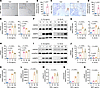
Obesity is a major risk factor for chronic kidney disease. Time-restricted feeding (TRF) shows promise to reduce kidney inflammation in chronic kidney disease. We hypothesized that TRF blunts kidney fibrosis in obese mice by mitigating T cell inflammation. We used a diet-induced obese mouse model fed a high fat diet (DIO, 45% fat) ad libitum for 18 weeks followed by 2 weeks of TRF or ad libitum high fat feeding. We found that TRF reversed kidney fibrosis as well as reduced kidney CD8+ T cells in DIO mice. Our study also revealed that DIO mice had increased kidney CD8+ T cell infiltration from the small intestine that was blunted with TRF. Furthermore, anti-CD8 intervention in DIO showed reduced kidney fibrosis and damage compared to anti-IgG treated DIO mice. Single cell RNA sequencing data revealed that DIO increased, while TRF reduced, the frequency of a specific cluster of CD8+ T cells that featured high expression of exhaustion/activation genes. Spatial analyses showed DIO mice had significant infiltration of PD-1+CD8+ T cells near CD31+ endothelial cells that was diminished by TRF. In conclusion, this study discovered that TRF reverses kidney fibrosis through reducing CD8+ T cell infiltration in obese mice.
Authors
Claudia J. Edell, John D. Erickson, Xiaofen Liu, Savannah C. Walker, Jackson Colson, Michael Heim, Pranav Nagila, Kyle H. Moore, Keri M. Kemp, Kelly Hyndman, Selene Meza-Perez, Troy D. Randall, Annye P. Bennett, Anna G. Sorace, Yu-Hua Dean Fang, David M. Pollock, Carmen De Miguel, Julienne L. Carstens, Jennifer S. Pollock
Abstract
Inflammation driven by the innate immune response plays a crucial role in osteoarthritis (OA) pathogenesis, yet the underlying mechanisms remain incompletely understood. Moreover, current antiinflammatory therapies primarily offer symptomatic relief without altering disease progression. Nucleotide-binding oligomerization domain 2 (NOD2) is an intracellular pattern recognition receptor that detects a broad range of microbial and damage-associated stimuli and has been implicated in several inflammatory conditions. In this study, we investigated the role of NOD2 in OA-associated inflammation and cartilage degradation. Elevated NOD2 expression was observed in both human and mouse osteoarthritic cartilage. Conditional KO of Nod2 in chondrocytes suppressed inflammation-induced catabolic responses in vitro and protected against cartilage degradation in mouse OA models. Mechanistically, we identified tumor necrosis factor receptor–associated factor 6 (TRAF6) as a key downstream mediator through which NOD2 promotes chondrocyte catabolism. Furthermore, we showed that pharmacological inhibition of NOD2 using 2 independent small-molecule inhibitors significantly attenuated OA progression in vivo. Collectively, these findings establish NOD2 as a critical regulator of OA-associated inflammation and cartilage degradation, and they highlight its potential as a therapeutic target for disease-modifying OA treatment.
Authors
Yuting Wang, Song Li, Yonghui Dong, Jiaming Zhang, Jian Liu, Zhenggang Wang, Shuang Liang, Nathan R. Martinez, Hongxu Pu, Peng Cheng, Anmin Chen, Qing Yang, Charles K.F. Chan, Wen Jiang, Jun Xiao, Fengjing Guo, Liming Zhao
Abstract
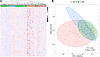
BACKGROUND Elucidating immune signals through well-defined cohorts of pediatric acute pancreatitis (AP) and chronic pancreatitis (CP) patients is critical. This study aimed to evaluate plasma chemokine and cytokine levels in pediatric participants with CP, compared with AP and healthy controls (HCs), to identify unique biomarkers of CP.METHODS Individuals were identified from a prospectively collected pediatric cohort (n = 146). Immunoproteins (n = 247) were measured using the NULISAseq platform on samples from individuals with CP (n = 71), AP (n = 55), and HCs (n = 20).RESULTS The measured analytes showed separation among the 3 groups (R2 = 0.13, P < 0.001). In the CP group, TRANCE, TWEAK, FLT-1, HGF, and TRAIL were increased when compared with HC and AP patients (FDR-corrected P <0.05). A multivariable logistic regression model including all 5 proteins provided an AUC of 0.94 (0.93–0.96) for differentiating samples from CP versus AP or HC samples. In the AP group, CRP, IL-6, CD3E, ENRAGE, and MIF were elevated compared with HCs, while FGF-2, TAFA-5, IL-33, TRANCE, and CXCL12 were downregulated in the same acute time period (FDR-corrected P < 0.05). In the 21 patients with AP for whom follow-up samples were obtained, there was a notable decrease in sequential expression of IL-6 and CRP over 12 months and increased expression of CCL25, TAFA-5, and TRANCE proteins. Additionally, TRANCE was expressed on CP pancreatic tissue.CONCLUSIONS TRANCE was increased in pediatric patients with CP and decreased in those with AP during a flare. Future studies are needed to investigate the role of TRANCE and other analytes in the pathogenesis of CP.
Authors
Peter R. Farrell, Bomi Lee, Faizan Ahmed, Maria E. Moreno-Fernandez, Ajay Dixit, Juan Pablo Gurria, Nicholas J. Ollberding, Qing Duan, Vineet Garlapally, Phoebe Christian, Sohail Z. Husain, Maisam Abu-El-Haija
Abstract
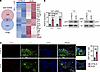
Chronic, non-healing wounds are a severe diabetic complication. The underlying mechanisms are not fully understood, and the role of ATF7 in this context has not been well characterized. In our study, we utilized db/db diabetic mice and AAV-mediated keratinocyte-specific Atf7 overexpression in vivo. HaCaT keratinocyte/THP-1 macrophage cocultures under high glucose were used in vitro. Our results showed that ATF7 was upregulated in diabetic wounds. Keratinocyte-specific Atf7 overexpression accelerated diabetic wound closure, enhanced re-epithelialization, granulation tissue formation, and keratinocyte proliferation, while suppressing macrophage M1 polarization and inflammation. Multiomics screening identified NOTCH1 as a key ATF7 target. ATF7 transcriptionally repressed NOTCH1 by recruiting Suv39h1, increasing H3K9me3 at the NOTCH1 promoter. This reduced NOTCH1 protein and its active intracellular domain (N1ICD) within keratinocyte-derived exosomes. ATF7-overexpressing keratinocyte exosomes carried less N1ICD, leading to decreased N1ICD transfer to macrophages and subsequent inhibition of M1 polarization. Notably, local injection of exosomes from ATF7-overexpressing keratinocytes accelerated wound healing in db/db mice. In summary, ATF7 promotes diabetic wound healing by repressing NOTCH1 transcription via H3K9me3, thereby reducing exosomal N1ICD secretion from keratinocytes and inhibiting macrophage M1 polarization. This identifies the ATF7/NOTCH1/exosome axis as a therapeutic target.
Authors
Pengcheng Xu, Yuan Xue, Linlin Feng, Jingwen Kuang, Xiaochen Hu, Huiyi Tang, Biao Cheng, Limin Wei
Abstract
Bone marrow-derived circulating monocytes continuously replenish intestinal macrophages, which become dysregulated in inflammatory bowel disease (IBD) and contribute to disease pathology. The origins of this dysregulation remain poorly understood. Here, we investigate the reprogramming of circulating monocytes in IBD prior to tissue recruitment using single-cell transcriptomic, epigenomic and functional approaches. We characterise blood monocyte heterogeneity in newly diagnosed, treatment-naïve IBD patients and healthy controls and show that monocytes in Crohn’s disease (CD) display a distinct transcriptional profile and altered distributions across inferred developmental trajectories; less pronounced changes are observed in ulcerative colitis (UC). We link CD-associated transcriptional changes to alterations in chromatin accessibility and identify NFB, EGR, KLF and AP-1 family transcription factors as putative regulators of an inflammatory gene program in blood monocytes from CD patients. We uncover a potential role for IFN- in priming blood monocytes for inflammatory function in CD by limiting their capacity to be regulated by IL-10. Finally, we show that the transcriptional and functional alterations in monocytes from CD patients are maintained in monocyte-derived cells from the intestine. Together these data suggest that intestinal macrophage dysfunction in CD is, at least in part, pre-established by systemic signals prior to tissue recruitment.
Authors
Eve Hornsby, Radha Gadhok, Inva Hoti, Eva Wozniak, James R. Boot, Emma Connick, Paul A Stevens, Holly Creed, Amy Lewis, Andrew Silver, James O Lindsay, Andrew J. Stagg
Abstract
The NF-κB signaling pathway coordinates inflammation, cell survival, and proliferation, while restraining excessive cell death to maintain immune homeostasis. Truncating mutations in RELA, encoding the NF-κB subunit p65, have been linked to autoinflammation and autoimmunity, but the underlying mechanisms remain incompletely defined. We investigated six patients from five unrelated families carrying previously unreported heterozygous truncating RELA variants. Despite reduced p65 expression, patients exhibited a broad spectrum of inflammatory manifestations alongside elevated baseline and stimulus-induced pro-inflammatory cytokines. Functional analyses in patient-derived cells and mutant RELA knock-in models showed that upstream NF-κB signaling was intact, but induction of inhibitory regulators such as IκBα and A20 was impaired. This defective feedback control shifted immune homeostasis toward amplified inflammatory responses that depended on the residual activity of the remaining functional RELA allele. Single-cell transcriptomics revealed distinct cell type-specific consequences: monocytes displayed constitutive type I interferon and NF-κB activation, B cells retained partial compensatory signaling, whereas T and NK cells exhibited transcriptional signatures of cell death pathways. Patient fibroblasts and mutant RELA knock-in cells further confirmed enhanced TNF-induced inflammatory gene expression and hypersensitivity to apoptosis and necroptosis. These findings establish RELA haploinsufficiency as a cause of systemic immune dysregulation, and link defective NF-κB feedback control to unchecked inflammation and inflammatory cell death.
Authors
Nadja Lucas, Sophia Weidler, Antonia A. Eicher, Baerbel Keller, Özlem Satirer, Adam Desrochers, Timothy J.S. Ramnarine, Mohammad Mokhtari, Sophie Elstner, Timmy Strauss, Simon W. Mages, Arek Kendirli, Oana Cristina Buzoianu, Tobias B. Haack, Lina Igel, Tim Niehues, Sandra von Hardenberg, Maria Fasshauer, Rami Abou Jamra, Hagen Ott, Ulrike Hüffmeier, Catharina Schütz, Marisa Bijwaard, Susan Wagner, Paulina Switala, Sarah Koss, Jurek Schultz, Stefanie Kretschmer, Jasmin Kümmerle-Deschner, Christine Wolf, Johanna Klughammer, Min Ae Lee-Kirsch
No posts were found with this tag.


