
Abstract
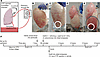
Bacterial pneumonia is the most common cause of acute respiratory distress syndrome (ARDS), characterized by disrupted pulmonary endothelial barrier function, hyperinflammation, and impaired alveolar epithelial fluid clearance. ARDS has a high mortality rate and no proven pharmacological treatments, stressing the need for new targeted therapies. The TIP peptide, mimicking the lectin-like domain of TNF, directly binds to the α subunit of the epithelial Na+ channel, expressed in both alveolar epithelial and capillary endothelial cells, and may increase lung endothelial barrier function and alveolar fluid clearance during bacterial infection. This study tested these potential therapeutic mechanisms of the TIP peptide in a clinically relevant preparation of the ex vivo–perfused human lung injured by Streptococcus pneumoniae. Therapeutic administration of the TIP peptide reduced pulmonary barrier permeability to protein and lung edema formation, increased alveolar edema fluid clearance, and produced an antiinflammatory effect in the airspaces with reductions in IL-6 and IL-8 levels. Additionally, the TIP peptide reduced the translocation of bacteria into the circulation. These findings establish 3 mechanisms of benefit with the TIP peptide to reduce injury in the human lung and support the clinical relevance as a potential therapeutic for pneumococcal bacterial pneumonia.
Authors
Mazharul Maishan, Hiroki Taenaka, Bruno Evrard, Shotaro Matsumoto, Angelika Ringor, Carolyn Leroux, Rudolf Lucas, Michael A. Matthay
This file is in Adobe Acrobat (PDF) format. If you have not installed and configured the Adobe Acrobat Reader on your system.
Having trouble reading a PDF?
PDFs are designed to be printed out and read, but if you prefer to read them online, you may find it easier if you increase the view size to 125%.
Having trouble saving a PDF?
Many versions of the free Acrobat Reader do not allow Save. You must instead save the PDF from the JCI Online page you downloaded it from. PC users: Right-click on the Download link and choose the option that says something like "Save Link As...". Mac users should hold the mouse button down on the link to get these same options.
Having trouble printing a PDF?
- Try printing one page at a time or to a newer printer.
- Try saving the file to disk before printing rather than opening it "on the fly." This requires that you configure your browser to "Save" rather than "Launch Application" for the file type "application/pdf", and can usually be done in the "Helper Applications" options.
- Make sure you are using the latest version of Adobe's Acrobat Reader.


