
Abstract
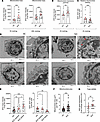
Systemic lupus erythematosus (SLE) is a chronic autoimmune disease characterized by immune dysregulation and widespread inflammation. NK cells display marked functional impairment in SLE, including defective cytotoxicity and cytokine production, but the underlying mechanisms remain poorly defined. Here, we show that mitochondrial dysfunction and impaired mitophagy are key contributors to NK cell abnormalities in SLE. Using complementary structural, metabolic, and proteomic analyses, we found that SLE NK cells accumulate enlarged and dysfunctional mitochondria, exhibit impaired lysosomal acidification, and release mitochondrial DNA into the cytosol — features consistent with defective mitochondrial quality control. Transcriptional and proteomic profiling revealed downregulation of key mitophagy-related genes and pathways. These abnormalities correlated with reduced NK cell degranulation and cytokine production. We then tested whether enhancing mitochondrial quality control could restore NK cell function. The mitophagy activator Urolithin A improved mitochondrial and lysosomal parameters and rescued NK cell effector responses in vitro. Hydroxychloroquine partially restored mitochondrial recycling and reduced cytosolic mtDNA. These findings suggest that defective mitophagy and mitochondrial dysfunction are major contributors to NK cell impairment in SLE and that targeting mitochondrial quality control may represent a promising strategy for restoring immune balance in this disease.
Authors
Natalia Fluder, Morgane Humbel, Emeline Recazens, Alexis A. Jourdain, Camillo Ribi, George Tsokos, Denis Comte
This file is in Adobe Acrobat (PDF) format. If you have not installed and configured the Adobe Acrobat Reader on your system.
Having trouble reading a PDF?
PDFs are designed to be printed out and read, but if you prefer to read them online, you may find it easier if you increase the view size to 125%.
Having trouble saving a PDF?
Many versions of the free Acrobat Reader do not allow Save. You must instead save the PDF from the JCI Online page you downloaded it from. PC users: Right-click on the Download link and choose the option that says something like "Save Link As...". Mac users should hold the mouse button down on the link to get these same options.
Having trouble printing a PDF?
- Try printing one page at a time or to a newer printer.
- Try saving the file to disk before printing rather than opening it "on the fly." This requires that you configure your browser to "Save" rather than "Launch Application" for the file type "application/pdf", and can usually be done in the "Helper Applications" options.
- Make sure you are using the latest version of Adobe's Acrobat Reader.


