
Research ArticleGeneticsNeuroscience
Open Access |  10.1172/jci.insight.197941
KIF5A downregulation in spinal muscular atrophy links axonal regeneration defects with ALS
Tetsuya Akiyama,1 Yi Zeng,1 Caiwei Guo,1 Olivia Gautier,1,2 Lauren Koepke,3,4 Heankel Lyons,1 Elana Molotsky,5 Juliane S. Bombosch,1 Odilia Sianto,1 Jay P. Ross,1 Phuong Hoang,1 Luke Zhao,1 Cole Spencer,1 Charlotte J. Sumner,5,6 Michelle Monje,3,7 John W. Day,8 and Aaron D. Gitler1,9,10
1Department of Genetics, Stanford University School of Medicine, Stanford, California, USA.
2Stanford Neurosciences Graduate Program,
3Department of Neurology and Neurological Sciences, and
4Stem Cell Biology and Regenerative Medicine, Stanford University, Stanford, California, USA.
5Department of Neurology and
6Department of Neuroscience, Johns Hopkins University School of Medicine, Baltimore, Maryland, USA.
7Howard Hughes Medical Institute and
8Department of Neurology and Clinical Neurosciences, Stanford University, Stanford, California, USA.
9Biohub – San Francisco, San Francisco, California, USA.
10The Phil and Penny Knight Initiative for Brain Resilience, Stanford University, Stanford, California, USA.
Address correspondence to: Tetsuya Akiyama, Department of Genetics, Stanford University School of Medicine, Beckman Center, B275, Stanford, CA 94305, USA. Email: takiyama@stanford.edu. Or to: Aaron D. Gitler, Department of Genetics, Stanford University School of Medicine, Beckman Center, B271, Stanford, CA 94305, USA. Email: agitler@stanford.edu.
Find articles by Akiyama, T. in: PubMed | Google Scholar
1Department of Genetics, Stanford University School of Medicine, Stanford, California, USA.
2Stanford Neurosciences Graduate Program,
3Department of Neurology and Neurological Sciences, and
4Stem Cell Biology and Regenerative Medicine, Stanford University, Stanford, California, USA.
5Department of Neurology and
6Department of Neuroscience, Johns Hopkins University School of Medicine, Baltimore, Maryland, USA.
7Howard Hughes Medical Institute and
8Department of Neurology and Clinical Neurosciences, Stanford University, Stanford, California, USA.
9Biohub – San Francisco, San Francisco, California, USA.
10The Phil and Penny Knight Initiative for Brain Resilience, Stanford University, Stanford, California, USA.
Address correspondence to: Tetsuya Akiyama, Department of Genetics, Stanford University School of Medicine, Beckman Center, B275, Stanford, CA 94305, USA. Email: takiyama@stanford.edu. Or to: Aaron D. Gitler, Department of Genetics, Stanford University School of Medicine, Beckman Center, B271, Stanford, CA 94305, USA. Email: agitler@stanford.edu.
Find articles by Zeng, Y. in: PubMed | Google Scholar
1Department of Genetics, Stanford University School of Medicine, Stanford, California, USA.
2Stanford Neurosciences Graduate Program,
3Department of Neurology and Neurological Sciences, and
4Stem Cell Biology and Regenerative Medicine, Stanford University, Stanford, California, USA.
5Department of Neurology and
6Department of Neuroscience, Johns Hopkins University School of Medicine, Baltimore, Maryland, USA.
7Howard Hughes Medical Institute and
8Department of Neurology and Clinical Neurosciences, Stanford University, Stanford, California, USA.
9Biohub – San Francisco, San Francisco, California, USA.
10The Phil and Penny Knight Initiative for Brain Resilience, Stanford University, Stanford, California, USA.
Address correspondence to: Tetsuya Akiyama, Department of Genetics, Stanford University School of Medicine, Beckman Center, B275, Stanford, CA 94305, USA. Email: takiyama@stanford.edu. Or to: Aaron D. Gitler, Department of Genetics, Stanford University School of Medicine, Beckman Center, B271, Stanford, CA 94305, USA. Email: agitler@stanford.edu.
Find articles by Guo, C. in: PubMed | Google Scholar
1Department of Genetics, Stanford University School of Medicine, Stanford, California, USA.
2Stanford Neurosciences Graduate Program,
3Department of Neurology and Neurological Sciences, and
4Stem Cell Biology and Regenerative Medicine, Stanford University, Stanford, California, USA.
5Department of Neurology and
6Department of Neuroscience, Johns Hopkins University School of Medicine, Baltimore, Maryland, USA.
7Howard Hughes Medical Institute and
8Department of Neurology and Clinical Neurosciences, Stanford University, Stanford, California, USA.
9Biohub – San Francisco, San Francisco, California, USA.
10The Phil and Penny Knight Initiative for Brain Resilience, Stanford University, Stanford, California, USA.
Address correspondence to: Tetsuya Akiyama, Department of Genetics, Stanford University School of Medicine, Beckman Center, B275, Stanford, CA 94305, USA. Email: takiyama@stanford.edu. Or to: Aaron D. Gitler, Department of Genetics, Stanford University School of Medicine, Beckman Center, B271, Stanford, CA 94305, USA. Email: agitler@stanford.edu.
Find articles by Gautier, O. in: PubMed | Google Scholar
1Department of Genetics, Stanford University School of Medicine, Stanford, California, USA.
2Stanford Neurosciences Graduate Program,
3Department of Neurology and Neurological Sciences, and
4Stem Cell Biology and Regenerative Medicine, Stanford University, Stanford, California, USA.
5Department of Neurology and
6Department of Neuroscience, Johns Hopkins University School of Medicine, Baltimore, Maryland, USA.
7Howard Hughes Medical Institute and
8Department of Neurology and Clinical Neurosciences, Stanford University, Stanford, California, USA.
9Biohub – San Francisco, San Francisco, California, USA.
10The Phil and Penny Knight Initiative for Brain Resilience, Stanford University, Stanford, California, USA.
Address correspondence to: Tetsuya Akiyama, Department of Genetics, Stanford University School of Medicine, Beckman Center, B275, Stanford, CA 94305, USA. Email: takiyama@stanford.edu. Or to: Aaron D. Gitler, Department of Genetics, Stanford University School of Medicine, Beckman Center, B271, Stanford, CA 94305, USA. Email: agitler@stanford.edu.
Find articles by Koepke, L. in: PubMed | Google Scholar
1Department of Genetics, Stanford University School of Medicine, Stanford, California, USA.
2Stanford Neurosciences Graduate Program,
3Department of Neurology and Neurological Sciences, and
4Stem Cell Biology and Regenerative Medicine, Stanford University, Stanford, California, USA.
5Department of Neurology and
6Department of Neuroscience, Johns Hopkins University School of Medicine, Baltimore, Maryland, USA.
7Howard Hughes Medical Institute and
8Department of Neurology and Clinical Neurosciences, Stanford University, Stanford, California, USA.
9Biohub – San Francisco, San Francisco, California, USA.
10The Phil and Penny Knight Initiative for Brain Resilience, Stanford University, Stanford, California, USA.
Address correspondence to: Tetsuya Akiyama, Department of Genetics, Stanford University School of Medicine, Beckman Center, B275, Stanford, CA 94305, USA. Email: takiyama@stanford.edu. Or to: Aaron D. Gitler, Department of Genetics, Stanford University School of Medicine, Beckman Center, B271, Stanford, CA 94305, USA. Email: agitler@stanford.edu.
Find articles by Lyons, H. in: PubMed | Google Scholar
1Department of Genetics, Stanford University School of Medicine, Stanford, California, USA.
2Stanford Neurosciences Graduate Program,
3Department of Neurology and Neurological Sciences, and
4Stem Cell Biology and Regenerative Medicine, Stanford University, Stanford, California, USA.
5Department of Neurology and
6Department of Neuroscience, Johns Hopkins University School of Medicine, Baltimore, Maryland, USA.
7Howard Hughes Medical Institute and
8Department of Neurology and Clinical Neurosciences, Stanford University, Stanford, California, USA.
9Biohub – San Francisco, San Francisco, California, USA.
10The Phil and Penny Knight Initiative for Brain Resilience, Stanford University, Stanford, California, USA.
Address correspondence to: Tetsuya Akiyama, Department of Genetics, Stanford University School of Medicine, Beckman Center, B275, Stanford, CA 94305, USA. Email: takiyama@stanford.edu. Or to: Aaron D. Gitler, Department of Genetics, Stanford University School of Medicine, Beckman Center, B271, Stanford, CA 94305, USA. Email: agitler@stanford.edu.
Find articles by Molotsky, E. in: PubMed | Google Scholar
1Department of Genetics, Stanford University School of Medicine, Stanford, California, USA.
2Stanford Neurosciences Graduate Program,
3Department of Neurology and Neurological Sciences, and
4Stem Cell Biology and Regenerative Medicine, Stanford University, Stanford, California, USA.
5Department of Neurology and
6Department of Neuroscience, Johns Hopkins University School of Medicine, Baltimore, Maryland, USA.
7Howard Hughes Medical Institute and
8Department of Neurology and Clinical Neurosciences, Stanford University, Stanford, California, USA.
9Biohub – San Francisco, San Francisco, California, USA.
10The Phil and Penny Knight Initiative for Brain Resilience, Stanford University, Stanford, California, USA.
Address correspondence to: Tetsuya Akiyama, Department of Genetics, Stanford University School of Medicine, Beckman Center, B275, Stanford, CA 94305, USA. Email: takiyama@stanford.edu. Or to: Aaron D. Gitler, Department of Genetics, Stanford University School of Medicine, Beckman Center, B271, Stanford, CA 94305, USA. Email: agitler@stanford.edu.
Find articles by Bombosch, J. in: PubMed | Google Scholar
1Department of Genetics, Stanford University School of Medicine, Stanford, California, USA.
2Stanford Neurosciences Graduate Program,
3Department of Neurology and Neurological Sciences, and
4Stem Cell Biology and Regenerative Medicine, Stanford University, Stanford, California, USA.
5Department of Neurology and
6Department of Neuroscience, Johns Hopkins University School of Medicine, Baltimore, Maryland, USA.
7Howard Hughes Medical Institute and
8Department of Neurology and Clinical Neurosciences, Stanford University, Stanford, California, USA.
9Biohub – San Francisco, San Francisco, California, USA.
10The Phil and Penny Knight Initiative for Brain Resilience, Stanford University, Stanford, California, USA.
Address correspondence to: Tetsuya Akiyama, Department of Genetics, Stanford University School of Medicine, Beckman Center, B275, Stanford, CA 94305, USA. Email: takiyama@stanford.edu. Or to: Aaron D. Gitler, Department of Genetics, Stanford University School of Medicine, Beckman Center, B271, Stanford, CA 94305, USA. Email: agitler@stanford.edu.
Find articles by Sianto, O. in: PubMed | Google Scholar
1Department of Genetics, Stanford University School of Medicine, Stanford, California, USA.
2Stanford Neurosciences Graduate Program,
3Department of Neurology and Neurological Sciences, and
4Stem Cell Biology and Regenerative Medicine, Stanford University, Stanford, California, USA.
5Department of Neurology and
6Department of Neuroscience, Johns Hopkins University School of Medicine, Baltimore, Maryland, USA.
7Howard Hughes Medical Institute and
8Department of Neurology and Clinical Neurosciences, Stanford University, Stanford, California, USA.
9Biohub – San Francisco, San Francisco, California, USA.
10The Phil and Penny Knight Initiative for Brain Resilience, Stanford University, Stanford, California, USA.
Address correspondence to: Tetsuya Akiyama, Department of Genetics, Stanford University School of Medicine, Beckman Center, B275, Stanford, CA 94305, USA. Email: takiyama@stanford.edu. Or to: Aaron D. Gitler, Department of Genetics, Stanford University School of Medicine, Beckman Center, B271, Stanford, CA 94305, USA. Email: agitler@stanford.edu.
Find articles by Ross, J. in: PubMed | Google Scholar
1Department of Genetics, Stanford University School of Medicine, Stanford, California, USA.
2Stanford Neurosciences Graduate Program,
3Department of Neurology and Neurological Sciences, and
4Stem Cell Biology and Regenerative Medicine, Stanford University, Stanford, California, USA.
5Department of Neurology and
6Department of Neuroscience, Johns Hopkins University School of Medicine, Baltimore, Maryland, USA.
7Howard Hughes Medical Institute and
8Department of Neurology and Clinical Neurosciences, Stanford University, Stanford, California, USA.
9Biohub – San Francisco, San Francisco, California, USA.
10The Phil and Penny Knight Initiative for Brain Resilience, Stanford University, Stanford, California, USA.
Address correspondence to: Tetsuya Akiyama, Department of Genetics, Stanford University School of Medicine, Beckman Center, B275, Stanford, CA 94305, USA. Email: takiyama@stanford.edu. Or to: Aaron D. Gitler, Department of Genetics, Stanford University School of Medicine, Beckman Center, B271, Stanford, CA 94305, USA. Email: agitler@stanford.edu.
Find articles by Hoang, P. in: PubMed | Google Scholar
1Department of Genetics, Stanford University School of Medicine, Stanford, California, USA.
2Stanford Neurosciences Graduate Program,
3Department of Neurology and Neurological Sciences, and
4Stem Cell Biology and Regenerative Medicine, Stanford University, Stanford, California, USA.
5Department of Neurology and
6Department of Neuroscience, Johns Hopkins University School of Medicine, Baltimore, Maryland, USA.
7Howard Hughes Medical Institute and
8Department of Neurology and Clinical Neurosciences, Stanford University, Stanford, California, USA.
9Biohub – San Francisco, San Francisco, California, USA.
10The Phil and Penny Knight Initiative for Brain Resilience, Stanford University, Stanford, California, USA.
Address correspondence to: Tetsuya Akiyama, Department of Genetics, Stanford University School of Medicine, Beckman Center, B275, Stanford, CA 94305, USA. Email: takiyama@stanford.edu. Or to: Aaron D. Gitler, Department of Genetics, Stanford University School of Medicine, Beckman Center, B271, Stanford, CA 94305, USA. Email: agitler@stanford.edu.
Find articles by Zhao, L. in: PubMed | Google Scholar
1Department of Genetics, Stanford University School of Medicine, Stanford, California, USA.
2Stanford Neurosciences Graduate Program,
3Department of Neurology and Neurological Sciences, and
4Stem Cell Biology and Regenerative Medicine, Stanford University, Stanford, California, USA.
5Department of Neurology and
6Department of Neuroscience, Johns Hopkins University School of Medicine, Baltimore, Maryland, USA.
7Howard Hughes Medical Institute and
8Department of Neurology and Clinical Neurosciences, Stanford University, Stanford, California, USA.
9Biohub – San Francisco, San Francisco, California, USA.
10The Phil and Penny Knight Initiative for Brain Resilience, Stanford University, Stanford, California, USA.
Address correspondence to: Tetsuya Akiyama, Department of Genetics, Stanford University School of Medicine, Beckman Center, B275, Stanford, CA 94305, USA. Email: takiyama@stanford.edu. Or to: Aaron D. Gitler, Department of Genetics, Stanford University School of Medicine, Beckman Center, B271, Stanford, CA 94305, USA. Email: agitler@stanford.edu.
Find articles by Spencer, C. in: PubMed | Google Scholar
1Department of Genetics, Stanford University School of Medicine, Stanford, California, USA.
2Stanford Neurosciences Graduate Program,
3Department of Neurology and Neurological Sciences, and
4Stem Cell Biology and Regenerative Medicine, Stanford University, Stanford, California, USA.
5Department of Neurology and
6Department of Neuroscience, Johns Hopkins University School of Medicine, Baltimore, Maryland, USA.
7Howard Hughes Medical Institute and
8Department of Neurology and Clinical Neurosciences, Stanford University, Stanford, California, USA.
9Biohub – San Francisco, San Francisco, California, USA.
10The Phil and Penny Knight Initiative for Brain Resilience, Stanford University, Stanford, California, USA.
Address correspondence to: Tetsuya Akiyama, Department of Genetics, Stanford University School of Medicine, Beckman Center, B275, Stanford, CA 94305, USA. Email: takiyama@stanford.edu. Or to: Aaron D. Gitler, Department of Genetics, Stanford University School of Medicine, Beckman Center, B271, Stanford, CA 94305, USA. Email: agitler@stanford.edu.
Find articles by
Sumner, C.
in:
PubMed
|
Google Scholar
|

1Department of Genetics, Stanford University School of Medicine, Stanford, California, USA.
2Stanford Neurosciences Graduate Program,
3Department of Neurology and Neurological Sciences, and
4Stem Cell Biology and Regenerative Medicine, Stanford University, Stanford, California, USA.
5Department of Neurology and
6Department of Neuroscience, Johns Hopkins University School of Medicine, Baltimore, Maryland, USA.
7Howard Hughes Medical Institute and
8Department of Neurology and Clinical Neurosciences, Stanford University, Stanford, California, USA.
9Biohub – San Francisco, San Francisco, California, USA.
10The Phil and Penny Knight Initiative for Brain Resilience, Stanford University, Stanford, California, USA.
Address correspondence to: Tetsuya Akiyama, Department of Genetics, Stanford University School of Medicine, Beckman Center, B275, Stanford, CA 94305, USA. Email: takiyama@stanford.edu. Or to: Aaron D. Gitler, Department of Genetics, Stanford University School of Medicine, Beckman Center, B271, Stanford, CA 94305, USA. Email: agitler@stanford.edu.
Find articles by Monje, M. in: PubMed | Google Scholar
1Department of Genetics, Stanford University School of Medicine, Stanford, California, USA.
2Stanford Neurosciences Graduate Program,
3Department of Neurology and Neurological Sciences, and
4Stem Cell Biology and Regenerative Medicine, Stanford University, Stanford, California, USA.
5Department of Neurology and
6Department of Neuroscience, Johns Hopkins University School of Medicine, Baltimore, Maryland, USA.
7Howard Hughes Medical Institute and
8Department of Neurology and Clinical Neurosciences, Stanford University, Stanford, California, USA.
9Biohub – San Francisco, San Francisco, California, USA.
10The Phil and Penny Knight Initiative for Brain Resilience, Stanford University, Stanford, California, USA.
Address correspondence to: Tetsuya Akiyama, Department of Genetics, Stanford University School of Medicine, Beckman Center, B275, Stanford, CA 94305, USA. Email: takiyama@stanford.edu. Or to: Aaron D. Gitler, Department of Genetics, Stanford University School of Medicine, Beckman Center, B271, Stanford, CA 94305, USA. Email: agitler@stanford.edu.
Find articles by Day, J. in: PubMed | Google Scholar
1Department of Genetics, Stanford University School of Medicine, Stanford, California, USA.
2Stanford Neurosciences Graduate Program,
3Department of Neurology and Neurological Sciences, and
4Stem Cell Biology and Regenerative Medicine, Stanford University, Stanford, California, USA.
5Department of Neurology and
6Department of Neuroscience, Johns Hopkins University School of Medicine, Baltimore, Maryland, USA.
7Howard Hughes Medical Institute and
8Department of Neurology and Clinical Neurosciences, Stanford University, Stanford, California, USA.
9Biohub – San Francisco, San Francisco, California, USA.
10The Phil and Penny Knight Initiative for Brain Resilience, Stanford University, Stanford, California, USA.
Address correspondence to: Tetsuya Akiyama, Department of Genetics, Stanford University School of Medicine, Beckman Center, B275, Stanford, CA 94305, USA. Email: takiyama@stanford.edu. Or to: Aaron D. Gitler, Department of Genetics, Stanford University School of Medicine, Beckman Center, B271, Stanford, CA 94305, USA. Email: agitler@stanford.edu.
Find articles by Gitler, A. in: PubMed | Google Scholar
Published March 26, 2026 - More info
JCI Insight. 2026;11(10):e197941. https://doi.org/10.1172/jci.insight.197941.
© 2026 Akiyama et al. This work is licensed under the Creative Commons Attribution 4.0 International License. To view a copy of this license, visit http://creativecommons.org/licenses/by/4.0/.
Received: July 14, 2025; Accepted: March 19, 2026


-
Results
To investigate the molecular mechanisms underlying SMA, we performed RNA-seq of human neurons following SMN knockdown (SMN-KD). We used human neurons derived from either induced pluripotent stem cells (iPSCs) or human embryonic stem (ES) cells (Supplemental Table 1; supplemental material available online with this article; https://doi.org/10.1172/jci.insight.197941DS1) and 2 distinct systems to induce neuronal differentiation. To make motor neurons, we used HB9–Td-Tomato iPSCs (35), in which Td-Tomato was expressed under the HB9 promoter, allowing for the isolation of motor neurons (iMNs) via FACS (Figure 1A). To generate excitatory glutamatergic neurons, we used H1 ES cells engineered for inducible NGN2 expression (i3Neurons; i3Ns) (36). We targeted both cell types for SMN-KD using lentiviral shRNA against SMN1/2. Following 12 days of SMN-KD, we harvested RNA for RNA-seq (Figure 1A).
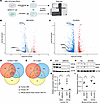 Figure 1
SMN deficiency downregulates KIF5A expression. (A) Two types of human neurons were generated and analyzed. Td-Tomato+ motor neurons (iMNs) were derived from human iPSCs by small molecule treatment and purified using fluorescence-activated cell sorting (FACS) under the control of the HB9 promoter. In parallel, i3Neurons (i3Ns) were produced by doxycycline-induced NGN2 expression from isogenic, integrated human H1 ESCs (Supplemental Table 1). Both iMNs and i3Ns were subsequently transduced with lentivirus carrying shRNA targeting SMN1/2 (SMN-KD), followed by RNA-seq. (B and C) Volcano plots showing differentially expressed genes (DEGs) in iMNs (B) and i3Ns (C) following SMN-KD. Each plot displays log2 fold change (x axis) versus negative log10 adjusted P-value (y axis). Genes significantly upregulated (red dots) or downregulated (blue dots) are defined by adjusted P < 0.01 and |log2 fold change| > 1. (D and E) Venn diagrams integrating RNA-seq datasets from iMNs (red), i3Ns (blue), and laser-microdissected motor neurons from SMA model mice (yellow) (37). Downregulated DEGs (D) and upregulated DEGs (E) were defined by adjusted P < 0.01 and |log2 fold change| > 1. Gene lists are provided in Supplemental Table 2. KIF5A was identified as a commonly downregulated gene. (F–I) Western blot analysis of i3N lysates following SMN-KD (F) and of primary mouse cortical neurons treated with siRNAs targeting Smn (H), confirming reduced SMN and KIF5A protein levels. Quantification of SMN and KIF5A protein levels relative to scrambled controls (SCR or Scr) is shown in G and I. Data represent 3 independent experiments. Statistical analysis was performed using an unpaired 2-tailed t test with Welch’s correction.
As expected, SMN1 and SMN2 RNA levels were significantly reduced (Figure 1, B and C). In iMNs, SMN-KD resulted in downregulation of 362 genes and upregulation of 138 genes (Figure 1, D and E, and Supplemental Table 2). In i3Ns, 1,530 genes were downregulated, and 688 genes were upregulated (Figure 1, D and E, Supplemental Table 2). Notably, 216 genes were commonly downregulated, and 57 genes were commonly upregulated in both cell types (Figure 1, D and E, and Supplemental Table 2). To narrow the list of SMN targets, we compared our set of up- and downregulated genes to a previously reported RNA-seq dataset of motor neurons isolated by laser microdissection from the spinal cord of an SMA mouse model (Figure 1, D and E, and Supplemental Table 2) (37). There were only 2 genes, ACAT2 and KIF5A, downregulated in all 3 datasets (Figure 1D). qPCR and immunoblot analysis confirmed that SMN reduction resulted in decreased KIF5A mRNA and protein levels in human i3Ns (Figure 1, F and G, and Supplemental Figure 1, A–C) and iMNs (Supplemental Figure 1, D–F), whereas ACAT2 protein levels remained unchanged despite reduced mRNA expression (Supplemental Figure 1, A–F). Although ACAT2 mRNA levels were reduced in SMA neurons, ACAT2 protein levels remain unchanged under the conditions tested, suggesting buffering at the posttranscriptional or protein-stability level. KIF5A is a neuron-enriched member of the kinesin-1 family together with KIF5B and KIF5C (38). Among these family members, KIF5A showed the most robust and consistent reduction following SMN depletion (Supplemental Figure 1, A–F). We further confirmed KIF5A mRNA reduction using single-molecule FISH (smFISH) by directly counting mRNA granules in SMN-KD i3Ns (Supplemental Figure 1, G–I). To test if KIF5A downregulation also occurs in mouse neurons and to assess the conservation of this effect across species, we performed siRNA-mediated Smn-KD in embryonic mouse primary cortical neurons. This resulted in a robust and reproducible reduction in both SMN and KIF5A protein levels (Figure 1, H and I). These findings validate the transcriptomic data and indicate that the downregulation of KIF5A is a conserved and specific response to SMN deficiency.
To validate our in vitro results in vivo, we first examined KIF5A expression in the spinal cord of an SMA mouse model known as SMNΔ7. These mice carry a homozygous deletion of the endogenous mouse Smn gene and are transgenic for 2 copies of the human SMN2 gene and approximately 12 copies of a human SMN cDNA lacking exon 7 (referred to as SMNΔ7). This combination results in a severe SMA phenotype that closely resembles the human disease (39, 40). Compared with 10-day-old SMNΔ7 age-matched control animals, spinal motor neurons from SMA mice exhibited significantly reduced KIF5A staining (Figure 2, A–F, and Supplemental Figure 2, A–D). Notably, a subset of motor neurons in SMA mice retained detectable KIF5A expression (Supplemental Figure 2, C and D), resulting in partial overlap of KIF5A intensity values between SMA and control groups (Figure 2F). Consistent with this observation, residual SMN expression was also preserved in some motor neurons (Supplemental Figure 2, C and D). Importantly, motor neurons with higher SMN intensity tended to maintain higher levels of KIF5A, revealing a positive correlation between SMN and KIF5A expression that was not observed with ChAT staining (Supplemental Figure 2E).
 Figure 2
KIF5A is downregulated in SMA model mice. (A–D) IHC analysis of whole spinal cord sections from P10 SMNΔ7 mice (A and B) and age-matched control mice (C and D). SMN is shown in green, KIF5A in red, and the motor neuron marker ChAT in gray. Two motor neurons within the white boxed regions in A and C are shown at higher magnification in B and D, respectively. (E and F) Spinal motor neurons from SMA model mice exhibited reduced KIF5A immunoreactivity. (E) Quantification of KIF5A intensity was performed by averaging measurements from more than 20 motor neurons sampled across nonconsecutive sections from 3 biologically independent mice per group. Statistical comparison was performed using an unpaired t test (2 tailed) on per-animal averages. (F) Individual KIF5A intensity values for all quantified motor neurons are shown. Scale bar: 100 μm (A and C).
Because SMNΔ7 mice exhibit a rapidly progressing, end-stage phenotype by P10, we further examined Smn2B/– mice, a milder SMA model with delayed disease onset and longer survival (41, 42). Using a genetic strategy to fluorescently label motor neuron nuclei, we analyzed KIF5A expression in spinal motor neurons in Smn2B/– mice at P17. P17 represents a symptomatic stage in this model, during which motor deficits are emerging but mice have not yet reached end stage, allowing assessment of molecular alterations prior to advanced disease stage (41, 42). Our analysis revealed a directionally consistent but modest trend toward reduced KIF5A expression, supporting the overall direction of the changes observed in the severe SMA model (Supplemental Figure 2, F–J).
Next, to validate our findings from SMN-KD models, we examined KIF5A expression in motor neurons derived from SMA patient iPSCs. We utilized iPSC lines from 4 healthy donors and 6 lines from patients with SMA (Figure 3A and Supplemental Table 1, which includes patient demographic details, including SMN2 copy number). We differentiated iPSCs from 4 healthy donors and 6 patients with SMA into motor neurons with comparable differentiation efficiencies (Figure 3, B and C, and Supplemental Figure 3, A–C). Compared with the 4 healthy donor lines, all 6 SMA patient–derived motor neurons exhibited reduced levels of both SMN and KIF5A mRNA and proteins (Figure 3, D–F). Importantly, upregulation of SMN using a lentivirus was sufficient to restore KIF5A protein levels (Figure 3, D–F), providing evidence that SMN directly regulates KIF5A levels. We also tested an alternative SMN-restoration strategy using the exon 7 splice-skipping ASO, nusinersen, on the SMA patient–derived motor neurons. After 20 days of treatment, we observed consistent increase in SMN expression and restoration of KIF5A levels (Figure 3, G–I), whereas effects on other kinesin-1 family members were limited or context dependent (Supplemental Figure 4, A–H). Together, these data support KIF5A reduction as an SMN-linked molecular change in SMA, although contributions from disease progression in vivo cannot be excluded.
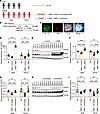 Figure 3
KIF5A is downregulated in SMA patient–derived iPSC motor neurons. (A–C) Experimental design and characterization of SMA patient–derived motor neurons. (A) Motor neurons were differentiated from 4 healthy donor and 6 SMA patient iPSC lines using small-molecule protocols (cell line information in Supplemental Table 1). (B) Schematic of the differentiation and treatment timeline. SMN overexpression was induced by lentiviral transduction on day 10 after plating, with samples collected on day 20. For nusinersen treatment, administration started on day 10, and samples were collected on day 30. (C) Representative immunocytochemistry images at day 20 showing βIII-tubulin, HB9, and ISL1/2 staining. Additional images and quantifications are shown in Supplemental Figure 3. Scale bar: 20 μm. (D–F) Restoration of KIF5A expression by SMN overexpression in SMA patient–derived motor neurons. (D) qPCR analysis of SMN and KIF5A mRNA levels in WT and SMA motor neurons transduced with empty vector (+ control) or SMN-expressing lentivirus (+ SMN). (E) Representative Western blots of SMN and KIF5A in WT and SMA-iMNs. (F) Quantification of SMN and KIF5A protein levels normalized to ACTB and expressed relative to WT. Individual data points are shown in Supplemental Figure 4D. (G–I) Effects of nusinersen on SMN and KIF5A expression in SMA patient–derived motor neurons. (G) qPCR analysis of SMN and KIF5A mRNA levels following nusinersen or control ASO treatment, with WT samples included for comparison. (H) Representative Western blots of SMN and KIF5A following nusinersen treatment. (I) Quantification of SMN and KIF5A protein levels normalized to ACTB. Individual data points are shown in Supplemental Figure 4H. All experiments were performed in triplicate with 3 biologically independent experiments.
We next investigated the functional effect of KIF5A downregulation in SMA. Given the established role of KIF5A in axonal transport and regeneration (30), we hypothesized that KIF5A downregulation contributes to the axonal growth defects observed in patients with SMA and SMA mouse models (43, 44). We first quantified neurite length and did not find any significant differences in SMN-KD i3Ns and SMA patient lines (Supplemental Figure 5, A–C). We next examined axonal regeneration in SMN-KD i3Ns (Figure 4A). SMN-KD significantly impaired axonal regeneration compared with control neurons (Figure 4, B and C). KIF5A deficiency alone also reduced axon regeneration (Supplemental Figure 5, D and E) without affecting other kinesin 5 family proteins (Supplemental Figure 5, F and G), consistent with previous reports (30). Importantly, restoring KIF5A expression provided almost full rescue of the axonal regeneration defect in SMN-KD i3Ns, independent of other protein family members (Figure 4, B and C, and Supplemental Figure 5, H and I). Thus, KIF5A functions downstream of, or parallel to, SMN in the maintenance of axonal integrity.
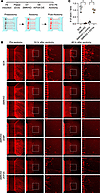 Figure 4
KIF5A overexpression rescues axonal regeneration defects in SMN-deficient neurons. (A) Experimental timeline and schema: i3Ns underwent SMN-KD for 12 days, followed by axonal transection using a microfluidic device. To overexpress KIF5A in SMN-deficient neurons, cells were infected with lentivirus expressing KIF5A 2 days after initiating SMN-KD. Axonal regeneration was assessed by live-cell imaging at 24 and 48 hours after transection on microfluidic device (XC-450, Xona Microfluidics). (B) Representative live-cell images before and after axonal transection. Axons extend from the cell body compartment (left) into the axonal compartment (right). The length of each microchannel is 450 μm. (C) Quantification of regenerating axons per microfluidic channel. Data represent the average number of regenerating axons per channel, normalized to control conditions (n = 3 images per condition from 2 independent experiments; 17–20 channels per image; >100 channels total). Statistical analysis was performed using 1-way ANOVA followed by Tukey’s multiple comparisons test.
Finally, we investigated the mechanism underlying KIF5A mRNA reduction following SMN-KD. First, we considered the possibility that SMN deficiency might alter KIF5A pre-mRNA splicing. However, reanalysis of our RNA-seq data revealed no clear splicing abnormalities in KIF5A. We then hypothesized that SMN deficiency might instead reduce KIF5A mRNA stability. To test this, we treated SMN-KD i3N with actinomycin D to halt new RNA synthesis and measured KIF5A mRNA levels over time by qPCR, using GAPDH as a stable control. Compared with control samples, SMN-KD neurons exhibited an accelerated decline in KIF5A mRNA levels, indicating reduced mRNA stability (Figure 5, A and B). We next examined whether this effect is mediated through untranslated regions of KIF5A mRNA. Given the low and variable transfection efficiency of postmitotic neurons, we performed luciferase reporter assays in HEK293T cells as a heterologous system for quantitative assessment of UTR-dependent regulation. Stable SMN-KD HEK293T cells were generated by lentiviral transduction followed by puromycin selection (Supplemental Figure 6, A–C), and dual-luciferase reporters containing no UTR, the KIF5A 5′-UTR, or the KIF5A 3′-UTR were transfected (Figure 5C). While luciferase activity from control and 5′-UTR–containing reporters was unchanged between control and SMN-KD cells, incorporation of the KIF5A 3′-UTR resulted in a significant reduction of reporter activity in SMN-KD cells (Figure 5D). These results indicate that SMN regulates KIF5A expression in a 3′-UTR–dependent manner.
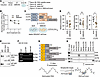 Figure 5
SMN contributes to KIF5A mRNA stability through 3′-UTR–dependent mechanism. The relationship between SMN protein levels and KIF5A mRNA stability was investigated. (A) Experimental schematic. At 12 days after induction, SMN knockdown (SMN-KD) and scrambled control (SCR) i3Ns were collected for the assays shown in panels B and E–H. (B) SMN-KD and SCR i3Ns were treated with actinomycin D (Act-D, 10 μg/mL) to inhibit de novo RNA synthesis, and cells were harvested at the indicated time points for qPCR analysis. KIF5A mRNA declined more rapidly in SMN-KD neurons than in SCR controls, with differences at 3 hours and 6 hours. Statistical significance was determined by 2-way ANOVA followed by Šídák’s multiple comparisons test. n = 3 independent experiments. (C) Schematic of the dual-luciferase reporter assay used to assess UTR-dependent regulation of KIF5A expression. Luciferase reporters containing no UTR, the KIF5A 5′-UTR, or the KIF5A 3′-UTR were transfected into stable SCR or SMN-KD HEK293T cells (Supplemental Figure 6, A–C). (D) Quantification of luciferase activity. Reporter activity from control and 5′-UTR constructs was unchanged between SCR and SMN-KD cells, whereas the KIF5A 3′-UTR reduced reporter activity in SMN-KD cells. (E) Immunoprecipitation (IP) using an anti-SMN antibody confirming efficient pulldown of SMN protein from i3N lysates. (F) RNA immunoprecipitation (RIP) followed by RT-PCR analysis demonstrating preferential enrichment of KIF5A mRNA over KIF5B mRNA in SMN immunoprecipitants. (G) Schematic of the RNA pulldown assay using biotinylated 5′ and 3′-UTRs of KIF5A, KIF5B, and KIF5C incubated with i3N lysates. (H) Immunoblot analysis of RNA pulldown fractions showed recovery of SMN with KIF5A 3′-UTRs and, to a lesser extent, with the KIF5B 3′-UTR, but not with any 5′-UTRs or KIF5C UTRs. FUS was not detected. Beads-only samples without RNA (No RNA) were used as a negative control, and blank lanes contained no sample.
To determine whether SMN interacts with KIF5A mRNA, we performed immunoprecipitation (IP) using an anti-SMN antibody (Figure 5E), followed by RNA extraction (RNA-IP) and RT-PCR analysis from i3Ns (Figure 5F). KIF5A mRNA was specifically enriched in SMN-IP samples (Figure 5F), compared with KIF5B or KIF5C, suggesting preferential enrichment of KIF5A transcripts in SMN immunoprecipitates. We further validated this association using RNA pulldown assays with biotinylated 5′- and 3′-UTRs of KIF5A, KIF5B, and KIF5C incubated with i3N lysates (Figure 5, A, G, and H). SMN was robustly recovered with KIF5A 3′-UTR and, to a lesser extent, with the KIF5B 3′-UTR, whereas another RNA-binding protein, FUS, was not detected in these pulldown fractions. Together, these experiments indicate that SMN is enriched in complexes containing KIF5A mRNA and functionally regulates its expression through a 3′-UTR–dependent mechanism. We note that additional RNA-binding proteins (including ACTB and TDP43) can also be recovered in KIF5A 3′-UTR pulldown assays, suggesting that the KIF5A 3′-UTR is part of a broader RNP complex rather than establishing direct SMN–RNA binding.
Finally, to test whether specific SMN domains contribute to the association between SMN and KIF5A mRNA, we generated FLAG-tagged SMN constructs carrying Tudor domain deletions or point mutations (W102A and Y130A) based on previous work (45), as well as a truncated axonal SMN construct (46), and performed RNA IP (RIP) assays (Supplemental Figure 6, D–G). The truncated axonal SMN construct, which failed to coimmunoprecipitate endogenous SMN, did not associate with KIF5A mRNA, whereas Tudor domain–deficient or mutant SMN constructs retained detectable association with KIF5A mRNA. Importantly, these Tudor-deficient constructs coimmunoprecipitated endogenous WT SMN, suggesting that the observed association is likely mediated indirectly through endogenous SMN (Supplemental Figure 6, F and G). Thus, while these experiments indicate that SMN associates with KIF5A mRNA either directly or indirectly, they do not allow definitive assignment of the Tudor domain as the sole mediator of this interaction. Taken together, these results suggest mechanisms underlying how KIF5A mRNA stability is compromised in the absence of SMN.


