
Abstract
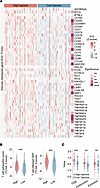
Hypoxia critically restricts the effectiveness of immunotherapy in triple-negative breast cancer (TNBC). Comprehensive bioinformatics analyses have demonstrated that highly hypoxic TNBC tumors exhibited elevated T cell exhaustion, increased immune checkpoint molecule expression, and diminished responsiveness to immune checkpoint blockade (ICB). Consequently, strategies aimed at alleviating tumor hypoxia may effectively augment ICB therapy. Although ultrasound-targeted microbubble cavitation (UTMC) has been shown to reduce tumor hypoxia, the precise molecular mechanisms remain unclear. Here, we provide evidence that UTMC activated endothelial nitric oxide synthase (eNOS) through G protein–coupled signaling, resembling pathways induced by fluid shear stress. UTMC-induced eNOS activation was largely Ca2+ dependent and resulted in increased nitric oxide production. Enhanced nitric oxide generation was associated with improved tumor perfusion and reduced hypoxia. Combining UTMC with anti–PD-L1 therapy markedly improved the tumor immune microenvironment, characterized by increased CD8+ T cell infiltration, reduced T cell exhaustion, diminished regulatory T cell infiltration, increased macrophage polarization from an M2 to M1 phenotype, and elevated production of proinflammatory cytokines. Collectively, our findings identified UTMC as a promising adjunctive therapeutic approach to mitigate hypoxia and enhance the efficacy of anti–PD-L1 immunotherapy in TNBC. These results support further translational evaluation of UTMC-based combination strategies in hypoxic TNBC.
Authors
Zhiyu Zhao, Li Ba, Siwei Li, Jianxin Wang, Yuzhou Luo, Sihan Wang, Yan Jin, Changjun Wu
This file is in Adobe Acrobat (PDF) format. If you have not installed and configured the Adobe Acrobat Reader on your system.
Having trouble reading a PDF?
PDFs are designed to be printed out and read, but if you prefer to read them online, you may find it easier if you increase the view size to 125%.
Having trouble saving a PDF?
Many versions of the free Acrobat Reader do not allow Save. You must instead save the PDF from the JCI Online page you downloaded it from. PC users: Right-click on the Download link and choose the option that says something like "Save Link As...". Mac users should hold the mouse button down on the link to get these same options.
Having trouble printing a PDF?
- Try printing one page at a time or to a newer printer.
- Try saving the file to disk before printing rather than opening it "on the fly." This requires that you configure your browser to "Save" rather than "Launch Application" for the file type "application/pdf", and can usually be done in the "Helper Applications" options.
- Make sure you are using the latest version of Adobe's Acrobat Reader.


