
Clinical Research and Public HealthGeneticsPulmonology
Open Access |  10.1172/jci.insight.199951
Multi-trait polygenic scores for COPD and COPD exacerbations implicate druggable proteins
Chengyue Zhang, Iain R. Konigsberg, Yixuan He, Jingzhou Zhang, Tinashe Chikowore, William B. Feldman, Xiaowei Hu, Yi Ding, Bogdan Pasaniuc, Diana Chang, Qingwen Chen, Jessica A. Lasky-Su, Julian Hecker, Martin D. Tobin, Jing Chen, Sean Kalra, Katherine A. Pratte, Hae Kyung Im, Emily S. Wan, Ani Manichaikul, Edwin K. Silverman, Russell P. Bowler, Leslie A. Lange, Victor E. Ortega, Alicia R. Martin, Michael H. Cho, and Matthew R. Moll
1Channing Division of Network Medicine, Mass General Brigham, Boston, Massachusetts, USA.
2Department of Biomedical Informatics, University of Colorado Anschutz Medical Campus, Aurora, Colorado, USA.
3Department of Epidemiology School of Public Health, UTHealth Houston, Houston, Texas, USA.
4Pulmonary Center, Boston University School of Medicine, Boston, Massachusetts, USA.
5Harvard Medical School, Boston, Massachusetts, USA.
6Division of Pharmacoepidemiology and Pharmacoeconomics, Mass General Brigham, Boston, Massachusetts, USA.
7Department of Public Health Genomics, University of Virginia, Charlottesville, Virginia, USA.
8Department of Medicine, DanaFarber Cancer Institute, Boston, Massachusetts, USA.
9Center for Computational Biomedicine, Institute for Biomedical Informatics, Perelman School of Medicine, University of Pennsylvania, Philadelphia, Pennsylvania, USA.
10Genentech, South San Francisco, California, USA.
11Department of Population Health Sciences, University of Leicester, Leicester, United Kingdom.
12Division of Biostatistics and Bioinformatics, National Jewish Health, Denver, Colorado, USA.
13Department of Human Genetics, Department of Medicine, University of Chicago, Chicago, Illinois, USA.
14Section on Pulmonary, Critical Care, Allergy, and Sleep Medicine, VA Boston Healthcare System, West Roxbury, Massachusetts, USA.
15Public Health Genomics Program, University of Virginia, Charlottesville, Virginia, USA.
16Department of Genetic Medicine, Cleveland Clinic Lerner College of Medicine, Cleveland, Ohio, USA.
17Division of Pulmonary and Critical Care Medicine, Mayo Clinic, Phoenix, Arizona, USA.
18Analytic and Translational Genetics Unit, Massachusetts General Hospital, Boston, Massachusetts, USA.
19Program in Medical & Population Genetics, Broad Institute, Cambridge, Massachusetts, USA.
Authorship note: CZ and IRK contributed equally and have been designated as co-first authors. MHC and MRM contributed equally and have been designated as co-last authors.
Find articles by Zhang, C. in: PubMed | Google Scholar
1Channing Division of Network Medicine, Mass General Brigham, Boston, Massachusetts, USA.
2Department of Biomedical Informatics, University of Colorado Anschutz Medical Campus, Aurora, Colorado, USA.
3Department of Epidemiology School of Public Health, UTHealth Houston, Houston, Texas, USA.
4Pulmonary Center, Boston University School of Medicine, Boston, Massachusetts, USA.
5Harvard Medical School, Boston, Massachusetts, USA.
6Division of Pharmacoepidemiology and Pharmacoeconomics, Mass General Brigham, Boston, Massachusetts, USA.
7Department of Public Health Genomics, University of Virginia, Charlottesville, Virginia, USA.
8Department of Medicine, DanaFarber Cancer Institute, Boston, Massachusetts, USA.
9Center for Computational Biomedicine, Institute for Biomedical Informatics, Perelman School of Medicine, University of Pennsylvania, Philadelphia, Pennsylvania, USA.
10Genentech, South San Francisco, California, USA.
11Department of Population Health Sciences, University of Leicester, Leicester, United Kingdom.
12Division of Biostatistics and Bioinformatics, National Jewish Health, Denver, Colorado, USA.
13Department of Human Genetics, Department of Medicine, University of Chicago, Chicago, Illinois, USA.
14Section on Pulmonary, Critical Care, Allergy, and Sleep Medicine, VA Boston Healthcare System, West Roxbury, Massachusetts, USA.
15Public Health Genomics Program, University of Virginia, Charlottesville, Virginia, USA.
16Department of Genetic Medicine, Cleveland Clinic Lerner College of Medicine, Cleveland, Ohio, USA.
17Division of Pulmonary and Critical Care Medicine, Mayo Clinic, Phoenix, Arizona, USA.
18Analytic and Translational Genetics Unit, Massachusetts General Hospital, Boston, Massachusetts, USA.
19Program in Medical & Population Genetics, Broad Institute, Cambridge, Massachusetts, USA.
Authorship note: CZ and IRK contributed equally and have been designated as co-first authors. MHC and MRM contributed equally and have been designated as co-last authors.
Find articles by Konigsberg, I. in: PubMed | Google Scholar
1Channing Division of Network Medicine, Mass General Brigham, Boston, Massachusetts, USA.
2Department of Biomedical Informatics, University of Colorado Anschutz Medical Campus, Aurora, Colorado, USA.
3Department of Epidemiology School of Public Health, UTHealth Houston, Houston, Texas, USA.
4Pulmonary Center, Boston University School of Medicine, Boston, Massachusetts, USA.
5Harvard Medical School, Boston, Massachusetts, USA.
6Division of Pharmacoepidemiology and Pharmacoeconomics, Mass General Brigham, Boston, Massachusetts, USA.
7Department of Public Health Genomics, University of Virginia, Charlottesville, Virginia, USA.
8Department of Medicine, DanaFarber Cancer Institute, Boston, Massachusetts, USA.
9Center for Computational Biomedicine, Institute for Biomedical Informatics, Perelman School of Medicine, University of Pennsylvania, Philadelphia, Pennsylvania, USA.
10Genentech, South San Francisco, California, USA.
11Department of Population Health Sciences, University of Leicester, Leicester, United Kingdom.
12Division of Biostatistics and Bioinformatics, National Jewish Health, Denver, Colorado, USA.
13Department of Human Genetics, Department of Medicine, University of Chicago, Chicago, Illinois, USA.
14Section on Pulmonary, Critical Care, Allergy, and Sleep Medicine, VA Boston Healthcare System, West Roxbury, Massachusetts, USA.
15Public Health Genomics Program, University of Virginia, Charlottesville, Virginia, USA.
16Department of Genetic Medicine, Cleveland Clinic Lerner College of Medicine, Cleveland, Ohio, USA.
17Division of Pulmonary and Critical Care Medicine, Mayo Clinic, Phoenix, Arizona, USA.
18Analytic and Translational Genetics Unit, Massachusetts General Hospital, Boston, Massachusetts, USA.
19Program in Medical & Population Genetics, Broad Institute, Cambridge, Massachusetts, USA.
Authorship note: CZ and IRK contributed equally and have been designated as co-first authors. MHC and MRM contributed equally and have been designated as co-last authors.
Find articles by He, Y. in: PubMed | Google Scholar
1Channing Division of Network Medicine, Mass General Brigham, Boston, Massachusetts, USA.
2Department of Biomedical Informatics, University of Colorado Anschutz Medical Campus, Aurora, Colorado, USA.
3Department of Epidemiology School of Public Health, UTHealth Houston, Houston, Texas, USA.
4Pulmonary Center, Boston University School of Medicine, Boston, Massachusetts, USA.
5Harvard Medical School, Boston, Massachusetts, USA.
6Division of Pharmacoepidemiology and Pharmacoeconomics, Mass General Brigham, Boston, Massachusetts, USA.
7Department of Public Health Genomics, University of Virginia, Charlottesville, Virginia, USA.
8Department of Medicine, DanaFarber Cancer Institute, Boston, Massachusetts, USA.
9Center for Computational Biomedicine, Institute for Biomedical Informatics, Perelman School of Medicine, University of Pennsylvania, Philadelphia, Pennsylvania, USA.
10Genentech, South San Francisco, California, USA.
11Department of Population Health Sciences, University of Leicester, Leicester, United Kingdom.
12Division of Biostatistics and Bioinformatics, National Jewish Health, Denver, Colorado, USA.
13Department of Human Genetics, Department of Medicine, University of Chicago, Chicago, Illinois, USA.
14Section on Pulmonary, Critical Care, Allergy, and Sleep Medicine, VA Boston Healthcare System, West Roxbury, Massachusetts, USA.
15Public Health Genomics Program, University of Virginia, Charlottesville, Virginia, USA.
16Department of Genetic Medicine, Cleveland Clinic Lerner College of Medicine, Cleveland, Ohio, USA.
17Division of Pulmonary and Critical Care Medicine, Mayo Clinic, Phoenix, Arizona, USA.
18Analytic and Translational Genetics Unit, Massachusetts General Hospital, Boston, Massachusetts, USA.
19Program in Medical & Population Genetics, Broad Institute, Cambridge, Massachusetts, USA.
Authorship note: CZ and IRK contributed equally and have been designated as co-first authors. MHC and MRM contributed equally and have been designated as co-last authors.
Find articles by Zhang, J. in: PubMed | Google Scholar
1Channing Division of Network Medicine, Mass General Brigham, Boston, Massachusetts, USA.
2Department of Biomedical Informatics, University of Colorado Anschutz Medical Campus, Aurora, Colorado, USA.
3Department of Epidemiology School of Public Health, UTHealth Houston, Houston, Texas, USA.
4Pulmonary Center, Boston University School of Medicine, Boston, Massachusetts, USA.
5Harvard Medical School, Boston, Massachusetts, USA.
6Division of Pharmacoepidemiology and Pharmacoeconomics, Mass General Brigham, Boston, Massachusetts, USA.
7Department of Public Health Genomics, University of Virginia, Charlottesville, Virginia, USA.
8Department of Medicine, DanaFarber Cancer Institute, Boston, Massachusetts, USA.
9Center for Computational Biomedicine, Institute for Biomedical Informatics, Perelman School of Medicine, University of Pennsylvania, Philadelphia, Pennsylvania, USA.
10Genentech, South San Francisco, California, USA.
11Department of Population Health Sciences, University of Leicester, Leicester, United Kingdom.
12Division of Biostatistics and Bioinformatics, National Jewish Health, Denver, Colorado, USA.
13Department of Human Genetics, Department of Medicine, University of Chicago, Chicago, Illinois, USA.
14Section on Pulmonary, Critical Care, Allergy, and Sleep Medicine, VA Boston Healthcare System, West Roxbury, Massachusetts, USA.
15Public Health Genomics Program, University of Virginia, Charlottesville, Virginia, USA.
16Department of Genetic Medicine, Cleveland Clinic Lerner College of Medicine, Cleveland, Ohio, USA.
17Division of Pulmonary and Critical Care Medicine, Mayo Clinic, Phoenix, Arizona, USA.
18Analytic and Translational Genetics Unit, Massachusetts General Hospital, Boston, Massachusetts, USA.
19Program in Medical & Population Genetics, Broad Institute, Cambridge, Massachusetts, USA.
Authorship note: CZ and IRK contributed equally and have been designated as co-first authors. MHC and MRM contributed equally and have been designated as co-last authors.
Find articles by Chikowore, T. in: PubMed | Google Scholar
1Channing Division of Network Medicine, Mass General Brigham, Boston, Massachusetts, USA.
2Department of Biomedical Informatics, University of Colorado Anschutz Medical Campus, Aurora, Colorado, USA.
3Department of Epidemiology School of Public Health, UTHealth Houston, Houston, Texas, USA.
4Pulmonary Center, Boston University School of Medicine, Boston, Massachusetts, USA.
5Harvard Medical School, Boston, Massachusetts, USA.
6Division of Pharmacoepidemiology and Pharmacoeconomics, Mass General Brigham, Boston, Massachusetts, USA.
7Department of Public Health Genomics, University of Virginia, Charlottesville, Virginia, USA.
8Department of Medicine, DanaFarber Cancer Institute, Boston, Massachusetts, USA.
9Center for Computational Biomedicine, Institute for Biomedical Informatics, Perelman School of Medicine, University of Pennsylvania, Philadelphia, Pennsylvania, USA.
10Genentech, South San Francisco, California, USA.
11Department of Population Health Sciences, University of Leicester, Leicester, United Kingdom.
12Division of Biostatistics and Bioinformatics, National Jewish Health, Denver, Colorado, USA.
13Department of Human Genetics, Department of Medicine, University of Chicago, Chicago, Illinois, USA.
14Section on Pulmonary, Critical Care, Allergy, and Sleep Medicine, VA Boston Healthcare System, West Roxbury, Massachusetts, USA.
15Public Health Genomics Program, University of Virginia, Charlottesville, Virginia, USA.
16Department of Genetic Medicine, Cleveland Clinic Lerner College of Medicine, Cleveland, Ohio, USA.
17Division of Pulmonary and Critical Care Medicine, Mayo Clinic, Phoenix, Arizona, USA.
18Analytic and Translational Genetics Unit, Massachusetts General Hospital, Boston, Massachusetts, USA.
19Program in Medical & Population Genetics, Broad Institute, Cambridge, Massachusetts, USA.
Authorship note: CZ and IRK contributed equally and have been designated as co-first authors. MHC and MRM contributed equally and have been designated as co-last authors.
Find articles by Feldman, W. in: PubMed | Google Scholar
1Channing Division of Network Medicine, Mass General Brigham, Boston, Massachusetts, USA.
2Department of Biomedical Informatics, University of Colorado Anschutz Medical Campus, Aurora, Colorado, USA.
3Department of Epidemiology School of Public Health, UTHealth Houston, Houston, Texas, USA.
4Pulmonary Center, Boston University School of Medicine, Boston, Massachusetts, USA.
5Harvard Medical School, Boston, Massachusetts, USA.
6Division of Pharmacoepidemiology and Pharmacoeconomics, Mass General Brigham, Boston, Massachusetts, USA.
7Department of Public Health Genomics, University of Virginia, Charlottesville, Virginia, USA.
8Department of Medicine, DanaFarber Cancer Institute, Boston, Massachusetts, USA.
9Center for Computational Biomedicine, Institute for Biomedical Informatics, Perelman School of Medicine, University of Pennsylvania, Philadelphia, Pennsylvania, USA.
10Genentech, South San Francisco, California, USA.
11Department of Population Health Sciences, University of Leicester, Leicester, United Kingdom.
12Division of Biostatistics and Bioinformatics, National Jewish Health, Denver, Colorado, USA.
13Department of Human Genetics, Department of Medicine, University of Chicago, Chicago, Illinois, USA.
14Section on Pulmonary, Critical Care, Allergy, and Sleep Medicine, VA Boston Healthcare System, West Roxbury, Massachusetts, USA.
15Public Health Genomics Program, University of Virginia, Charlottesville, Virginia, USA.
16Department of Genetic Medicine, Cleveland Clinic Lerner College of Medicine, Cleveland, Ohio, USA.
17Division of Pulmonary and Critical Care Medicine, Mayo Clinic, Phoenix, Arizona, USA.
18Analytic and Translational Genetics Unit, Massachusetts General Hospital, Boston, Massachusetts, USA.
19Program in Medical & Population Genetics, Broad Institute, Cambridge, Massachusetts, USA.
Authorship note: CZ and IRK contributed equally and have been designated as co-first authors. MHC and MRM contributed equally and have been designated as co-last authors.
Find articles by Hu, X. in: PubMed | Google Scholar
1Channing Division of Network Medicine, Mass General Brigham, Boston, Massachusetts, USA.
2Department of Biomedical Informatics, University of Colorado Anschutz Medical Campus, Aurora, Colorado, USA.
3Department of Epidemiology School of Public Health, UTHealth Houston, Houston, Texas, USA.
4Pulmonary Center, Boston University School of Medicine, Boston, Massachusetts, USA.
5Harvard Medical School, Boston, Massachusetts, USA.
6Division of Pharmacoepidemiology and Pharmacoeconomics, Mass General Brigham, Boston, Massachusetts, USA.
7Department of Public Health Genomics, University of Virginia, Charlottesville, Virginia, USA.
8Department of Medicine, DanaFarber Cancer Institute, Boston, Massachusetts, USA.
9Center for Computational Biomedicine, Institute for Biomedical Informatics, Perelman School of Medicine, University of Pennsylvania, Philadelphia, Pennsylvania, USA.
10Genentech, South San Francisco, California, USA.
11Department of Population Health Sciences, University of Leicester, Leicester, United Kingdom.
12Division of Biostatistics and Bioinformatics, National Jewish Health, Denver, Colorado, USA.
13Department of Human Genetics, Department of Medicine, University of Chicago, Chicago, Illinois, USA.
14Section on Pulmonary, Critical Care, Allergy, and Sleep Medicine, VA Boston Healthcare System, West Roxbury, Massachusetts, USA.
15Public Health Genomics Program, University of Virginia, Charlottesville, Virginia, USA.
16Department of Genetic Medicine, Cleveland Clinic Lerner College of Medicine, Cleveland, Ohio, USA.
17Division of Pulmonary and Critical Care Medicine, Mayo Clinic, Phoenix, Arizona, USA.
18Analytic and Translational Genetics Unit, Massachusetts General Hospital, Boston, Massachusetts, USA.
19Program in Medical & Population Genetics, Broad Institute, Cambridge, Massachusetts, USA.
Authorship note: CZ and IRK contributed equally and have been designated as co-first authors. MHC and MRM contributed equally and have been designated as co-last authors.
Find articles by Ding, Y. in: PubMed | Google Scholar
1Channing Division of Network Medicine, Mass General Brigham, Boston, Massachusetts, USA.
2Department of Biomedical Informatics, University of Colorado Anschutz Medical Campus, Aurora, Colorado, USA.
3Department of Epidemiology School of Public Health, UTHealth Houston, Houston, Texas, USA.
4Pulmonary Center, Boston University School of Medicine, Boston, Massachusetts, USA.
5Harvard Medical School, Boston, Massachusetts, USA.
6Division of Pharmacoepidemiology and Pharmacoeconomics, Mass General Brigham, Boston, Massachusetts, USA.
7Department of Public Health Genomics, University of Virginia, Charlottesville, Virginia, USA.
8Department of Medicine, DanaFarber Cancer Institute, Boston, Massachusetts, USA.
9Center for Computational Biomedicine, Institute for Biomedical Informatics, Perelman School of Medicine, University of Pennsylvania, Philadelphia, Pennsylvania, USA.
10Genentech, South San Francisco, California, USA.
11Department of Population Health Sciences, University of Leicester, Leicester, United Kingdom.
12Division of Biostatistics and Bioinformatics, National Jewish Health, Denver, Colorado, USA.
13Department of Human Genetics, Department of Medicine, University of Chicago, Chicago, Illinois, USA.
14Section on Pulmonary, Critical Care, Allergy, and Sleep Medicine, VA Boston Healthcare System, West Roxbury, Massachusetts, USA.
15Public Health Genomics Program, University of Virginia, Charlottesville, Virginia, USA.
16Department of Genetic Medicine, Cleveland Clinic Lerner College of Medicine, Cleveland, Ohio, USA.
17Division of Pulmonary and Critical Care Medicine, Mayo Clinic, Phoenix, Arizona, USA.
18Analytic and Translational Genetics Unit, Massachusetts General Hospital, Boston, Massachusetts, USA.
19Program in Medical & Population Genetics, Broad Institute, Cambridge, Massachusetts, USA.
Authorship note: CZ and IRK contributed equally and have been designated as co-first authors. MHC and MRM contributed equally and have been designated as co-last authors.
Find articles by Pasaniuc, B. in: PubMed | Google Scholar
1Channing Division of Network Medicine, Mass General Brigham, Boston, Massachusetts, USA.
2Department of Biomedical Informatics, University of Colorado Anschutz Medical Campus, Aurora, Colorado, USA.
3Department of Epidemiology School of Public Health, UTHealth Houston, Houston, Texas, USA.
4Pulmonary Center, Boston University School of Medicine, Boston, Massachusetts, USA.
5Harvard Medical School, Boston, Massachusetts, USA.
6Division of Pharmacoepidemiology and Pharmacoeconomics, Mass General Brigham, Boston, Massachusetts, USA.
7Department of Public Health Genomics, University of Virginia, Charlottesville, Virginia, USA.
8Department of Medicine, DanaFarber Cancer Institute, Boston, Massachusetts, USA.
9Center for Computational Biomedicine, Institute for Biomedical Informatics, Perelman School of Medicine, University of Pennsylvania, Philadelphia, Pennsylvania, USA.
10Genentech, South San Francisco, California, USA.
11Department of Population Health Sciences, University of Leicester, Leicester, United Kingdom.
12Division of Biostatistics and Bioinformatics, National Jewish Health, Denver, Colorado, USA.
13Department of Human Genetics, Department of Medicine, University of Chicago, Chicago, Illinois, USA.
14Section on Pulmonary, Critical Care, Allergy, and Sleep Medicine, VA Boston Healthcare System, West Roxbury, Massachusetts, USA.
15Public Health Genomics Program, University of Virginia, Charlottesville, Virginia, USA.
16Department of Genetic Medicine, Cleveland Clinic Lerner College of Medicine, Cleveland, Ohio, USA.
17Division of Pulmonary and Critical Care Medicine, Mayo Clinic, Phoenix, Arizona, USA.
18Analytic and Translational Genetics Unit, Massachusetts General Hospital, Boston, Massachusetts, USA.
19Program in Medical & Population Genetics, Broad Institute, Cambridge, Massachusetts, USA.
Authorship note: CZ and IRK contributed equally and have been designated as co-first authors. MHC and MRM contributed equally and have been designated as co-last authors.
Find articles by Chang, D. in: PubMed | Google Scholar
1Channing Division of Network Medicine, Mass General Brigham, Boston, Massachusetts, USA.
2Department of Biomedical Informatics, University of Colorado Anschutz Medical Campus, Aurora, Colorado, USA.
3Department of Epidemiology School of Public Health, UTHealth Houston, Houston, Texas, USA.
4Pulmonary Center, Boston University School of Medicine, Boston, Massachusetts, USA.
5Harvard Medical School, Boston, Massachusetts, USA.
6Division of Pharmacoepidemiology and Pharmacoeconomics, Mass General Brigham, Boston, Massachusetts, USA.
7Department of Public Health Genomics, University of Virginia, Charlottesville, Virginia, USA.
8Department of Medicine, DanaFarber Cancer Institute, Boston, Massachusetts, USA.
9Center for Computational Biomedicine, Institute for Biomedical Informatics, Perelman School of Medicine, University of Pennsylvania, Philadelphia, Pennsylvania, USA.
10Genentech, South San Francisco, California, USA.
11Department of Population Health Sciences, University of Leicester, Leicester, United Kingdom.
12Division of Biostatistics and Bioinformatics, National Jewish Health, Denver, Colorado, USA.
13Department of Human Genetics, Department of Medicine, University of Chicago, Chicago, Illinois, USA.
14Section on Pulmonary, Critical Care, Allergy, and Sleep Medicine, VA Boston Healthcare System, West Roxbury, Massachusetts, USA.
15Public Health Genomics Program, University of Virginia, Charlottesville, Virginia, USA.
16Department of Genetic Medicine, Cleveland Clinic Lerner College of Medicine, Cleveland, Ohio, USA.
17Division of Pulmonary and Critical Care Medicine, Mayo Clinic, Phoenix, Arizona, USA.
18Analytic and Translational Genetics Unit, Massachusetts General Hospital, Boston, Massachusetts, USA.
19Program in Medical & Population Genetics, Broad Institute, Cambridge, Massachusetts, USA.
Authorship note: CZ and IRK contributed equally and have been designated as co-first authors. MHC and MRM contributed equally and have been designated as co-last authors.
Find articles by
Chen, Q.
in:
PubMed
|
Google Scholar
|

1Channing Division of Network Medicine, Mass General Brigham, Boston, Massachusetts, USA.
2Department of Biomedical Informatics, University of Colorado Anschutz Medical Campus, Aurora, Colorado, USA.
3Department of Epidemiology School of Public Health, UTHealth Houston, Houston, Texas, USA.
4Pulmonary Center, Boston University School of Medicine, Boston, Massachusetts, USA.
5Harvard Medical School, Boston, Massachusetts, USA.
6Division of Pharmacoepidemiology and Pharmacoeconomics, Mass General Brigham, Boston, Massachusetts, USA.
7Department of Public Health Genomics, University of Virginia, Charlottesville, Virginia, USA.
8Department of Medicine, DanaFarber Cancer Institute, Boston, Massachusetts, USA.
9Center for Computational Biomedicine, Institute for Biomedical Informatics, Perelman School of Medicine, University of Pennsylvania, Philadelphia, Pennsylvania, USA.
10Genentech, South San Francisco, California, USA.
11Department of Population Health Sciences, University of Leicester, Leicester, United Kingdom.
12Division of Biostatistics and Bioinformatics, National Jewish Health, Denver, Colorado, USA.
13Department of Human Genetics, Department of Medicine, University of Chicago, Chicago, Illinois, USA.
14Section on Pulmonary, Critical Care, Allergy, and Sleep Medicine, VA Boston Healthcare System, West Roxbury, Massachusetts, USA.
15Public Health Genomics Program, University of Virginia, Charlottesville, Virginia, USA.
16Department of Genetic Medicine, Cleveland Clinic Lerner College of Medicine, Cleveland, Ohio, USA.
17Division of Pulmonary and Critical Care Medicine, Mayo Clinic, Phoenix, Arizona, USA.
18Analytic and Translational Genetics Unit, Massachusetts General Hospital, Boston, Massachusetts, USA.
19Program in Medical & Population Genetics, Broad Institute, Cambridge, Massachusetts, USA.
Authorship note: CZ and IRK contributed equally and have been designated as co-first authors. MHC and MRM contributed equally and have been designated as co-last authors.
Find articles by Lasky-Su, J. in: PubMed | Google Scholar
1Channing Division of Network Medicine, Mass General Brigham, Boston, Massachusetts, USA.
2Department of Biomedical Informatics, University of Colorado Anschutz Medical Campus, Aurora, Colorado, USA.
3Department of Epidemiology School of Public Health, UTHealth Houston, Houston, Texas, USA.
4Pulmonary Center, Boston University School of Medicine, Boston, Massachusetts, USA.
5Harvard Medical School, Boston, Massachusetts, USA.
6Division of Pharmacoepidemiology and Pharmacoeconomics, Mass General Brigham, Boston, Massachusetts, USA.
7Department of Public Health Genomics, University of Virginia, Charlottesville, Virginia, USA.
8Department of Medicine, DanaFarber Cancer Institute, Boston, Massachusetts, USA.
9Center for Computational Biomedicine, Institute for Biomedical Informatics, Perelman School of Medicine, University of Pennsylvania, Philadelphia, Pennsylvania, USA.
10Genentech, South San Francisco, California, USA.
11Department of Population Health Sciences, University of Leicester, Leicester, United Kingdom.
12Division of Biostatistics and Bioinformatics, National Jewish Health, Denver, Colorado, USA.
13Department of Human Genetics, Department of Medicine, University of Chicago, Chicago, Illinois, USA.
14Section on Pulmonary, Critical Care, Allergy, and Sleep Medicine, VA Boston Healthcare System, West Roxbury, Massachusetts, USA.
15Public Health Genomics Program, University of Virginia, Charlottesville, Virginia, USA.
16Department of Genetic Medicine, Cleveland Clinic Lerner College of Medicine, Cleveland, Ohio, USA.
17Division of Pulmonary and Critical Care Medicine, Mayo Clinic, Phoenix, Arizona, USA.
18Analytic and Translational Genetics Unit, Massachusetts General Hospital, Boston, Massachusetts, USA.
19Program in Medical & Population Genetics, Broad Institute, Cambridge, Massachusetts, USA.
Authorship note: CZ and IRK contributed equally and have been designated as co-first authors. MHC and MRM contributed equally and have been designated as co-last authors.
Find articles by Hecker, J. in: PubMed | Google Scholar
1Channing Division of Network Medicine, Mass General Brigham, Boston, Massachusetts, USA.
2Department of Biomedical Informatics, University of Colorado Anschutz Medical Campus, Aurora, Colorado, USA.
3Department of Epidemiology School of Public Health, UTHealth Houston, Houston, Texas, USA.
4Pulmonary Center, Boston University School of Medicine, Boston, Massachusetts, USA.
5Harvard Medical School, Boston, Massachusetts, USA.
6Division of Pharmacoepidemiology and Pharmacoeconomics, Mass General Brigham, Boston, Massachusetts, USA.
7Department of Public Health Genomics, University of Virginia, Charlottesville, Virginia, USA.
8Department of Medicine, DanaFarber Cancer Institute, Boston, Massachusetts, USA.
9Center for Computational Biomedicine, Institute for Biomedical Informatics, Perelman School of Medicine, University of Pennsylvania, Philadelphia, Pennsylvania, USA.
10Genentech, South San Francisco, California, USA.
11Department of Population Health Sciences, University of Leicester, Leicester, United Kingdom.
12Division of Biostatistics and Bioinformatics, National Jewish Health, Denver, Colorado, USA.
13Department of Human Genetics, Department of Medicine, University of Chicago, Chicago, Illinois, USA.
14Section on Pulmonary, Critical Care, Allergy, and Sleep Medicine, VA Boston Healthcare System, West Roxbury, Massachusetts, USA.
15Public Health Genomics Program, University of Virginia, Charlottesville, Virginia, USA.
16Department of Genetic Medicine, Cleveland Clinic Lerner College of Medicine, Cleveland, Ohio, USA.
17Division of Pulmonary and Critical Care Medicine, Mayo Clinic, Phoenix, Arizona, USA.
18Analytic and Translational Genetics Unit, Massachusetts General Hospital, Boston, Massachusetts, USA.
19Program in Medical & Population Genetics, Broad Institute, Cambridge, Massachusetts, USA.
Authorship note: CZ and IRK contributed equally and have been designated as co-first authors. MHC and MRM contributed equally and have been designated as co-last authors.
Find articles by Tobin, M. in: PubMed | Google Scholar
1Channing Division of Network Medicine, Mass General Brigham, Boston, Massachusetts, USA.
2Department of Biomedical Informatics, University of Colorado Anschutz Medical Campus, Aurora, Colorado, USA.
3Department of Epidemiology School of Public Health, UTHealth Houston, Houston, Texas, USA.
4Pulmonary Center, Boston University School of Medicine, Boston, Massachusetts, USA.
5Harvard Medical School, Boston, Massachusetts, USA.
6Division of Pharmacoepidemiology and Pharmacoeconomics, Mass General Brigham, Boston, Massachusetts, USA.
7Department of Public Health Genomics, University of Virginia, Charlottesville, Virginia, USA.
8Department of Medicine, DanaFarber Cancer Institute, Boston, Massachusetts, USA.
9Center for Computational Biomedicine, Institute for Biomedical Informatics, Perelman School of Medicine, University of Pennsylvania, Philadelphia, Pennsylvania, USA.
10Genentech, South San Francisco, California, USA.
11Department of Population Health Sciences, University of Leicester, Leicester, United Kingdom.
12Division of Biostatistics and Bioinformatics, National Jewish Health, Denver, Colorado, USA.
13Department of Human Genetics, Department of Medicine, University of Chicago, Chicago, Illinois, USA.
14Section on Pulmonary, Critical Care, Allergy, and Sleep Medicine, VA Boston Healthcare System, West Roxbury, Massachusetts, USA.
15Public Health Genomics Program, University of Virginia, Charlottesville, Virginia, USA.
16Department of Genetic Medicine, Cleveland Clinic Lerner College of Medicine, Cleveland, Ohio, USA.
17Division of Pulmonary and Critical Care Medicine, Mayo Clinic, Phoenix, Arizona, USA.
18Analytic and Translational Genetics Unit, Massachusetts General Hospital, Boston, Massachusetts, USA.
19Program in Medical & Population Genetics, Broad Institute, Cambridge, Massachusetts, USA.
Authorship note: CZ and IRK contributed equally and have been designated as co-first authors. MHC and MRM contributed equally and have been designated as co-last authors.
Find articles by Chen, J. in: PubMed | Google Scholar
1Channing Division of Network Medicine, Mass General Brigham, Boston, Massachusetts, USA.
2Department of Biomedical Informatics, University of Colorado Anschutz Medical Campus, Aurora, Colorado, USA.
3Department of Epidemiology School of Public Health, UTHealth Houston, Houston, Texas, USA.
4Pulmonary Center, Boston University School of Medicine, Boston, Massachusetts, USA.
5Harvard Medical School, Boston, Massachusetts, USA.
6Division of Pharmacoepidemiology and Pharmacoeconomics, Mass General Brigham, Boston, Massachusetts, USA.
7Department of Public Health Genomics, University of Virginia, Charlottesville, Virginia, USA.
8Department of Medicine, DanaFarber Cancer Institute, Boston, Massachusetts, USA.
9Center for Computational Biomedicine, Institute for Biomedical Informatics, Perelman School of Medicine, University of Pennsylvania, Philadelphia, Pennsylvania, USA.
10Genentech, South San Francisco, California, USA.
11Department of Population Health Sciences, University of Leicester, Leicester, United Kingdom.
12Division of Biostatistics and Bioinformatics, National Jewish Health, Denver, Colorado, USA.
13Department of Human Genetics, Department of Medicine, University of Chicago, Chicago, Illinois, USA.
14Section on Pulmonary, Critical Care, Allergy, and Sleep Medicine, VA Boston Healthcare System, West Roxbury, Massachusetts, USA.
15Public Health Genomics Program, University of Virginia, Charlottesville, Virginia, USA.
16Department of Genetic Medicine, Cleveland Clinic Lerner College of Medicine, Cleveland, Ohio, USA.
17Division of Pulmonary and Critical Care Medicine, Mayo Clinic, Phoenix, Arizona, USA.
18Analytic and Translational Genetics Unit, Massachusetts General Hospital, Boston, Massachusetts, USA.
19Program in Medical & Population Genetics, Broad Institute, Cambridge, Massachusetts, USA.
Authorship note: CZ and IRK contributed equally and have been designated as co-first authors. MHC and MRM contributed equally and have been designated as co-last authors.
Find articles by Kalra, S. in: PubMed | Google Scholar
1Channing Division of Network Medicine, Mass General Brigham, Boston, Massachusetts, USA.
2Department of Biomedical Informatics, University of Colorado Anschutz Medical Campus, Aurora, Colorado, USA.
3Department of Epidemiology School of Public Health, UTHealth Houston, Houston, Texas, USA.
4Pulmonary Center, Boston University School of Medicine, Boston, Massachusetts, USA.
5Harvard Medical School, Boston, Massachusetts, USA.
6Division of Pharmacoepidemiology and Pharmacoeconomics, Mass General Brigham, Boston, Massachusetts, USA.
7Department of Public Health Genomics, University of Virginia, Charlottesville, Virginia, USA.
8Department of Medicine, DanaFarber Cancer Institute, Boston, Massachusetts, USA.
9Center for Computational Biomedicine, Institute for Biomedical Informatics, Perelman School of Medicine, University of Pennsylvania, Philadelphia, Pennsylvania, USA.
10Genentech, South San Francisco, California, USA.
11Department of Population Health Sciences, University of Leicester, Leicester, United Kingdom.
12Division of Biostatistics and Bioinformatics, National Jewish Health, Denver, Colorado, USA.
13Department of Human Genetics, Department of Medicine, University of Chicago, Chicago, Illinois, USA.
14Section on Pulmonary, Critical Care, Allergy, and Sleep Medicine, VA Boston Healthcare System, West Roxbury, Massachusetts, USA.
15Public Health Genomics Program, University of Virginia, Charlottesville, Virginia, USA.
16Department of Genetic Medicine, Cleveland Clinic Lerner College of Medicine, Cleveland, Ohio, USA.
17Division of Pulmonary and Critical Care Medicine, Mayo Clinic, Phoenix, Arizona, USA.
18Analytic and Translational Genetics Unit, Massachusetts General Hospital, Boston, Massachusetts, USA.
19Program in Medical & Population Genetics, Broad Institute, Cambridge, Massachusetts, USA.
Authorship note: CZ and IRK contributed equally and have been designated as co-first authors. MHC and MRM contributed equally and have been designated as co-last authors.
Find articles by Pratte, K. in: PubMed | Google Scholar
1Channing Division of Network Medicine, Mass General Brigham, Boston, Massachusetts, USA.
2Department of Biomedical Informatics, University of Colorado Anschutz Medical Campus, Aurora, Colorado, USA.
3Department of Epidemiology School of Public Health, UTHealth Houston, Houston, Texas, USA.
4Pulmonary Center, Boston University School of Medicine, Boston, Massachusetts, USA.
5Harvard Medical School, Boston, Massachusetts, USA.
6Division of Pharmacoepidemiology and Pharmacoeconomics, Mass General Brigham, Boston, Massachusetts, USA.
7Department of Public Health Genomics, University of Virginia, Charlottesville, Virginia, USA.
8Department of Medicine, DanaFarber Cancer Institute, Boston, Massachusetts, USA.
9Center for Computational Biomedicine, Institute for Biomedical Informatics, Perelman School of Medicine, University of Pennsylvania, Philadelphia, Pennsylvania, USA.
10Genentech, South San Francisco, California, USA.
11Department of Population Health Sciences, University of Leicester, Leicester, United Kingdom.
12Division of Biostatistics and Bioinformatics, National Jewish Health, Denver, Colorado, USA.
13Department of Human Genetics, Department of Medicine, University of Chicago, Chicago, Illinois, USA.
14Section on Pulmonary, Critical Care, Allergy, and Sleep Medicine, VA Boston Healthcare System, West Roxbury, Massachusetts, USA.
15Public Health Genomics Program, University of Virginia, Charlottesville, Virginia, USA.
16Department of Genetic Medicine, Cleveland Clinic Lerner College of Medicine, Cleveland, Ohio, USA.
17Division of Pulmonary and Critical Care Medicine, Mayo Clinic, Phoenix, Arizona, USA.
18Analytic and Translational Genetics Unit, Massachusetts General Hospital, Boston, Massachusetts, USA.
19Program in Medical & Population Genetics, Broad Institute, Cambridge, Massachusetts, USA.
Authorship note: CZ and IRK contributed equally and have been designated as co-first authors. MHC and MRM contributed equally and have been designated as co-last authors.
Find articles by Im, H. in: PubMed | Google Scholar
1Channing Division of Network Medicine, Mass General Brigham, Boston, Massachusetts, USA.
2Department of Biomedical Informatics, University of Colorado Anschutz Medical Campus, Aurora, Colorado, USA.
3Department of Epidemiology School of Public Health, UTHealth Houston, Houston, Texas, USA.
4Pulmonary Center, Boston University School of Medicine, Boston, Massachusetts, USA.
5Harvard Medical School, Boston, Massachusetts, USA.
6Division of Pharmacoepidemiology and Pharmacoeconomics, Mass General Brigham, Boston, Massachusetts, USA.
7Department of Public Health Genomics, University of Virginia, Charlottesville, Virginia, USA.
8Department of Medicine, DanaFarber Cancer Institute, Boston, Massachusetts, USA.
9Center for Computational Biomedicine, Institute for Biomedical Informatics, Perelman School of Medicine, University of Pennsylvania, Philadelphia, Pennsylvania, USA.
10Genentech, South San Francisco, California, USA.
11Department of Population Health Sciences, University of Leicester, Leicester, United Kingdom.
12Division of Biostatistics and Bioinformatics, National Jewish Health, Denver, Colorado, USA.
13Department of Human Genetics, Department of Medicine, University of Chicago, Chicago, Illinois, USA.
14Section on Pulmonary, Critical Care, Allergy, and Sleep Medicine, VA Boston Healthcare System, West Roxbury, Massachusetts, USA.
15Public Health Genomics Program, University of Virginia, Charlottesville, Virginia, USA.
16Department of Genetic Medicine, Cleveland Clinic Lerner College of Medicine, Cleveland, Ohio, USA.
17Division of Pulmonary and Critical Care Medicine, Mayo Clinic, Phoenix, Arizona, USA.
18Analytic and Translational Genetics Unit, Massachusetts General Hospital, Boston, Massachusetts, USA.
19Program in Medical & Population Genetics, Broad Institute, Cambridge, Massachusetts, USA.
Authorship note: CZ and IRK contributed equally and have been designated as co-first authors. MHC and MRM contributed equally and have been designated as co-last authors.
Find articles by Wan, E. in: PubMed | Google Scholar
1Channing Division of Network Medicine, Mass General Brigham, Boston, Massachusetts, USA.
2Department of Biomedical Informatics, University of Colorado Anschutz Medical Campus, Aurora, Colorado, USA.
3Department of Epidemiology School of Public Health, UTHealth Houston, Houston, Texas, USA.
4Pulmonary Center, Boston University School of Medicine, Boston, Massachusetts, USA.
5Harvard Medical School, Boston, Massachusetts, USA.
6Division of Pharmacoepidemiology and Pharmacoeconomics, Mass General Brigham, Boston, Massachusetts, USA.
7Department of Public Health Genomics, University of Virginia, Charlottesville, Virginia, USA.
8Department of Medicine, DanaFarber Cancer Institute, Boston, Massachusetts, USA.
9Center for Computational Biomedicine, Institute for Biomedical Informatics, Perelman School of Medicine, University of Pennsylvania, Philadelphia, Pennsylvania, USA.
10Genentech, South San Francisco, California, USA.
11Department of Population Health Sciences, University of Leicester, Leicester, United Kingdom.
12Division of Biostatistics and Bioinformatics, National Jewish Health, Denver, Colorado, USA.
13Department of Human Genetics, Department of Medicine, University of Chicago, Chicago, Illinois, USA.
14Section on Pulmonary, Critical Care, Allergy, and Sleep Medicine, VA Boston Healthcare System, West Roxbury, Massachusetts, USA.
15Public Health Genomics Program, University of Virginia, Charlottesville, Virginia, USA.
16Department of Genetic Medicine, Cleveland Clinic Lerner College of Medicine, Cleveland, Ohio, USA.
17Division of Pulmonary and Critical Care Medicine, Mayo Clinic, Phoenix, Arizona, USA.
18Analytic and Translational Genetics Unit, Massachusetts General Hospital, Boston, Massachusetts, USA.
19Program in Medical & Population Genetics, Broad Institute, Cambridge, Massachusetts, USA.
Authorship note: CZ and IRK contributed equally and have been designated as co-first authors. MHC and MRM contributed equally and have been designated as co-last authors.
Find articles by Manichaikul, A. in: PubMed | Google Scholar
1Channing Division of Network Medicine, Mass General Brigham, Boston, Massachusetts, USA.
2Department of Biomedical Informatics, University of Colorado Anschutz Medical Campus, Aurora, Colorado, USA.
3Department of Epidemiology School of Public Health, UTHealth Houston, Houston, Texas, USA.
4Pulmonary Center, Boston University School of Medicine, Boston, Massachusetts, USA.
5Harvard Medical School, Boston, Massachusetts, USA.
6Division of Pharmacoepidemiology and Pharmacoeconomics, Mass General Brigham, Boston, Massachusetts, USA.
7Department of Public Health Genomics, University of Virginia, Charlottesville, Virginia, USA.
8Department of Medicine, DanaFarber Cancer Institute, Boston, Massachusetts, USA.
9Center for Computational Biomedicine, Institute for Biomedical Informatics, Perelman School of Medicine, University of Pennsylvania, Philadelphia, Pennsylvania, USA.
10Genentech, South San Francisco, California, USA.
11Department of Population Health Sciences, University of Leicester, Leicester, United Kingdom.
12Division of Biostatistics and Bioinformatics, National Jewish Health, Denver, Colorado, USA.
13Department of Human Genetics, Department of Medicine, University of Chicago, Chicago, Illinois, USA.
14Section on Pulmonary, Critical Care, Allergy, and Sleep Medicine, VA Boston Healthcare System, West Roxbury, Massachusetts, USA.
15Public Health Genomics Program, University of Virginia, Charlottesville, Virginia, USA.
16Department of Genetic Medicine, Cleveland Clinic Lerner College of Medicine, Cleveland, Ohio, USA.
17Division of Pulmonary and Critical Care Medicine, Mayo Clinic, Phoenix, Arizona, USA.
18Analytic and Translational Genetics Unit, Massachusetts General Hospital, Boston, Massachusetts, USA.
19Program in Medical & Population Genetics, Broad Institute, Cambridge, Massachusetts, USA.
Authorship note: CZ and IRK contributed equally and have been designated as co-first authors. MHC and MRM contributed equally and have been designated as co-last authors.
Find articles by Silverman, E. in: PubMed | Google Scholar
1Channing Division of Network Medicine, Mass General Brigham, Boston, Massachusetts, USA.
2Department of Biomedical Informatics, University of Colorado Anschutz Medical Campus, Aurora, Colorado, USA.
3Department of Epidemiology School of Public Health, UTHealth Houston, Houston, Texas, USA.
4Pulmonary Center, Boston University School of Medicine, Boston, Massachusetts, USA.
5Harvard Medical School, Boston, Massachusetts, USA.
6Division of Pharmacoepidemiology and Pharmacoeconomics, Mass General Brigham, Boston, Massachusetts, USA.
7Department of Public Health Genomics, University of Virginia, Charlottesville, Virginia, USA.
8Department of Medicine, DanaFarber Cancer Institute, Boston, Massachusetts, USA.
9Center for Computational Biomedicine, Institute for Biomedical Informatics, Perelman School of Medicine, University of Pennsylvania, Philadelphia, Pennsylvania, USA.
10Genentech, South San Francisco, California, USA.
11Department of Population Health Sciences, University of Leicester, Leicester, United Kingdom.
12Division of Biostatistics and Bioinformatics, National Jewish Health, Denver, Colorado, USA.
13Department of Human Genetics, Department of Medicine, University of Chicago, Chicago, Illinois, USA.
14Section on Pulmonary, Critical Care, Allergy, and Sleep Medicine, VA Boston Healthcare System, West Roxbury, Massachusetts, USA.
15Public Health Genomics Program, University of Virginia, Charlottesville, Virginia, USA.
16Department of Genetic Medicine, Cleveland Clinic Lerner College of Medicine, Cleveland, Ohio, USA.
17Division of Pulmonary and Critical Care Medicine, Mayo Clinic, Phoenix, Arizona, USA.
18Analytic and Translational Genetics Unit, Massachusetts General Hospital, Boston, Massachusetts, USA.
19Program in Medical & Population Genetics, Broad Institute, Cambridge, Massachusetts, USA.
Authorship note: CZ and IRK contributed equally and have been designated as co-first authors. MHC and MRM contributed equally and have been designated as co-last authors.
Find articles by
Bowler, R.
in:
PubMed
|
Google Scholar
|
1Channing Division of Network Medicine, Mass General Brigham, Boston, Massachusetts, USA.
2Department of Biomedical Informatics, University of Colorado Anschutz Medical Campus, Aurora, Colorado, USA.
3Department of Epidemiology School of Public Health, UTHealth Houston, Houston, Texas, USA.
4Pulmonary Center, Boston University School of Medicine, Boston, Massachusetts, USA.
5Harvard Medical School, Boston, Massachusetts, USA.
6Division of Pharmacoepidemiology and Pharmacoeconomics, Mass General Brigham, Boston, Massachusetts, USA.
7Department of Public Health Genomics, University of Virginia, Charlottesville, Virginia, USA.
8Department of Medicine, DanaFarber Cancer Institute, Boston, Massachusetts, USA.
9Center for Computational Biomedicine, Institute for Biomedical Informatics, Perelman School of Medicine, University of Pennsylvania, Philadelphia, Pennsylvania, USA.
10Genentech, South San Francisco, California, USA.
11Department of Population Health Sciences, University of Leicester, Leicester, United Kingdom.
12Division of Biostatistics and Bioinformatics, National Jewish Health, Denver, Colorado, USA.
13Department of Human Genetics, Department of Medicine, University of Chicago, Chicago, Illinois, USA.
14Section on Pulmonary, Critical Care, Allergy, and Sleep Medicine, VA Boston Healthcare System, West Roxbury, Massachusetts, USA.
15Public Health Genomics Program, University of Virginia, Charlottesville, Virginia, USA.
16Department of Genetic Medicine, Cleveland Clinic Lerner College of Medicine, Cleveland, Ohio, USA.
17Division of Pulmonary and Critical Care Medicine, Mayo Clinic, Phoenix, Arizona, USA.
18Analytic and Translational Genetics Unit, Massachusetts General Hospital, Boston, Massachusetts, USA.
19Program in Medical & Population Genetics, Broad Institute, Cambridge, Massachusetts, USA.
Authorship note: CZ and IRK contributed equally and have been designated as co-first authors. MHC and MRM contributed equally and have been designated as co-last authors.
Find articles by Lange, L. in: PubMed | Google Scholar
1Channing Division of Network Medicine, Mass General Brigham, Boston, Massachusetts, USA.
2Department of Biomedical Informatics, University of Colorado Anschutz Medical Campus, Aurora, Colorado, USA.
3Department of Epidemiology School of Public Health, UTHealth Houston, Houston, Texas, USA.
4Pulmonary Center, Boston University School of Medicine, Boston, Massachusetts, USA.
5Harvard Medical School, Boston, Massachusetts, USA.
6Division of Pharmacoepidemiology and Pharmacoeconomics, Mass General Brigham, Boston, Massachusetts, USA.
7Department of Public Health Genomics, University of Virginia, Charlottesville, Virginia, USA.
8Department of Medicine, DanaFarber Cancer Institute, Boston, Massachusetts, USA.
9Center for Computational Biomedicine, Institute for Biomedical Informatics, Perelman School of Medicine, University of Pennsylvania, Philadelphia, Pennsylvania, USA.
10Genentech, South San Francisco, California, USA.
11Department of Population Health Sciences, University of Leicester, Leicester, United Kingdom.
12Division of Biostatistics and Bioinformatics, National Jewish Health, Denver, Colorado, USA.
13Department of Human Genetics, Department of Medicine, University of Chicago, Chicago, Illinois, USA.
14Section on Pulmonary, Critical Care, Allergy, and Sleep Medicine, VA Boston Healthcare System, West Roxbury, Massachusetts, USA.
15Public Health Genomics Program, University of Virginia, Charlottesville, Virginia, USA.
16Department of Genetic Medicine, Cleveland Clinic Lerner College of Medicine, Cleveland, Ohio, USA.
17Division of Pulmonary and Critical Care Medicine, Mayo Clinic, Phoenix, Arizona, USA.
18Analytic and Translational Genetics Unit, Massachusetts General Hospital, Boston, Massachusetts, USA.
19Program in Medical & Population Genetics, Broad Institute, Cambridge, Massachusetts, USA.
Authorship note: CZ and IRK contributed equally and have been designated as co-first authors. MHC and MRM contributed equally and have been designated as co-last authors.
Find articles by Ortega, V. in: PubMed | Google Scholar
1Channing Division of Network Medicine, Mass General Brigham, Boston, Massachusetts, USA.
2Department of Biomedical Informatics, University of Colorado Anschutz Medical Campus, Aurora, Colorado, USA.
3Department of Epidemiology School of Public Health, UTHealth Houston, Houston, Texas, USA.
4Pulmonary Center, Boston University School of Medicine, Boston, Massachusetts, USA.
5Harvard Medical School, Boston, Massachusetts, USA.
6Division of Pharmacoepidemiology and Pharmacoeconomics, Mass General Brigham, Boston, Massachusetts, USA.
7Department of Public Health Genomics, University of Virginia, Charlottesville, Virginia, USA.
8Department of Medicine, DanaFarber Cancer Institute, Boston, Massachusetts, USA.
9Center for Computational Biomedicine, Institute for Biomedical Informatics, Perelman School of Medicine, University of Pennsylvania, Philadelphia, Pennsylvania, USA.
10Genentech, South San Francisco, California, USA.
11Department of Population Health Sciences, University of Leicester, Leicester, United Kingdom.
12Division of Biostatistics and Bioinformatics, National Jewish Health, Denver, Colorado, USA.
13Department of Human Genetics, Department of Medicine, University of Chicago, Chicago, Illinois, USA.
14Section on Pulmonary, Critical Care, Allergy, and Sleep Medicine, VA Boston Healthcare System, West Roxbury, Massachusetts, USA.
15Public Health Genomics Program, University of Virginia, Charlottesville, Virginia, USA.
16Department of Genetic Medicine, Cleveland Clinic Lerner College of Medicine, Cleveland, Ohio, USA.
17Division of Pulmonary and Critical Care Medicine, Mayo Clinic, Phoenix, Arizona, USA.
18Analytic and Translational Genetics Unit, Massachusetts General Hospital, Boston, Massachusetts, USA.
19Program in Medical & Population Genetics, Broad Institute, Cambridge, Massachusetts, USA.
Authorship note: CZ and IRK contributed equally and have been designated as co-first authors. MHC and MRM contributed equally and have been designated as co-last authors.
Find articles by Martin, A. in: PubMed | Google Scholar
1Channing Division of Network Medicine, Mass General Brigham, Boston, Massachusetts, USA.
2Department of Biomedical Informatics, University of Colorado Anschutz Medical Campus, Aurora, Colorado, USA.
3Department of Epidemiology School of Public Health, UTHealth Houston, Houston, Texas, USA.
4Pulmonary Center, Boston University School of Medicine, Boston, Massachusetts, USA.
5Harvard Medical School, Boston, Massachusetts, USA.
6Division of Pharmacoepidemiology and Pharmacoeconomics, Mass General Brigham, Boston, Massachusetts, USA.
7Department of Public Health Genomics, University of Virginia, Charlottesville, Virginia, USA.
8Department of Medicine, DanaFarber Cancer Institute, Boston, Massachusetts, USA.
9Center for Computational Biomedicine, Institute for Biomedical Informatics, Perelman School of Medicine, University of Pennsylvania, Philadelphia, Pennsylvania, USA.
10Genentech, South San Francisco, California, USA.
11Department of Population Health Sciences, University of Leicester, Leicester, United Kingdom.
12Division of Biostatistics and Bioinformatics, National Jewish Health, Denver, Colorado, USA.
13Department of Human Genetics, Department of Medicine, University of Chicago, Chicago, Illinois, USA.
14Section on Pulmonary, Critical Care, Allergy, and Sleep Medicine, VA Boston Healthcare System, West Roxbury, Massachusetts, USA.
15Public Health Genomics Program, University of Virginia, Charlottesville, Virginia, USA.
16Department of Genetic Medicine, Cleveland Clinic Lerner College of Medicine, Cleveland, Ohio, USA.
17Division of Pulmonary and Critical Care Medicine, Mayo Clinic, Phoenix, Arizona, USA.
18Analytic and Translational Genetics Unit, Massachusetts General Hospital, Boston, Massachusetts, USA.
19Program in Medical & Population Genetics, Broad Institute, Cambridge, Massachusetts, USA.
Authorship note: CZ and IRK contributed equally and have been designated as co-first authors. MHC and MRM contributed equally and have been designated as co-last authors.
Find articles by
Cho, M.
in:
PubMed
|
Google Scholar
|
1Channing Division of Network Medicine, Mass General Brigham, Boston, Massachusetts, USA.
2Department of Biomedical Informatics, University of Colorado Anschutz Medical Campus, Aurora, Colorado, USA.
3Department of Epidemiology School of Public Health, UTHealth Houston, Houston, Texas, USA.
4Pulmonary Center, Boston University School of Medicine, Boston, Massachusetts, USA.
5Harvard Medical School, Boston, Massachusetts, USA.
6Division of Pharmacoepidemiology and Pharmacoeconomics, Mass General Brigham, Boston, Massachusetts, USA.
7Department of Public Health Genomics, University of Virginia, Charlottesville, Virginia, USA.
8Department of Medicine, DanaFarber Cancer Institute, Boston, Massachusetts, USA.
9Center for Computational Biomedicine, Institute for Biomedical Informatics, Perelman School of Medicine, University of Pennsylvania, Philadelphia, Pennsylvania, USA.
10Genentech, South San Francisco, California, USA.
11Department of Population Health Sciences, University of Leicester, Leicester, United Kingdom.
12Division of Biostatistics and Bioinformatics, National Jewish Health, Denver, Colorado, USA.
13Department of Human Genetics, Department of Medicine, University of Chicago, Chicago, Illinois, USA.
14Section on Pulmonary, Critical Care, Allergy, and Sleep Medicine, VA Boston Healthcare System, West Roxbury, Massachusetts, USA.
15Public Health Genomics Program, University of Virginia, Charlottesville, Virginia, USA.
16Department of Genetic Medicine, Cleveland Clinic Lerner College of Medicine, Cleveland, Ohio, USA.
17Division of Pulmonary and Critical Care Medicine, Mayo Clinic, Phoenix, Arizona, USA.
18Analytic and Translational Genetics Unit, Massachusetts General Hospital, Boston, Massachusetts, USA.
19Program in Medical & Population Genetics, Broad Institute, Cambridge, Massachusetts, USA.
Authorship note: CZ and IRK contributed equally and have been designated as co-first authors. MHC and MRM contributed equally and have been designated as co-last authors.
Find articles by Moll, M. in: PubMed | Google Scholar
Published February 19, 2026 - More info
JCI Insight. 2026;11(7):e199951. https://doi.org/10.1172/jci.insight.199951.
© 2026 Zhang et al. This work is licensed under the Creative Commons Attribution 4.0 International License. To view a copy of this license, visit http://creativecommons.org/licenses/by/4.0/.
Received: September 10, 2025; Accepted: February 10, 2026

-
Results
An overview of the study design is shown in Figure 1 and described in Methods.
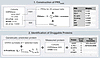 Figure 1
Overview of study design. Schematic representation of the study workflow. Plots included in this figure are intended for illustrative purposes only.
Characteristics of study participants.
A total of 144,679 individuals were included in genetic analyses (Table 1), drawn from both COPD-enriched cohorts (Genetic Epidemiology of COPD [COPDGene] and Evaluation of COPD Longitudinally to Identify Predictive Surrogate Endpoints [ECLIPSE]) and population-scale biobanks (Mass General Brigham Biobank [MGBB] and All of Us). As expected, smoking prevalence varied across cohorts.
Cohort characteristics for COPDGene and UK Biobank (UKBB) proteomic analyses are shown in Supplemental Table 1; supplemental material available online with this article; https://doi.org/10.1172/jci.insight.199951DS1 Participants had similar age, sex distribution, and spirometric measures. In COPDGene, individuals who were never smokers were excluded.
Development of multi-trait PRSs for COPD and related traits.
We used 25 individual PRSs (Supplemental Table 2), chosen based on clinician input and literature review, to develop multi-trait PRSs for COPD and related traits. Four new PRSs were developed for this analysis (emphysema, peak expiratory flow, eosinophils, and smoking) which are available upon request. Clustering analysis revealed that PRSs for spirometry were highly correlated and that the emphysema and type 2 diabetes scores were correlated, as were asthma/allergic rhinitis and venous thromboembolism/cor pulmonale (Supplemental Figure 1).
We constructed multi-trait PRS models for COPD status (Global Initiative for Chronic Obstructive Lung Disease [GOLD] stages 2–4 vs. GOLD 0) and exacerbations, as well as computed tomography (CT) measures of quantitative emphysema (adjusted lung density) and airway wall thickness (square root of the wall area of a hypothetical airway with an internal perimeter of 10 millimeters, Pi10) using PRSmix+. Mixing weights for each model are displayed in Supplemental Table 3. Final weighted models included between 2 and 7 individual PRSs. Notably, PRSs for FEV1/FVC (PRSratio) and a deep learning spirometry (PRSDLspiro) trait contribute to all 4 traits. PRSs for FEV1 (PRSFEV1), BMI (PRSBMI), and CRP (PRSCRP) contribute to both Pi10 and COPD, and all 7 PRSs, including smoking (cigarettes per day) (PRSsmoke) and idiopathic pulmonary fibrosis (PRSIPF), contribute to COPD. Thus, while PRSratio is the largest contributor to COPD genetic risk, 6 additional PRSs also contribute to COPD risk.
All multi-trait PRSs showed strong associations with their respective training outcomes in multivariable models (Supplemental Table 4). The PRSmix+ models for emphysema (adjusted lung density) and airway thickness (Pi10) were associated with COPD and exacerbations, and inversely associated with their respective outcomes (e.g., higher PRSmix+ [Pi10] is associated with lower quantitative emphysema). As our a priori decision was to select the multi-trait PRS that represents the highest number of comorbid traits, the PRS for COPD derived from 7 separate PRSs was carried forward for further testing and will hereafter be referred to as the PRSmulti. The PRSmulti explained 20.7% of the variance on the liability scale for COPD (12).
Testing the multi-trait PRS for COPD.
We tested the predictive utility of PRSmulti for both COPD and COPD exacerbations compared with individual component PRSs. For COPD, PRSmulti consistently demonstrated larger absolute effect sizes in all cohorts except All of Us, where PRSBMI showed the strongest effect (Supplemental Table 5). For COPD exacerbations, PRSmulti outperformed other scores in COPDGene non-Hispanic White (NHW) and ECLIPSE, whereas PRSBMI had higher effects in the remaining cohorts (Supplemental Table 6). Notably, PRSmulti associations with COPD status remained significant after adjusting for baseline FEV1 in COPDGene, but associations with exacerbations were attenuated in FEV1-adjusted models.
In a random effects meta-analysis, PRSmulti was associated with increased odds of COPD (OR: 1.58 per SD [95% CI: 1.28–1.94]) (Figure 2A). We observed significant between-study heterogeneity (I2 = 0.98, P < 0.01), with stronger effects in smoking-enriched research cohorts. Among the component PRSs, PRSIPF and PRSBMI were the only scores not significantly associated with COPD, and PRSmulti had a larger effect on COPD status than any individual score (Figure 2B).
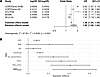 Figure 2
PRSmulti is associated with COPD. (A) Forest plot from a meta-analysis of the association between PRSmulti and COPD status across multiple cohorts. The figure presents ORs with 95% CIs for each cohort, demonstrating the overall effect size and heterogeneity (I2). (B) Forest plot comparing the effects of individual PRSs and PRSmulti on COPD risk. PRSmulti outperforms single-trait PRSs, particularly in smoking-enriched cohorts. CRP, C-reactive protein; BMI, body mass index; IPF, idiopathic pulmonary fibrosis; DL, deep learning; PRS, polygenic risk score. Cohort abbreviations are in the legend for Table 1.
We next performed a similar analysis for COPD exacerbations but with multivariable negative binomial modeling of count data. In meta-analysis, PRSmulti was associated with an increase of 0.21 exacerbations per year per SD (95% CI: 0.11–0.31) (Figure 3A). However, this association was attenuated in sensitivity analyses adjusting for baseline FEV1. All component PRSs were significantly associated with exacerbations except for the PRSIPF and PRSBMI (Figure 3B). We note that PRSBMI demonstrated the largest effects on exacerbations compared with other PRSs in some cohorts (Supplemental Table 6), but it was not significantly associated with exacerbations in meta-analysis (Supplemental Figure 2) due to a flipped direction of effect in COPDGene African American (AA) participants. Again, between-study heterogeneity was significant (I2 = 0.86, P < 0.0001), although less pronounced than for COPD status.
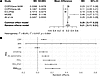 Figure 3
PRS is associated with COPD exacerbations. (A) Meta-analysis forest plot showing the association between PRSmulti and COPD exacerbations, with estimates from individual cohorts and the overall effect. The PRSmulti is significantly associated with increased exacerbation risk. (B) Comparison of individual PRSs and PRSmulti for exacerbation prediction. Effect sizes and confidence intervals are presented, highlighting PRSmulti as the most predictive score. Abbreviations are in the legends of Figure 2 and Table 1.
We also observed that heterogeneity in COPD status associations was driven largely by differences between research and biobank cohorts, reflecting the use of spirometry- versus International Classification of Diseases–based (ICD-based) case definitions, respectively (Supplemental Figure 3A). In contrast, heterogeneity in exacerbation outcomes was lower and appeared to be influenced by outlier results from MGBB participants (Supplemental Figure 3B). In a leave-one-out sensitivity analysis excluding COPDGene NHW participants, we observed similar results for COPD and COPD exacerbations (Supplemental Figure 4).
In AUC analyses among COPDGene NHW participants, PRSmulti outperformed PRSratio in predicting both COPD (AUC 0.67 vs. 0.64, P = 1.05 × 10⁻⁸) and frequent exacerbations (≥2 per year) (AUC 0.569 vs. 0.562, P = 0.000001). Both PRSs improve prediction when added to clinical covariates (Table 2 and Supplemental Figure 5). For COPD, the AUC increased from 0.756 (clinical only) to 0.8 with PRSmulti and 0.79 with the PRSratio. For exacerbation prediction, the AUC increased from 0.599 to 0.612 and 0.609, respectively. The PRSmulti also demonstrated higher predictive capacity for COPD and frequent exacerbations compared with any of the other tested single-trait PRSs or the previously published PRSFEV1+FEV1/FVC from Moll et al. (5) (Supplemental Table 9).
Examining other COPD-related outcomes, we found that a higher PRSBMI was the PRS most associated with all-cause mortality, while the PRSDLspiro was most highly associated with respiratory mortality (Supplemental Table 10). However, the PRSmulti had the largest effects on severe exacerbations and antibiotic or steroid use compared with other tested PRSs (Supplemental Table 10).
Genetically predicted proteins based on shared genetic risks among traits.
Following the identification of 7 traits contributing to COPD genetic risk, we investigated shared genetic mechanisms by identifying proteins whose levels are predicted to be altered based on the genetic architecture of these traits. Using GWAS summary statistics for each trait, we applied S-PrediXcan (10) with Atherosclerosis Risk in Communities (ARIC) PredictDB protein expression models (13) to infer genetically regulated protein levels (full results available upon request). We then tested whether measured plasma protein levels were associated with COPD exacerbations using multivariable negative binomial regression models in COPDGene and UKBB. Models were adjusted for COPD case-control status and other confounders (see Methods). We examined only proteins meeting FDR-adjusted significance in S-PrediXcan, COPDGene SomaScan (measured protein levels), and UKBB Olink (measured protein levels) data (Supplemental Table 7). We further restricted the protein list to those with concordant directions of effects in COPDGene and UKBB, resulting in a final set of 73 genetically predicted proteins associated with COPD exacerbations (Table 3). The number of proteins at each filtering step for all 7 traits are detailed in Supplemental Table 11.
We ranked these proteins by the number of traits for which all criteria were met. The receptor for advanced glycation end products (RAGE) and its soluble form (sRAGE), IL-1 receptor–like 1 (IL1RL1), and scavenger receptor class F member 2 (SCARF2) were represented in 5 out of 7 tested traits. SERPINA1 was represented in 2 out of 7 tested traits. We performed gene name lookups in the OpenTargets Platform (14) to identify potential drug repurposing candidates. We identified 25 proteins with existing clinical trials for 46 drugs (Table 3 and Supplemental Table 8). Notably, we found drugs targeting RAGE/sRAGE and IL1RL1 that are being tested in clinical trials, with the latter being tested in COPD. Finally, among the 73 proteins, we identified 8 (agrin [AGRN], CD300C, CFB, GM2 ganglioside activator [GM2A], IL1RL1, INHBB, leukocyte immunoglobulin-like receptor A5 [LILRA5], and TIMP4) that demonstrated consistent associations with COPD status, frequent exacerbations, and the highest versus lowest quintile of PRSmulti in COPDGene NHW participants (Supplemental Figure 6). Compared with IL1RL1, RAGE/sRAGE, and SCARF2 protein levels, PRSmulti demonstrated higher predictive capacity for frequent exacerbations (Supplemental Figure 8; AUC 0.77, all P < 0.05).


