
Abstract
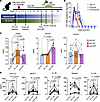
HIV infection rapidly impairs the gastrointestinal barrier, contributing to persistent mucosal immune dysfunction, microbial translocation, and systemic inflammation despite antiretroviral therapy (ART). Using SIV-infected rhesus macaques on long-term ART, we investigated mechanisms underlying impairment in gut barrier–protective IL-17/IL-22 responses and the potential modulation of this pathway by dietary indoles. Longitudinal profiling of colonic epithelial and lamina propria cells revealed a selective loss of IL-17/IL-22–producing γδ T cells and type 3 innate lymphoid cells (ILC3s). This loss correlated with reduced expression of the transcription factors AHR and RORγt and was associated with elevated plasma markers of intestinal epithelial barrier disruption (IEBD), including intestinal fatty acid–binding protein (iFABP), zonulin, and LPS-binding protein (LBP). Targeting this transcriptional deficiency, dietary indole supplementation for 1 month restored colonic AHR+ IL-22–producing γδ T cells, RORγt+ ILC3s, and Vδ1 T cells, and was associated with reduced iFABP and zonulin levels. Immunohistochemical analyses further demonstrated enrichment of AHR/RORγt-coexpressing cells in the colon of indole-supplemented animals during chronic SIV infection on ART. Collectively, these findings indicate that disruption of the AHR-RORγt axis is a key pathogenic mechanism underlying persistent IEBD in chronic SIV/HIV infection. Modulation of AHR and RORγt signaling pathways in the gut may therefore represent a promising therapeutic strategy to reinforce mucosal barrier function and mitigate chronic inflammation in people living with HIV.
Authors
Siva Thirugnanam, Alison R. Van Zandt, Alexandra B. McNally, Victoria A. Hart, Isabelle Berthelot, Cecily C. Midkiff, Lara A. Doyle-Meyers, David A. Welsh, Robert V. Blair, Andrew G. MacLean, Namita Rout
This file is in Adobe Acrobat (PDF) format. If you have not installed and configured the Adobe Acrobat Reader on your system.
Having trouble reading a PDF?
PDFs are designed to be printed out and read, but if you prefer to read them online, you may find it easier if you increase the view size to 125%.
Having trouble saving a PDF?
Many versions of the free Acrobat Reader do not allow Save. You must instead save the PDF from the JCI Online page you downloaded it from. PC users: Right-click on the Download link and choose the option that says something like "Save Link As...". Mac users should hold the mouse button down on the link to get these same options.
Having trouble printing a PDF?
- Try printing one page at a time or to a newer printer.
- Try saving the file to disk before printing rather than opening it "on the fly." This requires that you configure your browser to "Save" rather than "Launch Application" for the file type "application/pdf", and can usually be done in the "Helper Applications" options.
- Make sure you are using the latest version of Adobe's Acrobat Reader.


