
Abstract
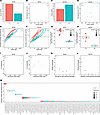
In chronic infection, T cell clones recognizing the same epitope are variably expanded, with some clones evolving to become dominant, while others are lost. Clonal expansion and changes in the repertoire reflect both T cell receptor–intrinsic (TCR-intrinsic) and -extrinsic factors, yet the individuality of TCR repertoires makes it difficult to disentangle how TCR sequence shapes clonal behaviors. To address this, we exploited the observation that TCRs can be grouped into clusters based on sequence similarity. Using complementarity-determining region 3β (CDR3β) sequencing data derived from lymphocytic choriomeningitis virus–specific CD8+ T cells from mice infected early and late in the course of chronic infection, we identified CDR3β clusters ubiquitously shared by all mice. The pattern of CDR3β cluster abundance was highly similar between mice at the early time point in both self-limiting and persistent infection models. Over the course of chronic infection, the pattern of cluster abundance diverged between mice and dominant clones emerged that did not share sequence similarity between mice. This repertoire divergence was not observed in self-limiting infection, where the pattern of cluster abundance established early in infection was stable between mice beyond resolution of infection. In chronic infection, the repertoires of stem-like and exhausted antigen-specific T cells remained similar over time within individual mice, suggesting clonal selection acts on the stem-like pool. Our findings suggest that antigen-specific CD8+ T cell clones expanded early in infection have CDR3β motifs that are shared between mice, supporting a role for TCR structural properties in determining the repertoire structure. Divergent patterns of repertoire composition later in chronic infection suggest that these shared CDR3β motifs are less important in patterning the repertoire than during the initial response and there is greater complexity in factors that sculpt the repertoire over the course of persistent antigen exposure.
Authors
Daniel Y. Chang, Barbara Bravi, Sakshi Malik, Donald J. McGuire, Hasan Ahmed, Rustom Antia, Rafi Ahmed, Ehsan Ghorani
This file is in Adobe Acrobat (PDF) format. If you have not installed and configured the Adobe Acrobat Reader on your system.
Having trouble reading a PDF?
PDFs are designed to be printed out and read, but if you prefer to read them online, you may find it easier if you increase the view size to 125%.
Having trouble saving a PDF?
Many versions of the free Acrobat Reader do not allow Save. You must instead save the PDF from the JCI Online page you downloaded it from. PC users: Right-click on the Download link and choose the option that says something like "Save Link As...". Mac users should hold the mouse button down on the link to get these same options.
Having trouble printing a PDF?
- Try printing one page at a time or to a newer printer.
- Try saving the file to disk before printing rather than opening it "on the fly." This requires that you configure your browser to "Save" rather than "Launch Application" for the file type "application/pdf", and can usually be done in the "Helper Applications" options.
- Make sure you are using the latest version of Adobe's Acrobat Reader.


