
Clinical Research and Public HealthImmunologyInfectious disease
Open Access |  10.1172/jci.insight.203270
Exhausted T cell phenotypes in disseminated coccidioidomycosis
Gregory D. Whitehill,1 Alexis V. Stephens,2 Timothy J. Thauland,3 Miguel A. Moreno Lastre,3 Matthew M. Tate,4,5 Sinem Beyhan,4,5 Royce H. Johnson,1,6,7 George R. Thompson III,8,9 Maria Garcia-Lloret,2 and Manish J. Butte2,3,10
1Department of Medicine, Division of Infectious Diseases,
2Department of Human Genetics, and
3Department of Pediatrics, Division of Immunology, Allergy, and Rheumatology, UCLA, Los Angeles, California, USA.
4Veterans Affairs San Diego Healthcare System, Research Service, San Diego, California, USA.
5Department of Medicine, UCSD, La Jolla, California, USA.
6Department of Medicine, Division of Infectious Diseases, and
7Valley Fever Institute at Kern Medical Center, Bakersfield, California, USA.
8Department of Medicine, Division of Infectious Diseases, and
9Department of Medical Microbiology and Immunology, University of California, Davis, Sacramento, California, USA.
10Department of Microbiology, Immunology and Molecular Genetics, UCLA, Los Angeles, California, USA.
Find articles by Whitehill, G. in: PubMed | Google Scholar
1Department of Medicine, Division of Infectious Diseases,
2Department of Human Genetics, and
3Department of Pediatrics, Division of Immunology, Allergy, and Rheumatology, UCLA, Los Angeles, California, USA.
4Veterans Affairs San Diego Healthcare System, Research Service, San Diego, California, USA.
5Department of Medicine, UCSD, La Jolla, California, USA.
6Department of Medicine, Division of Infectious Diseases, and
7Valley Fever Institute at Kern Medical Center, Bakersfield, California, USA.
8Department of Medicine, Division of Infectious Diseases, and
9Department of Medical Microbiology and Immunology, University of California, Davis, Sacramento, California, USA.
10Department of Microbiology, Immunology and Molecular Genetics, UCLA, Los Angeles, California, USA.
Find articles by Stephens, A. in: PubMed | Google Scholar
1Department of Medicine, Division of Infectious Diseases,
2Department of Human Genetics, and
3Department of Pediatrics, Division of Immunology, Allergy, and Rheumatology, UCLA, Los Angeles, California, USA.
4Veterans Affairs San Diego Healthcare System, Research Service, San Diego, California, USA.
5Department of Medicine, UCSD, La Jolla, California, USA.
6Department of Medicine, Division of Infectious Diseases, and
7Valley Fever Institute at Kern Medical Center, Bakersfield, California, USA.
8Department of Medicine, Division of Infectious Diseases, and
9Department of Medical Microbiology and Immunology, University of California, Davis, Sacramento, California, USA.
10Department of Microbiology, Immunology and Molecular Genetics, UCLA, Los Angeles, California, USA.
Find articles by Thauland, T. in: PubMed | Google Scholar
1Department of Medicine, Division of Infectious Diseases,
2Department of Human Genetics, and
3Department of Pediatrics, Division of Immunology, Allergy, and Rheumatology, UCLA, Los Angeles, California, USA.
4Veterans Affairs San Diego Healthcare System, Research Service, San Diego, California, USA.
5Department of Medicine, UCSD, La Jolla, California, USA.
6Department of Medicine, Division of Infectious Diseases, and
7Valley Fever Institute at Kern Medical Center, Bakersfield, California, USA.
8Department of Medicine, Division of Infectious Diseases, and
9Department of Medical Microbiology and Immunology, University of California, Davis, Sacramento, California, USA.
10Department of Microbiology, Immunology and Molecular Genetics, UCLA, Los Angeles, California, USA.
Find articles by Moreno Lastre, M. in: PubMed | Google Scholar
1Department of Medicine, Division of Infectious Diseases,
2Department of Human Genetics, and
3Department of Pediatrics, Division of Immunology, Allergy, and Rheumatology, UCLA, Los Angeles, California, USA.
4Veterans Affairs San Diego Healthcare System, Research Service, San Diego, California, USA.
5Department of Medicine, UCSD, La Jolla, California, USA.
6Department of Medicine, Division of Infectious Diseases, and
7Valley Fever Institute at Kern Medical Center, Bakersfield, California, USA.
8Department of Medicine, Division of Infectious Diseases, and
9Department of Medical Microbiology and Immunology, University of California, Davis, Sacramento, California, USA.
10Department of Microbiology, Immunology and Molecular Genetics, UCLA, Los Angeles, California, USA.
Find articles by Tate, M. in: PubMed | Google Scholar
1Department of Medicine, Division of Infectious Diseases,
2Department of Human Genetics, and
3Department of Pediatrics, Division of Immunology, Allergy, and Rheumatology, UCLA, Los Angeles, California, USA.
4Veterans Affairs San Diego Healthcare System, Research Service, San Diego, California, USA.
5Department of Medicine, UCSD, La Jolla, California, USA.
6Department of Medicine, Division of Infectious Diseases, and
7Valley Fever Institute at Kern Medical Center, Bakersfield, California, USA.
8Department of Medicine, Division of Infectious Diseases, and
9Department of Medical Microbiology and Immunology, University of California, Davis, Sacramento, California, USA.
10Department of Microbiology, Immunology and Molecular Genetics, UCLA, Los Angeles, California, USA.
Find articles by Beyhan, S. in: PubMed | Google Scholar
1Department of Medicine, Division of Infectious Diseases,
2Department of Human Genetics, and
3Department of Pediatrics, Division of Immunology, Allergy, and Rheumatology, UCLA, Los Angeles, California, USA.
4Veterans Affairs San Diego Healthcare System, Research Service, San Diego, California, USA.
5Department of Medicine, UCSD, La Jolla, California, USA.
6Department of Medicine, Division of Infectious Diseases, and
7Valley Fever Institute at Kern Medical Center, Bakersfield, California, USA.
8Department of Medicine, Division of Infectious Diseases, and
9Department of Medical Microbiology and Immunology, University of California, Davis, Sacramento, California, USA.
10Department of Microbiology, Immunology and Molecular Genetics, UCLA, Los Angeles, California, USA.
Find articles by Johnson, R. in: PubMed | Google Scholar
1Department of Medicine, Division of Infectious Diseases,
2Department of Human Genetics, and
3Department of Pediatrics, Division of Immunology, Allergy, and Rheumatology, UCLA, Los Angeles, California, USA.
4Veterans Affairs San Diego Healthcare System, Research Service, San Diego, California, USA.
5Department of Medicine, UCSD, La Jolla, California, USA.
6Department of Medicine, Division of Infectious Diseases, and
7Valley Fever Institute at Kern Medical Center, Bakersfield, California, USA.
8Department of Medicine, Division of Infectious Diseases, and
9Department of Medical Microbiology and Immunology, University of California, Davis, Sacramento, California, USA.
10Department of Microbiology, Immunology and Molecular Genetics, UCLA, Los Angeles, California, USA.
Find articles by Thompson, G. in: PubMed | Google Scholar
1Department of Medicine, Division of Infectious Diseases,
2Department of Human Genetics, and
3Department of Pediatrics, Division of Immunology, Allergy, and Rheumatology, UCLA, Los Angeles, California, USA.
4Veterans Affairs San Diego Healthcare System, Research Service, San Diego, California, USA.
5Department of Medicine, UCSD, La Jolla, California, USA.
6Department of Medicine, Division of Infectious Diseases, and
7Valley Fever Institute at Kern Medical Center, Bakersfield, California, USA.
8Department of Medicine, Division of Infectious Diseases, and
9Department of Medical Microbiology and Immunology, University of California, Davis, Sacramento, California, USA.
10Department of Microbiology, Immunology and Molecular Genetics, UCLA, Los Angeles, California, USA.
Find articles by Garcia-Lloret, M. in: PubMed | Google Scholar
1Department of Medicine, Division of Infectious Diseases,
2Department of Human Genetics, and
3Department of Pediatrics, Division of Immunology, Allergy, and Rheumatology, UCLA, Los Angeles, California, USA.
4Veterans Affairs San Diego Healthcare System, Research Service, San Diego, California, USA.
5Department of Medicine, UCSD, La Jolla, California, USA.
6Department of Medicine, Division of Infectious Diseases, and
7Valley Fever Institute at Kern Medical Center, Bakersfield, California, USA.
8Department of Medicine, Division of Infectious Diseases, and
9Department of Medical Microbiology and Immunology, University of California, Davis, Sacramento, California, USA.
10Department of Microbiology, Immunology and Molecular Genetics, UCLA, Los Angeles, California, USA.
Find articles by
Butte, M.
in:
PubMed
|
Google Scholar
|

Published April 20, 2026 - More info
JCI Insight. 2026;11(10):e203270. https://doi.org/10.1172/jci.insight.203270.
© 2026 Whitehill et al. This work is licensed under the Creative Commons Attribution 4.0 International License. To view a copy of this license, visit http://creativecommons.org/licenses/by/4.0/.
Received: December 22, 2025; Accepted: March 26, 2026

-
Results
Cohort characteristics. Three hundred and ten individuals with confirmed diagnosis of coccidioidomycosis were recruited. Clinical disease category and demographics are reported in Table 1. Age, sex, self-identified race and ethnicity (SIRE), and date of initial Coccidioides diagnosis were provided by individuals at recruitment. Coccidioidomycosis severity for each individual was categorized using the 5-level numeric classification described by Krogstad and colleagues (1, asymptomatic; 2, uncomplicated pulmonary; 3, complicated pulmonary; 4, non-meningeal disseminated; 5, meningitis) (1). Complicated pulmonary coccidioidomycosis (CPC), non-meningeal disseminated coccidioidomycosis (NMDCM), and Coccidioides meningitis (CM) were further stratified into subcategories. CPC was heterogeneous, comprising approximately equal proportions of simple cavitary disease (3A, 41%) and persistent symptoms despite 6 months of therapy (3C, 46%) with few cases of respiratory failure (3D, 10%) or fibrocavitary disease (3B, 3%). For NMDCM, most had dissemination to extrapulmonary organs or deep tissue sites (4B, 88%), while only a few showed dissemination to skin only (4A, 12%). Most individuals with CM had isolated meningeal disease (5A, 85%), while fewer had additional dissemination to skin (5B, 4%) or deeper tissue sites (5C, 11%).
We investigated whether demographic variables were associated with severe disease states by consolidating individuals into 2 broader groups: UVF (categories 1 and 2) and DCM (categories 4 and 5). CPC cases were excluded from these analyses due to the clinical heterogeneity of this group, which suffered more complicated syndromes than the self-limited UVF, yet without extrapulmonary dissemination. Male sex was significantly associated with DCM (Fisher’s exact test, P = 0.007; OR 2.5, 95% CI 1.5–4.0, P < 0.001; Supplemental Figure 1; supplemental material available online with this article; https://doi.org/10.1172/jci.insight.203270DS1) as other studies also observed (2). Previous studies suggest that persons identifying as Hispanic, Black, or Asian have increased risk for DCM relative to those identifying as White (39, 40). However, our cohort showed that SIRE of Hispanic or Latino was associated with a decreased risk for DCM (OR 0.4, 95% CI 0.2–0.7) while risk was increased among non-Hispanic White (OR 3.1, 95% CI 1.5–6.2) and Black (OR 4.2, 95% CI 1.2–22) but not Asian individuals (Supplemental Figure 1). Regarding age, DCM individuals were older than UVF at recruitment (median 50 years, IQR 34–58 vs. 43, IQR 33–56, P = 0.05 by Mann-Whitney U test) but age at diagnosis was not different (median 41 years, IQR 28–50 vs. 40 years, IQR 20–53, P = 0.6 by Mann-Whitney U test). Notably, individuals with UVF were recruited significantly more proximally to their dates of diagnosis than those with DCM (median 9 months, IQR 3–46 vs. 57 months, IQR 20–129, P < 0.0001 by Mann-Whitney U test). Taken together, these data show our cohort comprises a typical and diverse spectrum of demographics and clinical phenotypes.
T cell phenotype in DCM suggests exhausted immune state. We assessed whether biomarkers of peripheral T cell differentiation and activation differed between disease severities. Naive (CD45RA+CCR7+) T cells are quiescent and upon TCR engagement proliferate and differentiate into effector T cells. Circulating central memory T (TCM, CD45RO+CCR7+) cells provide a long-lived reservoir with high proliferative potential upon antigen reexposure and circulate between lymphoid tissues to endow follicular and extrafollicular help. Effector memory T (TEM, CD45RO+CCR7–) cells traffic between the circulation and peripheral tissues and provide fast cytokine recall responses. The role of CD4+ terminally differentiated effector memory RA (TEMRA) cells is less clear in fungal infections, but they likely represent effector memory cells in a more terminally differentiated state. By flow cytometry we measured T cell memory subsets (naive, TCM, TEM, TEMRA) and activation/exhaustion markers HLA-DR, PD-1, and CD57 in peripheral blood CD4+ and CD8+ T cells (Figure 1 and Supplemental Figure 2). We found that CD4+ T cell memory subsets were not significantly different between individuals with DCM or UVF. However, the DCM group showed a trend toward decreased CD4+ naive T cells compared with UVF (median 41%, IQR 26–54 vs. 44%, IQR 30–53, P = 0.2 by Mann-Whitney U test, Figure 1A). CD8+ T cell populations trended similarly to CD4+ T cells. Naive CD8+ T cells were fewer in DCM compared with UVF (median 24%, IQR 11–38 vs. 31%, IQR 15–46, P = 0.03) and TEMRA populations were larger (median 9%, IQR 2–14 vs. 7%, IQR 2–11, P = 0.04) (Figure 1E). These results show that DCM does not entail a quantitative immunodeficiency among helper T cells.
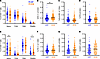 Figure 1
PBMC T cell phenotype of UVF and DCM. PBMCs from patients with UVF (blue, N = 108) and DCM (orange, N = 130) were phenotyped by flow cytometry. (A and E) Naive (CD45RA+CCR7+), central memory (TCM, CD45RA–CCR7+), effector memory (TEM, CD45RA–CCR7–), and TEMRA (CD45RA+CCR7–) subsets of (A) CD4+ and (E) CD8+ T cells. (B–D) Percentage of (B) PD-1+, (C) HLA-DR+, and (E) T follicular helper (TFH, PD-1+CXCR5+) CD4+ T cells. (F–H) percentage of (F) PD-1+, (G) HLA-DR+, and (H) CD57+ CD8+ T cells. Bars indicate the mean. Statistical comparisons by Mann-Whitney U test, unadjusted. *P < 0.05, **P < 0.01.
PD-1 expression on CD4+ T cells was significantly greater in the DCM group relative to UVF (median 21%, IQR 16–28 vs. 19%, IQR 13–24, P = 0.007; Figure 1B). PD-1 on T cells can demonstrate the exhausted phenotype in states of chronic infection weeks or more after acute infection (41, 42), but PD-1 can also appear as a short-term activation marker on T cells for a few hours to days after TCR stimulation. We evaluated whether expression of PD-1 could have indicated recent stimulation by measuring the activation marker HLA-DR on CD4+ T cells (43, 44), which was not significantly different between the groups (median 8%, IQR 6–13 in DCM vs. 9%, IQR 6–12 in UVF; Figure 1C). PD-1 is also expressed on circulating follicular helper (TFH) CD4+ T cells and facilitates productive interactions between T and B cells (45). Coccidioides-specific antibody titers are often dramatically elevated in patients with DCM. To assess whether the increased PD-1 expression in this group was driven by an expanded TFH subset, we measured CD4+PD-1+CXCR5+ circulating TFH cells, which were not significantly different between DCM and UVF (median 5, IQR 3–7 vs. 5, IQR 3–6; Figure 1D). These results show that the population of PD-1–expressing CD4+ T cells is not attributable to TFH or recent activation, and thus PD-1 expression may represent exhaustion.
For CD8+ T cells, PD-1 expression was no different between DCM and UVF (median 24%, IQR 16–34 vs. 23%, IQR 17–32, P = 0.7; Figure 1G), but the senescence marker CD57 trended slightly higher in DCM (median 30%, IQR 16–46 vs. 25%, IQR 14–39, P = 0.05; Figure 1H).
T cell phenotypes thus suggested a more differentiated (i.e., less naive) and exhausted state in DCM relative to UVF, with increased PD-1 expression among CD4+ T cells and decreased naive T cells. Since individuals with DCM and UVF also varied by age, sex, and time since diagnosis, we assessed whether these variables confounded our findings or identified interesting subgroups. PD-1 expression on CD4+ T cells showed a positive but statistically insignificant correlation with age in both UVF and DCM, with a stronger correlation among DCM relative to UVF (Spearman’s r = 0.098 vs. 0.026) (Supplemental Figure 3, A and B). We did not identify significant correlations between PD-1 expression on CD4+ T cells with time since diagnosis or sex (Supplemental Figure 3, C–F). As some of the variance in PD-1 expression could be attributed to the age of the individual, we assessed the variance of all measured phenotypic markers with age by linear regression. Across the entire cohort, age associated similarly with CD4+PD-1+ cells (r2 = 0.014) as compared with CD4+HLA-DR+ cells (r2 = 0.023), while other subsets such as CD4+ TCM (r2 = 0.11), CD8+ naive (r2 = 0.24), CD8+HLA-DR+ (r2 = 0.074), and CD8+CD57+ (r2 = 0.061) showed a much stronger association with age (Supplemental Figure 4). These results show that age does not sufficiently explain the variance in PD-1 expression on CD4+ T cells between individuals with DCM and UVF. In cancer, certain markers found on PBMCs prior to treatment with an anti–PD-1 antibody were associated with favorable responses, including ones we saw in individuals with DCM: increased PD1 expression, increased CD57 expression on CD8+ T cells, and increased CD4+ memory populations relative to naive (47, 48). Taken together, our findings of phenotypic differences in T cells suggested an exhausted state.
AIM assay for measurement of Coccidioides-specific T cell responses. We next sought to compare functional, Coccidioides-specific T cell responses between UVF and DCM. Coccidioides-specific T cell responses were measured by AIM assay (49). PBMCs were stimulated separately with formalin-killed spherules (FKS) or formalin-killed conidia (FKC) derived from the Coccidioides immitis RS strain. Activated CD4+ T cells were identified by coexpression of CD69 and CD134 (OX40), and activated CD8+ T cells by both CD69 and CD137 (4-1BB) (Supplemental Figure 5). AIM assays allow for the identification of diverse populations of antigen-specific CD4+ and CD8+ T cells specific for linear peptide antigens (e.g., SARS-CoV-2 and HCV) and more complex antigen preparations such as lysates of Mycobacterium tuberculosis and Trypanosoma cruzi (50–53). T cells are reported to express AIM markers both in response to TCR engagement with cognate peptide-MHC complexes and, when cultured over longer periods, antigen-independent “bystander” activation by stimulatory cytokines (54). We tested whether AIM responses to FKC and FKS were TCR dependent by stimulating PBMCs in the presence of MHC-I– and MHC-II–blocking antibodies (Figure 2, A and B). Both CD4+ and CD8+ T cell responses were fully suppressed by MHC-II blockade but not MHC-I blockade, suggesting that FKS- and FKC-responsive CD4+ T cells were antigen-specific, while bystander activation drove CD8+ T cell responses. This finding is consistent with extracellular antigen processing predominantly utilizing endosomal pathways and presentation on MHC-II molecules. Because of this finding and because the role of helper T cells is much better defined in fungal immunity, we therefore directed our focus to CD4+ T cells.
 Figure 2
AIM assay to identify Coccidioides-specific T cell responses. (A and B) PBMCs were incubated with Coccidioides formalin-killed spherules (FKS), formalin-killed conidia (FKC), or media alone (No Stim) with or without MHC-I–blocking antibody (αMHC-I) or MHC-II–blocking antibody (αMHC-II) for 24 hours. AIM-positive populations are gated for (A) CD4+ T cells (CD69+OX40+) and (B) CD8+ T cells (CD69+CD137+). (C) PBMCs from 11 individuals with coccidioidomycosis (mixed UVF and DCM) were simulated with FKS and FKC for 24 and 48 hours. Percentage AIM-positive CD4+ T cells with unstimulated background subtracted are presented. Colors denote unique individuals. Comparisons by Wilcoxon’s matched pairs rank-sum test. **P < 0.01. (D) PBMCs from 7 healthy control donors (HC) stimulated with FKC, FKS, or candida antigen (CA) for 24 hours. Symbols denote unique individuals. For C and D, values below dotted line (0.05%) are negative. (E) PBMCs from 2 HC (HC A and HC B) were stimulated for 48 hours with FKS alone or supernatant collected from cultures of Coccidioides-infected individuals’ PBMCs stimulated with FKS for 48 hours (FKS-sup). The AIM-positive population of CD4+ T cells is gated.
To assess the optimal stimulation period for these antigens, we compared T cell responses against FKS and FKC over 24-hour and 48-hour incubation periods (Figure 2C). FKS-specific responses were greater at 48 hours of stimulation than 24 hours (P = 0.008, Wilcoxon’s matched pairs rank-sum test), while FKC responses were not significantly different between the 2 time points. Seven of the 11 patients (64%) demonstrated a detectable response to any antigen across both time points, and all of these showed positive FKC-specific responses at 24 hours. These results show that 24-hour stimulation with FKC was adequate to detect cocci-specific T cell responses in over half the patients, and FKS required a longer stimulation period.
To assess the specificity of the responses to FKS and FKC, we examined the AIM assay in PBMCs from endemic-region healthy control donors (HC, N = 7) with an unknown history of Coccidioides exposure (Figure 2D). Four HC (57%) showed a positive response to FKS, while 2 (29%) responded to FKC. Interestingly, the 4 HC with FKS-specific responses also showed high T cell responses to stimulation with candida antigen. In vitro T cell cross-reactivity between Coccidioides with other endemic mycoses, including Histoplasma and Blastomyces, has been described, but whether Coccidioides-specific T cells cross-react with Candida is not known (55). We then attempted to determine whether the increased FKS-specific responses at 48 hours were driven by delayed T cell activation or bystander activation. PBMCs from 2 HC were stimulated with FKS alone for 48 hours or with supernatant (FKS-Sup) collected from AIM-positive individuals stimulated with FKS for 48 hours. FKS-Sup–stimulated HC PBMCs showed a greater percentage of AIM+CD4+ T cells than FKS alone (Figure 2E), suggesting that soluble factors produced by FKS-stimulated cells could augment T cell responses over extended incubation periods. Therefore, while the extended 48-hour stimulation period was necessary to reliably detect FKS-specific responses, some of these responses could also accumulate the effects of bystander T cell activation.
The finding of bystander effect and possible cross-reactivity with other fungal antigens does not diminish the relevance of spherule-specific T cell responses. Coccidioides is transmitted as conidia but propagates within infected hosts as spherules, and these 2 forms demonstrate unique expression patterns of their transcriptomes and proteomes (56). It is long established that different phases of the Coccidioides life cycle elicit different T cell responses (57); however, the exact antigens that are unique or overlapping across phases and their contributions to virulence have not been fully elaborated (58, 59). We therefore concluded that the presence or absence of Coccidioides-specific T cell responses could be adequately assessed by either FKC at 24 or 48 hours of stimulation, or FKS at 48 hours stimulation, though the absolute magnitude of response may differ by the method employed.
T cell responses are impaired early in disseminated Coccidioides. We surveyed Coccidioides-specific T cell responses by AIM assay in 161 individuals from various disease categories across our cohort (Figure 3A). Positive responses were detected in 52% of individuals (N = 84 of 161). By disease category, the response rates were 50% for asymptomatic disease (ASX, 5 of 10), 51% for uncomplicated pulmonary (UPC, 26 of 51), 59% for CPC (13 of 22), 40% for NMDCM (19 of 47), and 68% for CM (21 of 31). Given the low response rate, we sought to validate that the AIM assay correlated with functional T cell responses. We tested 22 AIM-positive and 14 AIM-negative individuals for production of IFN-γ, IL-4, and IL-17A in response to stimulation with Coccidioides antigens (Figure 3B and Supplemental Figure 6). FKS and FKC provoked similar responses, and cytokine production was almost universally absent in individuals who lacked an AIM response. This association between AIM and cytokine readouts for detection of Coccidioides-specific T cell responses did not vary by disease category.
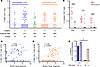 Figure 3
Coccidioides-specific T cell responses for 161 individuals by disease category. (A) AIM responses stratified by Coccidioides disease category. Limit of detection = 0.05%, values below dotted line are negative. (B) IFN-γ, IL-4, and IL-17 production of CD4+ T cells stimulated with FKS or FKC from individuals with positive Coccidioides-specific T cell responses by AIM assay (AIM+, pink, N = 22) or no response (AIM negative, grey, N = 14). Comparisons by Wilcoxon signed rank test. (C and D), Spearman correlation of Coccidioides-specific T cell responses by AIM and time since diagnosis for (C) UVF and (D) DCM. (E) Number of individuals with UVF or DCM within 10 months of diagnosis with positive or negative Coccidioides-specific T cell responses by AIM assay. Fisher’s exact test. *P < 0.05; ****P < 0.0005.
Most of our individuals with DCM were recruited years after their initial diagnosis and those with UVF were mostly recruited within 1 year. To investigate whether the proximity of blood sampling to diagnosis affected T cell responses, we compared AIM responses by time since Coccidioides diagnosis. The result revealed a strikingly low response rate among individuals with DCM recruited early in disease (Figure 3, C and D); only 1 of 13 (8%) individuals with DCM within 10 months of diagnosis demonstrated a positive AIM response. In contrast, positive responses were detected for 15 of 34 (44%) individuals with UVF within 10 months of diagnosis (P = 0.04, Fisher’s exact test; Figure 3E). These results reveal an almost 1-year refractory period of Coccidioides antigen recognition by CD4+ T cells for individuals with DCM but not UVF.
We compared AIM responses by age and sex, as these variables also differed between UVF and DCM (Supplemental Figure 7). AIM responses did not vary significantly with age (Supplemental Figure 7, A and B). For both UVF and DCM, a larger percentage of females were AIM responders than males (Supplemental Figure 7, C and D). This sex-dependent difference in response rate was more was pronounced in DCM (female, 68%; male, 45%) than UVF (female, 55%; male, 47%) but was not statistically significant (P = 0.09, 0.6, respectively, by Fisher’s exact test).
Patients with DCM with detectable T cell responses show an exhausted phenotype and respond to checkpoint blockade in vitro. Having identified an apparent deficit in the induction of T cell responses in DCM, we then assessed whether patients with DCM with T cell responses (i.e., AIM-positive) demonstrated functional T cell exhaustion. Revisiting the PBMC T cell phenotypes presented in Figure 1 among just the AIM-positive individuals, more CD4+ T cells expressed PD-1 in AIM-positive DCM individuals compared with AIM-positive UVF individuals (median = 24% vs. 20%, P = 0.01 by Mann-Whitney U test; Figure 4A). Interestingly, CD4+ T cell PD-1 expression was significantly lower in the AIM-negative DCM group (median = 17%, P = 0.005 by Mann-Whitney U test; Figure 4A), suggesting that the increased PD-1 expression in DCM may be driven by Coccidioides-specific immunity. Phenotypes also showed decreased naive CD4+ T cells and increased CD4+ TCM cells in AIM-positive DCM compared with AIM-negative DCM and UVF, consistent with a more antigen-experienced state, without significantly different HLA-DR expression (Figure 4, B–D).
 Figure 4
Checkpoint blockade augments Coccidioides-specific T cell responses in some individuals with DCM. (A–D) PBMC CD4+ T cell phenotypes were compared between AIM-positive UVF (dark blue, N = 29), AIM-positive DCM (dark orange, N = 34), AIM-negative UVF (light blue N = 30), and AIM-negative DCM (light orange N = 39) individuals. We specifically assessed (A) CD4+PD-1+, (B) CD4+ naive, (C) CD4+ central memory (CM), and (D) CD4+HLA-DR+ populations. Statistical comparisons by Mann-Whitney U test. *P < 0.05; **P < 0.01. (E and F) PBMCs from N = 13 AIM-positive DCM individuals were cultured with media alone (No Stim), FKS with isotype control antibody, or FKS with anti–PD-1 antibody. IFN-γ, IL-4, and IL-17A production was measured by intracellular staining and flow cytometry. (E) Representative patient data. (F) Fold change in cytokine production; each symbol represents 1 patient.
We tested whether Coccidioides-specific T cell effector responses could be augmented by checkpoint blockade. PBMCs from 13 AIM-positive DCM individuals were stimulated with FKS or FKC in the presence of PD-1 inhibitor or isotype control (Figure 4, E and F). Ten individuals (77%) showed an increase in CD4+ T cell IFN-γ production with PD-1 blockade, and in 6 individuals (46%) the increase was 2-fold or greater (Figure 4F). Increases in IL-17A production, and to a lesser extent IL-4 production, were observed in some individuals as well. Checkpoint blockade did not boost cytokine production in AIM-negative individuals.
We attempted to identify phenotypic or demographic correlates associated with response to checkpoint blockade. Fold change in IFN-γ production against Coccidioides antigen with PD-1 blockade was compared to phenotypic markers, AIM response, age, and time since infection by linear regression (Supplemental Figure 8). The 2 highest responders (representing IFN-γ fold changes of 4.2 and 6.6) were both female with CD4+ T cell PD-1 expression of greater than 40%; the 3 nonresponders were all male. However, no phenotypic or demographic variable assessed showed significant variation with response to PD-1 blockade.


