
Submit a comment
Abstract
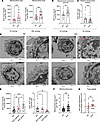
Systemic lupus erythematosus (SLE) is a chronic autoimmune disease characterized by immune dysregulation and widespread inflammation. NK cells display marked functional impairment in SLE, including defective cytotoxicity and cytokine production, but the underlying mechanisms remain poorly defined. Here, we show that mitochondrial dysfunction and impaired mitophagy are key contributors to NK cell abnormalities in SLE. Using complementary structural, metabolic, and proteomic analyses, we found that SLE NK cells accumulate enlarged and dysfunctional mitochondria, exhibit impaired lysosomal acidification, and release mitochondrial DNA into the cytosol — features consistent with defective mitochondrial quality control. Transcriptional and proteomic profiling revealed downregulation of key mitophagy-related genes and pathways. These abnormalities correlated with reduced NK cell degranulation and cytokine production. We then tested whether enhancing mitochondrial quality control could restore NK cell function. The mitophagy activator Urolithin A improved mitochondrial and lysosomal parameters and rescued NK cell effector responses in vitro. Hydroxychloroquine partially restored mitochondrial recycling and reduced cytosolic mtDNA. These findings suggest that defective mitophagy and mitochondrial dysfunction are major contributors to NK cell impairment in SLE and that targeting mitochondrial quality control may represent a promising strategy for restoring immune balance in this disease.
Authors
Natalia Fluder, Morgane Humbel, Emeline Recazens, Alexis A. Jourdain, Camillo Ribi, George Tsokos, Denis Comte
Guidelines
The Editorial Board will only consider comments that are deemed relevant and of interest to readers. The Journal will not post data that have not been subjected to peer review; or a comment that is essentially a reiteration of another comment.
- Comments appear on the Journal’s website and are linked from the original article’s web page.
- Authors are notified by email if their comments are posted.
- The Journal reserves the right to edit comments for length and clarity.
- No appeals will be considered.
- Comments are not indexed in PubMed.
Specific requirements
- Maximum length, 400 words
- Entered as plain text or HTML
- Author’s name and email address, to be posted with the comment
- Declaration of all potential conflicts of interest (even if these are not ultimately posted); see the Journal’s conflict-of-interest policy
- Comments may not include figures


