
Research ArticleCardiologyCell biology
Open Access |  10.1172/jci.insight.197555
E3 ubiquitin ligase TRIM21-mediated K48-linked ubiquitination of ALDH2 rs671 mutant promotes adverse cardiac remodeling
Tianrui Han,1,2,3,4,5 Xin Wen,1,2,3,4,5 Yunyun Guo,1,2,3,4,5 Xiangkai Zhao,1,2,3,4,5 Jian Zhang,1,2,3,4,5 Yuguo Chen,1,2,3,4,5 and Feng Xu1,2,3,4,5
1Department of Emergency Medicine, Qilu Hospital of Shandong University, Jinan, China.
2Shandong Provincial Clinical Research Center for Emergency and Critical Care Medicine, Institute of Emergency and Critical Care Medicine of Shandong University, Chest Pain Center, Qilu Hospital of Shandong University, Jinan, China.
3Medical and Pharmaceutical Basic Research Innovation Center of Emergency and Critical Care Medicine, China’s Ministry of Education, Shandong Provincial Engineering Laboratory for Emergency and Critical Care Medicine, Key Laboratory of Emergency and Critical Care Medicine of Shandong Province, Key Laboratory of Cardiopulmonary-Cerebral Resuscitation Research of Shandong Province, Qilu Hospital of Shandong University, Jinan, China.
4NMPA Key Laboratory for Clinical Research and Evaluation of Innovative Drug, Qilu Hospital of Shandong University, Jinan, China.
5National Key Laboratory for Innovation and Transformation of Luobing Theory, The Key Laboratory of Cardiovascular Remodeling and Function Research, Chinese Ministry of Education, Chinese National Health Commission and Chinese Academy of Medical Sciences, Qilu Hospital of Shandong University, Jinan, China.
Find articles by Han, T. in: PubMed | Google Scholar
1Department of Emergency Medicine, Qilu Hospital of Shandong University, Jinan, China.
2Shandong Provincial Clinical Research Center for Emergency and Critical Care Medicine, Institute of Emergency and Critical Care Medicine of Shandong University, Chest Pain Center, Qilu Hospital of Shandong University, Jinan, China.
3Medical and Pharmaceutical Basic Research Innovation Center of Emergency and Critical Care Medicine, China’s Ministry of Education, Shandong Provincial Engineering Laboratory for Emergency and Critical Care Medicine, Key Laboratory of Emergency and Critical Care Medicine of Shandong Province, Key Laboratory of Cardiopulmonary-Cerebral Resuscitation Research of Shandong Province, Qilu Hospital of Shandong University, Jinan, China.
4NMPA Key Laboratory for Clinical Research and Evaluation of Innovative Drug, Qilu Hospital of Shandong University, Jinan, China.
5National Key Laboratory for Innovation and Transformation of Luobing Theory, The Key Laboratory of Cardiovascular Remodeling and Function Research, Chinese Ministry of Education, Chinese National Health Commission and Chinese Academy of Medical Sciences, Qilu Hospital of Shandong University, Jinan, China.
Find articles by Wen, X. in: PubMed | Google Scholar
1Department of Emergency Medicine, Qilu Hospital of Shandong University, Jinan, China.
2Shandong Provincial Clinical Research Center for Emergency and Critical Care Medicine, Institute of Emergency and Critical Care Medicine of Shandong University, Chest Pain Center, Qilu Hospital of Shandong University, Jinan, China.
3Medical and Pharmaceutical Basic Research Innovation Center of Emergency and Critical Care Medicine, China’s Ministry of Education, Shandong Provincial Engineering Laboratory for Emergency and Critical Care Medicine, Key Laboratory of Emergency and Critical Care Medicine of Shandong Province, Key Laboratory of Cardiopulmonary-Cerebral Resuscitation Research of Shandong Province, Qilu Hospital of Shandong University, Jinan, China.
4NMPA Key Laboratory for Clinical Research and Evaluation of Innovative Drug, Qilu Hospital of Shandong University, Jinan, China.
5National Key Laboratory for Innovation and Transformation of Luobing Theory, The Key Laboratory of Cardiovascular Remodeling and Function Research, Chinese Ministry of Education, Chinese National Health Commission and Chinese Academy of Medical Sciences, Qilu Hospital of Shandong University, Jinan, China.
Find articles by Guo, Y. in: PubMed | Google Scholar
1Department of Emergency Medicine, Qilu Hospital of Shandong University, Jinan, China.
2Shandong Provincial Clinical Research Center for Emergency and Critical Care Medicine, Institute of Emergency and Critical Care Medicine of Shandong University, Chest Pain Center, Qilu Hospital of Shandong University, Jinan, China.
3Medical and Pharmaceutical Basic Research Innovation Center of Emergency and Critical Care Medicine, China’s Ministry of Education, Shandong Provincial Engineering Laboratory for Emergency and Critical Care Medicine, Key Laboratory of Emergency and Critical Care Medicine of Shandong Province, Key Laboratory of Cardiopulmonary-Cerebral Resuscitation Research of Shandong Province, Qilu Hospital of Shandong University, Jinan, China.
4NMPA Key Laboratory for Clinical Research and Evaluation of Innovative Drug, Qilu Hospital of Shandong University, Jinan, China.
5National Key Laboratory for Innovation and Transformation of Luobing Theory, The Key Laboratory of Cardiovascular Remodeling and Function Research, Chinese Ministry of Education, Chinese National Health Commission and Chinese Academy of Medical Sciences, Qilu Hospital of Shandong University, Jinan, China.
Find articles by Zhao, X. in: PubMed | Google Scholar
1Department of Emergency Medicine, Qilu Hospital of Shandong University, Jinan, China.
2Shandong Provincial Clinical Research Center for Emergency and Critical Care Medicine, Institute of Emergency and Critical Care Medicine of Shandong University, Chest Pain Center, Qilu Hospital of Shandong University, Jinan, China.
3Medical and Pharmaceutical Basic Research Innovation Center of Emergency and Critical Care Medicine, China’s Ministry of Education, Shandong Provincial Engineering Laboratory for Emergency and Critical Care Medicine, Key Laboratory of Emergency and Critical Care Medicine of Shandong Province, Key Laboratory of Cardiopulmonary-Cerebral Resuscitation Research of Shandong Province, Qilu Hospital of Shandong University, Jinan, China.
4NMPA Key Laboratory for Clinical Research and Evaluation of Innovative Drug, Qilu Hospital of Shandong University, Jinan, China.
5National Key Laboratory for Innovation and Transformation of Luobing Theory, The Key Laboratory of Cardiovascular Remodeling and Function Research, Chinese Ministry of Education, Chinese National Health Commission and Chinese Academy of Medical Sciences, Qilu Hospital of Shandong University, Jinan, China.
Find articles by Zhang, J. in: PubMed | Google Scholar
1Department of Emergency Medicine, Qilu Hospital of Shandong University, Jinan, China.
2Shandong Provincial Clinical Research Center for Emergency and Critical Care Medicine, Institute of Emergency and Critical Care Medicine of Shandong University, Chest Pain Center, Qilu Hospital of Shandong University, Jinan, China.
3Medical and Pharmaceutical Basic Research Innovation Center of Emergency and Critical Care Medicine, China’s Ministry of Education, Shandong Provincial Engineering Laboratory for Emergency and Critical Care Medicine, Key Laboratory of Emergency and Critical Care Medicine of Shandong Province, Key Laboratory of Cardiopulmonary-Cerebral Resuscitation Research of Shandong Province, Qilu Hospital of Shandong University, Jinan, China.
4NMPA Key Laboratory for Clinical Research and Evaluation of Innovative Drug, Qilu Hospital of Shandong University, Jinan, China.
5National Key Laboratory for Innovation and Transformation of Luobing Theory, The Key Laboratory of Cardiovascular Remodeling and Function Research, Chinese Ministry of Education, Chinese National Health Commission and Chinese Academy of Medical Sciences, Qilu Hospital of Shandong University, Jinan, China.
Find articles by
Chen, Y.
in:
PubMed
|
Google Scholar
|

1Department of Emergency Medicine, Qilu Hospital of Shandong University, Jinan, China.
2Shandong Provincial Clinical Research Center for Emergency and Critical Care Medicine, Institute of Emergency and Critical Care Medicine of Shandong University, Chest Pain Center, Qilu Hospital of Shandong University, Jinan, China.
3Medical and Pharmaceutical Basic Research Innovation Center of Emergency and Critical Care Medicine, China’s Ministry of Education, Shandong Provincial Engineering Laboratory for Emergency and Critical Care Medicine, Key Laboratory of Emergency and Critical Care Medicine of Shandong Province, Key Laboratory of Cardiopulmonary-Cerebral Resuscitation Research of Shandong Province, Qilu Hospital of Shandong University, Jinan, China.
4NMPA Key Laboratory for Clinical Research and Evaluation of Innovative Drug, Qilu Hospital of Shandong University, Jinan, China.
5National Key Laboratory for Innovation and Transformation of Luobing Theory, The Key Laboratory of Cardiovascular Remodeling and Function Research, Chinese Ministry of Education, Chinese National Health Commission and Chinese Academy of Medical Sciences, Qilu Hospital of Shandong University, Jinan, China.
Find articles by
Xu, F.
in:
PubMed
|
Google Scholar
|
Published February 24, 2026 - More info
JCI Insight. 2026;11(7):e197555. https://doi.org/10.1172/jci.insight.197555.
© 2026 Han et al. This work is licensed under the Creative Commons Attribution 4.0 International License. To view a copy of this license, visit http://creativecommons.org/licenses/by/4.0/.
Received: July 3, 2025; Accepted: February 17, 2026

-
Results
Efferocytosis-derived cardiac fibrosis was enhanced by myeloid-specific Aldh2 rs671 mutation. Initially, a mouse MI model was established and assessed by cardiac ultrasound and histologic morphology at different time points. The probability of survival was decreased in Aldh2 rs671 mice (Supplemental Figure 1A; supplemental material available online with this article; https://doi.org/10.1172/jci.insight.197555DS1). Furthermore, worse cardiac function and increased cardiac fibrosis were observed in Aldh2 rs671 mice compared with WT mice and, more distinctly, at 14 days after LAD ligation (Supplemental Figure 1, B–E). These results indicate that the Aldh2 rs671 variant had a greater effect on cardiac fibrosis after MI.
To determine whether macrophages contribute to in the enhanced cardiac fibrosis associated with the Aldh2 rs671 variant, BM derived from WT or rs671 mice was transplanted into irradiated WT recipients. MI was induced and cardiac function, histological morphology, and survival were assessed (Figure 1, A and B). Mice receiving the rs671 BM exhibited impaired cardiac systolic function and more severe cardiac fibrosis compared with those receiving the WT BM (Figure 1, C–G). As shown in Supplemental Figure 1, total ALDH2 rs671 mutation reduced cardiac systolic function by about 43%, while myeloid-specific rs671 mutation resulted in about 39% reduction. The extent of phenotype change resulting from total rs671 mutation and myeloid-specific rs671 mutation is approximately the same. Furthermore, immunofluorescence staining combined with TUNEL analysis showed efferocytosis deficiency in ischemic heart tissue from mice receiving the rs671 BM (Figure 1, H and I). Similar findings were observed in ischemic heart tissue and BM-derived macrophages (BMDMs) between WT and rs671 mice indicating that impaired efferocytosis contributes to cardiac fibrosis, while increased cardiomyocyte apoptosis was also observed in rs671 mice (Supplemental Figure 2, A–F). Accordingly, we focused on macrophages function in this study. In addition, we marked resident cardiac macrophages by TIM-4 and total macrophages by MOMA-2 to quantify resident macrophages and infiltrating macrophages from mice receiving ALDH2 rs671 or WT BM by immunofluorescence. The result showed no marked differences in the quantities of resident or infiltrating macrophages between mice receiving ALDH2 rs671 or WT BM following transplantation (Supplemental Figure 2, G and H).
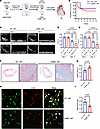 Figure 1
Post-MI cardiac fibrosis is enhanced by myeloid-specific Aldh2 rs671 variant. (A) Experimental strategy of myeloid-specific Aldh2 rs671 mice construction. (B) Probability of survival curve of WT mice transplanted WT or rs671 mice BM after MI operation. (C–E) Representative parasternal long-axis views and M-mode images. Echocardiographic analysis of ejection fraction (EF) and fractional shortening (FS) on days 0 and 14 after MI or sham operation in WT mice transplanted WT or rs671 mice BM (n = 5). (F and G) Representative Masson trichrome staining of cardiac tissue obtained from WT mice transplanted WT or rs671 mice BM on day 14 after MI operation. Quantitative analysis of collagen ratio on day 14 after MI operation (n = 5) (F) Scale bar 100 μm. (G) Scale bar 20μm. (H and I) Representative photomicrographs of terminal deoxynucleotidyl transferase dUTP nick-end labeling (TUNEL, green) staining with macrophages marker CD68 (red) in cardiac tissue obtained from WT and rs671 mice on day 14 after MI operation. Analysis of internalization of apoptotic cardiomyocytes in macrophages. Macrophages that locate close to apoptotic cells are scored as having internalized apoptotic cardiomyocytes (n = 5). White arrows indicate efferocytotic macrophages. Data are expressed as mean ± SEM. One-way ANOVA and Tukey post hoc test were used for analysis.
Efferocytosis deficiency was related to increased degradation of ALDH2 rs671 protein. Our previous study has shown that the Aldh2 rs671 variant inhibits efferocytosis during atherosclerosis by enhancing the degradation of Rac2 protein (13). Immunofluorescence showed that the same regulatory process also occurred after MI (Supplemental Figure 3, A and B). Moreover, upregulated ubiquitination and increased degradation of Rac2 were observed after MI, with rs671 protein showed even more ubiquitin level and less expression compared with WT protein (Supplemental Figure 3C). However, we observed that expression of ALDH2 rs671 mutant decreased obviously compared with WT protein. Therefore, we detected the ALDH2 protein level in both ischemic and nonischemic heart tissue from WT and rs671 mice. Compared with normal heart tissue, a remarkable decrease in ALDH2 protein level was discovered in ischemic heart tissue (Figure 2, A and B). To exclude the possibility that Aldh2 gene shows different expression levels at the mRNA stage, we also performed qPCR in mice heart tissue and no marked change was observed between WT and rs671 variant (Figure 2C). Therefore, we examined the expression level of ALDH2 protein obtained from peripheral blood mononuclear cells (PBMCs) derived from patients with MI and patients with unstable angina. We affirmed that ALDH2 rs671 protein exhibited less expression than the WT protein, while MI further dampened expression of ALDH2 protein (Figure 2, D and E). We also performed qPCR in human PBMCs and found no change between WT and rs671 variant in Aldh2 mRNA level (Figure 2F). In summary, the decreased ALDH2 protein level was due to degradation.
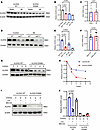 Figure 2
Degradation of ALDH2 protein undergoes proteosomal pathway. (A and B) Representative bands and quantification of ALDH2 protein level, obtained from ischemic and nonischemic heart tissue from WT and rs671 mice (n = 3). (C) Quantitative analysis of relative Aldh2 mRNA expression in ischemic heart tissue obtained from WT and rs671 mice (n = 5). (D and E) Representative bands and quantification of ALDH2 protein level was obtained from PBMCs of Aldh2 WT and rs671 individuals with or without MI (n = 4). (F) Quantitative analysis of relative Aldh2 mRNA expression in peripheral blood mononuclear cells (PBMCs) obtained from Aldh2 WT and rs671 patients with MI (n = 5). (G–J) BMDMs obtained from WT and rs671 mice were treated with cycloheximide (CHX) for the indicated times, some of which was followed by MG132 or chloroquine (CQ) stimulation (n = 3). β-Actin was used as loading control. Data are expressed as mean ± SEM. Unpaired 2-tailed Student’s t test was used for the analysis in C and F. Two-way ANOVA and Tukey post hoc test were used for the analysis in H. One-way ANOVA and Tukey post hoc test were used for the analysis in B, E, and J.
Initially, we treated BMDMs with the de novo protein synthesis inhibitor cycloheximide and measured the degradation of ALDH2. The degradation of ALDH2 was obviously increased in rs671 macrophages compared with that in WT macrophages (Figure 2, G and H). To verify the degradation pathway of the ALDH2 protein, we treated BMDMs with chloroquine or MG132 to inhibit the lysosomal or proteasomal degradation pathways. Results show that MG132 treatment substantially reduced the degradation of ALDH2, while chloroquine had no effect on ALDH2 degradation (Figure 2, I and J). These results reveal that ALDH2 mainly underwent proteasomal degradation.
Ubiquitin E3 ligase TRIM21 regulated ALDH2 protein ubiquitination. To discover the probable upstream ubiquitination pathway of ALDH2, we performed high-resolution mass spectrometry–based proteomics using primary macrophages treated with apoptotic cells (Figure 3A). The results identified 3 possible molecules interacting with ALDH2. We further cotransfected HEK293T cells with Flag-ALDH2 and HA-ubiquitin along with Myc-TRIM21, Myc-TRIM28, or V5-NEDD4. Among these, only TRIM21 was found to regulate the ubiquitination of ALDH2 (Figure 3B).
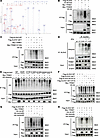 Figure 3
Ubiquitination of ALDH2 protein is mediated by E3 ligase TRIM21. (A) TRIM21 was identified in the protein mixture enriched by ALDH2 antibody. Graph represented peptide fragment GSELELLQEVR. (B) V5-NEDD4, Myc-TRIM21, and Myc-TRIM28 were separately cotransfected into HEK293T cells with Flag-ALDH2 and HA-ubiquitin. Cell lysates were subjected to coimmunoprecipitation (Co-IP) with anti-Flag antibody and followed by Western blotting. (C) Myc-TRIM21 and Myc-C16A were cotransfected into HEK293T cells with Flag-ALDH2, Flag-rs671, and HA-ubiquitin. Cell lysates were subjected to Co-IP with anti-Flag antibody and followed by Western blotting. (D) Co-IP using anti-ALDH2 antibody was performed with lysates from Aldh2 rs671 or WT mice BMDMs treated with or without apoptotic cells (ACs) followed by Western blotting. β-Actin were used as loading controls. (E) HEK293T cells were transfected with HA-Ub and Flag-ALDH2 or its single site mutation, with or without Myc-TRIM21. Cell lysates were subjected to Co-IP with anti-Flag antibody and followed by Western blotting. (F) Flag-ALDH2, Flag-rs671, Flag-ALDH2 (K73), and Flag-rs671 (K73) were cotransfected into HEK293T cells with Myc-TRIM21 and HA-ubiquitin. Cell lysates were subjected to Co-IP with anti-Flag antibody and followed by Western blotting. (G) HA-ubiquitin, HA-ubiquitin (K48R), and HA-ubiquitin (K63R) were cotransfected into HEK293T cells with Flag-ALDH2 and Myc-TRIM21. Cell lysates were subjected to Co-IP with anti-Flag antibody and followed by Western blotting. (H) HA-ubiquitin, HA-ubiquitin (K48) and HA-ubiquitin (K63) were cotransfected into HEK293T cells with Flag-ALDH2 and Myc-TRIM21. Cell lysates were subjected to Co-IP with anti-Flag antibody and followed by Western blotting.
Moreover, we used a Myc-TRIM21 C16A mutant plasmid to confirm the regulatory effect of TRIM21 on ALDH2 rs671 or WT protein, discovering a higher ubiquitination level in rs671 protein compared with WT protein (Figure 3C). To corroborate these findings in a physiologically relevant context, we utilized BMDMs derived from WT and rs671 mice treated with or without apoptotic cells to perform coimmunoprecipitation (Co-IP) between ALDH2 and ubiquitin, confirming that the ubiquitination level of ALDH2 increased during efferocytosis (Figure 3D). To verify which ubiquitination site of ALDH2 TRIM21 modulated, we constructed K52R, K73R, K195R, K378R, K383R, and K451R of ALDH2 and cotransfected with or without HA-ubiquitin and Myc-TRIM21. Results showed that K73R was resistant to TRIM21 modulating ubiquitination (Figure 3E). Furthermore, we constructed K73 mutation plasmids of both ALDH2 WT and rs671 and cotransfected with or without HA-ubiquitin and Myc-TRIM21 again. Results indicate that K73 mutation did not block ubiquitination of ALDH2, and ALDH2 rs671 K73 mutant still exhibited higher ubiquitination level than WT K73 mutant (Figure 3F). These results imply that ALDH2 mainly modulated the ubiquitination of ALDH2 at lysine 73.
To investigate the type of TRIM21-mediated ubiquitination of ALDH2, we used vectors expressing HA-tagged ubiquitin K48, K63, K48R, and K63R mutant to be cotransfected with Flag-ALDH2, and with or without Myc-TRIM21. Results showed that TRIM21 increased the ubiquitination of ALDH2 with the K63R-ubiquitin plasmid rather than the K48R-ubiquitin plasmid, while ALDH2 cotransfected with K48-ubiquitin showed raised ubiquitination level compared with ALDH2 cotransfected with K63-ubiquitin (Figure 3, G and H). Through results above, we confirmed that TRIM21 modulates K48-linked polyubiquitination of ALDH2. Additionally, we reconfirmed that ALDH2 also regulated K48-link polyubiquitination of Rac2 (Supplemental Figure 3D).
To detect whether TRIM21 interacts directly with ALDH2, we transfected Flag-ALDH2 or Flag-rs671 with Myc-TRIM21 into HEK293T cells. In Co-IP assays, we observed that TRIM21 interacted with ALDH2, and increased binding was found between the rs671 mutant and TRIM21 (Figure 4, A and B). We also found that TRIM21 expression does not differ between WT mice and those carrying the ALDH2 rs671 mutant, which is validated in human PBMCs (Supplemental Figure 4A). These results indicate that higher ubiquitination of ALDH2 rs671 mutant is due to increased binding between the rs671 mutant and TRIM21. In vivo Co-IP was also performed to confirm the results above (Figure 4, C and D). We further assessed the direct interaction between TRIM21 and ALDH2 in BMDMs treated with apoptotic cells, finding no remarkable change of binding ability between TRIM21 and ALDH2 during the process of efferocytosis (Figure 4, E and F). However, we observed that apoptotic cell treatment slightly increased TRIM21 expression, which is consistent with Figure 3D. Conclusively, increased ubiquitination level of ALDH2 caused by apoptotic cells treatment is mainly due to higher TRIM21 expression level but not increasing binding with TRIM21 and ALDH2. Finally, in order to verify the direct interaction between TRIM21 and ALDH2, we did a proximity ligation assay (PLA) between the 2 proteins and then used confocal microscopy to capture the images for analysis. Result show that TRIM21 did have direct interaction with ALDH2 (Figure 4G).
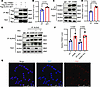 Figure 4
TRIM21 directly interacts with ALDH2. (A and B) Flag-ALDH2 or Flag-rs671 were cotransfected into HEK293T cells with Myc-Rac2. Cell lysates were subjected to Co-IP with anti-Myc antibody and followed by Western blotting. Quantitative analysis of relative ALDH2 level of lysates (n = 3). (C and D) Co-IP using anti-ALDH2 antibody was performed with lysates from WT and rs671 mice BMDMs. Quantitative analysis of relative TRIM21 level of lysates (n = 3). (E and F) Co-IP using anti-ALDH2 antibody was performed with lysates from WT and rs671 mice BMDMs treated with or without apoptotic cells. Quantitative analysis of relative TRIM21 level of lysates (n = 3). (G) Proximity ligation assay (PLA) of TRIM21 and ALDH2 in mice primary peritoneal macrophages. Binding TRIM21 and ALDH2 are red-stained. Scale bar 50 μm. β-Actin were used as loading controls. Data are expressed as mean ± SEM. Unpaired 2-tailed Student’s t test were used for the analysis in B and D. One-way ANOVA and Tukey post hoc test were used for the analysis in F.
Macrophage-specific Trim21 downregulation rescued deficient efferocytosis-derived cardiac fibrosis owing to Aldh2 rs671 variant. After clarifying the interaction between TRIM21 and ALDH2, we used AAV-Aldh2 to carry out rescue experiments. AAV-scramble and AAV-Aldh2 were injected into 6-week-old WT and rs671 mice via the tail vein, and an MI model was established 2 weeks after virus injection. Infection rate of AAV was detected by examining ALDH2 expression level in BMDMs obtained from injected mice (Supplemental Figure 4B). We found that overexpression of ALDH2 was able to relieve the descending range of cardiac function after MI and mitigated cardiac fibrosis during cardiac repair (Figure 5, A–E). Efferocytosis rate was also enhanced by overexpression of ALDH2 after MI (Supplemental Figure 5, A and B).
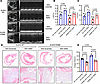 Figure 5
Aldh2 overexpressing rescues worsened cardiac function induced by Aldh2 rs671 variant. (A–C) Representative parasternal long-axis views and M-mode images. Echocardiographic analysis of LVEF and LVFS on days 14 after MI in WT and rs671 mice injected with AAV-scramble or AAV-Aldh2 (n = 5). (D and E) Representative Masson trichrome staining of cardiac tissue obtained from WT and rs671 mice injected with AAV-scramble or AAV-Aldh2 on day 14 after MI operation. Quantitative analysis of collagen ratio on day 14 after MI operation (n = 5). Data are expressed as mean ± SEM. One-way ANOVA and Tukey post hoc test were used for analysis. (D) Scale bar 100 μm.
To further elucidate the role of TRIM21 in macrophages during cardiac fibrosis following MI, we generated Trim21 macrophage–specific silencing mice using adeno-associated virus (AAV). AAV-scramble and AAV-shTrim21 using the CD68 promoter were injected into 6-week-old WT and rs671 mice via the tail vein, and an MI model was established 2 weeks after virus injection. The findings indicate that the TRIM21 protein level decreased significantly after AAV-shTrim21 injection (Supplemental Figure 4C). First, primary peritoneal macrophages from these mice were treated with apoptotic cells. Immunofluorescence showed that downregulating Trim21 rescued the deficient efferocytosis induced by the Aldh2 rs671 variant (Supplemental Figure 4, D and E). We also observed the probability of survival of these mice (Figure 6A).
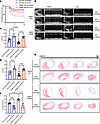 Figure 6
Macrophage-specific Trim21 downregulating ameliorates cardiac fibrosis owing to Aldh2 rs671 variant. (A) Probability of survival curve of Aldh2 WT and rs671 mice injected with CD68-promoter AAV-scramble or AAV-shTrim21 after MI operation. (B–D) Representative parasternal long-axis views and M-mode images. Echocardiographic analysis of LVEF and LVFS on days 14 after MI or sham operation in WT and rs671 mice injected with CD68-promoter AAV-scramble or AAV-shTrim21 (n = 10). (E and F) Representative Masson trichrome staining of cardiac tissue obtained from WT and rs671 mice injected with CD68-promoter AAV-scramble or AAV-shTrim21 on days 14 after MI operation. Quantitative analysis of collagen ratio on day 14 after MI operation (n = 10). Data are expressed as mean ± SEM. One-way ANOVA and Tukey post hoc test were used for analysis.
Furthermore, we assessed cardiac function and histological morphology. Compared with mice injected with AAV-scramble, mice injected with AAV-shTrim21 displayed mitigated cardiac function (Figure 6, B–D). In addition, cardiac fibrosis was alleviated after downregulating Trim21 (Figure 6, E and F). We also observed increased efferocytosis after Trim21 downregulation by immunofluorescence (Supplemental Figure 5, C and D). These results reveal that the rs671 mutant-mediated cardiac fibrosis deficiency was improved by downregulating Trim21.
-
Discussion
This study demonstrates the ubiquitination regulatory function of the E3 ligase TRIM21 toward ALDH2 (Figure 7). TRIM21 directly binds to and promotes K48-linked ubiquitination of the ALDH2 rs671 mutant. Enhanced binding affinity between TRIM21 and the ALDH2 rs671 protein results in increased ubiquitination and accelerated degradation of ALDH2. Following MI, TRIM21 expression is upregulated, further augmenting its interaction with ALDH2 and promoting ubiquitination of ALDH2. This mechanism may explain why ALDH2 is downregulated after MI. These findings suggest that targeting TRIM21 expression or disrupting its interaction with ALDH2 may offer a therapeutic approach for MI. Collectively, our results provide a convincing explanation for why the ALDH2 rs671 protein shows increased degradation. Additionally, the potential upstream pathway of ALDH2 regulating the ubiquitination of Rac2 has been clarified in this study. Furthermore, the TRIM21-ALDH2-Rac2-efferocytosis axis has been revealed during cardiac fibrosis after MI, which may partially answer previous clinical questions about how the Aldh2 rs671 variant confers an elevated risk of HF after MI.
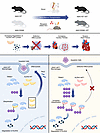 Figure 7
TRIM21 mediated K48-linked ubiquitination of ALDH2 rs671 mutant promotes adverse cardiac remodeling by suppressing efferocytosis. TRIM21 directly interacted with ALDH2 and upregulating ALDH2 rs671 mutant K48-linked ubiquitination. Increasing ALDH2 degradation accelerated Rac2 degradation and resulted in efferocytosis deficiency. Ultimately, Aldh2 rs671 variant led to adverse cardiac remodeling after MI.
Several studies have clarified a potentially novel nonenzymatic function of ALDH2 in cardiovascular diseases. For example, phosphorylated ALDH2 induced by AMPK translocate to the nucleus to regulate the transcription of Atp6v0e2, regulating lysosomal function and autophagy and preventing foam cell formation during atherosclerosis (14). Our previous research demonstrated that the mutant ALDH2 rs671 protein showed a reduced interaction with Rac2, resulting in increased ubiquitination of Rac2. Enhanced Rac2 protein degradation subsequently led to impaired efferocytosis in macrophages, thereby accelerating necrotic core formation during atherosclerosis (13). Furthermore, studies focusing on the upstream regulation of ALDH2 are still lacking. We used mass spectrometry–based proteomics and finally identified that E3 ligase TRIM21 interacted with ALDH2.
TRIM21 is a member of the tripartite motif protein (TRIM) family, which consists of more than 80 proteins. The TRIM21 gene, situated on chromosome 11, encodes a ubiquitously expressed protein known as a RING-dependent E3 ligase, which is present in both the cytoplasm and nucleus of cells (15–17). TRIM21 protein is widely recognized for its role in inflammation (18–21), cancer (22–25), and autoimmunity (26–29), including systemic lupus erythematosus (30, 31) and Sjögren’s syndrome (32). Moreover, TRIM21 has been shown to participate in MI. A previous study demonstrated that KO of TRIM21 mitigated MI-induced atrial remodeling by triggering the NF-κB signaling pathway activation, thus promoting Nox2 expression. Upregulation of Nox2 promotes ROS production, oxidative damage, and inflammation, ultimately leading to atrial remodeling (33). In addition, TRIM21 aggravated post-MI cardiac injury by enhancing M1 macrophage polarization (34). More recently, TRIM21 was found to exacerbate hypoxia-induced cardiomyocyte pyroptosis in post-MI HF (35) and to enhance I/R injury by blocking FAK/NF-κB signaling pathway (36). In this study, we revealed an alternative pathway of TRIM21 affecting cardiac fibrosis after MI: the ubiquitination of ALDH2 and defective efferocytosis. Additionally, since our study utilized BM chimeric mice and previous studies have demonstrated that TRIM21 can also regulate other immune cells such as CD4+ T cells (37) and CD8+ T cells (38), whether TRIM21 affects cardiac remodeling via regulating other immune cells needs further exploration.
The Aldh2 rs671 variant represents a prevalent genetic variation among the East Asian population (39). Accumulating evidence indicates that ALDH2 confers cardiovascular protection through multiple mechanisms, including ischemic preconditioning (40, 41), autophagy (42), and the renin-angiotensin system (RAS) (43). Our study defines a mechanism by which ALDH2 exerts cardioprotective function by regulating efferocytosis in macrophages. Compared with the rs671 mutant, WT ALDH2 protein is less ubiquitinated by TRIM21, thereby stabilizing Rac2 to ensure continuous efferocytosis. These processes prevent the aggravation of cardiac fibrosis, avoiding enhanced cardiac remodeling.
Macrophages play a pivotal role in mediating post-MI cardiac inflammation. Removal or alteration of these cells during either the proinflammatory or reparative phases of immune response significantly affects the functional recovery of cardiac tissue (44–47). Emerging evidence suggests that the majority of macrophages infiltrating the heart after MI predominantly derive from monocyte precursors originating in hematopoietic tissues (48, 49), while the capacity of resident cardiac macrophages to undergo local proliferation plays a significant role in mediating both adaptive healing and/or maladaptive responses in the injured myocardium (8, 50, 51). Several studies have revealed different functions of macrophages in cardiac remodeling. Deniset et al. found that resident Gata6+ macrophages in pericardial fluid played a crucial role in preventing fibrosis of healthy myocardium and improved functional cardiac recovery after ischemic injury (52). Numerous studies have also clarified that shifting the macrophage phenotype from the proinflammatory M1-like macrophage to an antiinflammatory M2-like macrophage protects the heart from adverse remodeling following AMI. In this study, we found that a lack of efferocytosis aggravated cardiac fibrosis and impaired cardiac function, leading to worsening cardiac remodeling. Deficient efferocytosis leads to prolonged inflammation induced by uncleared apoptotic cardiomyocytes and polarization of proinflammatory macrophages, and further it results in excretion of proinflammatory cytokines (such as IL-1β and TNF-α), causing excessive cardiac fibrosis (53, 54).
However, our study has some limitations. We mainly focused on the upstream regulation of ALDH2. The specific downstream mechanisms about how ALDH2 affects cardiac fibrosis through regulating efferocytosis still remain to be investigated. Whether TRIM21 regulating ubiquitination of ALDH2 occurs in other types of cells needs further exploration in the future as well. The certain binding site that TRIM21 interacts on ALDH2 and how the binding site affects the affinity of ubiquitination site on ALDH2 remains to be clarified. Furthermore, since ALDH2 also has its traditional enzymatic functions, we are going to be exploring whether TRIM21-regulating ALDH2 has an influence on post-MI cardiac remodeling through accumulating toxic aldehydes in our following studies.
Additionally, translational medical research targeting TRIM21 and ALDH2 in MI requires further development. Although pharmacological drugs directly targeting ALDH2 are limited, a compound known as fedratinib, has been reported to inhibit TRIM21 expression (55). Our study provides a potential therapeutic role of TRIM21 inhibitors for preventing post-MI HF.


