
Research ArticleImmunologyInfectious diseasePulmonology
Open Access |  10.1172/jci.insight.198342
Human iPSC-derived alveolar macrophages reveal macrophage subtype functions of itaconate in M. tuberculosis defense
Adam S. Krebs,1,2 Tomi Lazarov,1 Anthony T. Reynolds,3 Kimberly A. Dill-McFarland,3 Abigail Xie,4,5 James M. Bean,1 Muxue Du,2 Olivier Levy,1 John A. Buglino,1 Aaron Zhong,6 Anna-Lena Neehus,7 Stéphanie Boisson-Dupuis,7 Jean-Laurent Casanova,7 Elouise E. Kroon,8 Marlo Möller,8,9,10,11 Thomas R. Hawn,3 Ting Zhou,6 Lydia W.S. Finley,4 Marc Antoine Jean Juste,12 Dan W. Fitzgerald,12,13 Frederic Geissmann,1,2 and Michael S. Glickman1,2
1Immunology Program, Sloan Kettering Institute, Memorial Sloan Kettering Cancer Center, New York, New York, USA.
2Immunology and Microbial Pathogenesis Program, Weill Cornell Medicine, New York, New York, USA.
3Department of Medicine, University of Washington, Seattle, Washington, USA.
4Cell Biology Program, Sloan Kettering Institute, New York, New York, USA.
5Weill Cornell Graduate School of Medical Sciences, Cornell University, New York, New York, USA.
6The SKI Stem Cell Research Facility, The Center for Stem Cell Biology and Developmental Biology Program, Sloan-Kettering Institute, New York, New York, USA.
7Rockefeller University, New York, New York, USA.
8South African Medical Research Council Centre for Tuberculosis Research, Division of Molecular Biology and Human Genetics, Faculty of Medicine and Health Sciences, Stellenbosch University, Cape Town, South Africa.
9Centre for Bioinformatics and Computational Biology, Stellenbosch University, Cape Town, South Africa.
10National Institute for Theoretical and Computational Sciences (NITheCS) South Africa.
11Genomics for Health in Africa (GHA), Africa-Europe Cluster of Research Excellence (CoRE), Ghana.
12GHESKIO Center, Port Au Prince, Haiti.
13 Center for Global Health, Weill Cornell Medicine, New York, New York, USA.
Address correspondence to: Michael S. Glickman, PO Box 471, 1275 York Ave., New York, New York, 10065, USA. Phone: 646.888.2368; Email: glickmam@mskcc.org.
Find articles by Krebs, A. in: PubMed | Google Scholar
1Immunology Program, Sloan Kettering Institute, Memorial Sloan Kettering Cancer Center, New York, New York, USA.
2Immunology and Microbial Pathogenesis Program, Weill Cornell Medicine, New York, New York, USA.
3Department of Medicine, University of Washington, Seattle, Washington, USA.
4Cell Biology Program, Sloan Kettering Institute, New York, New York, USA.
5Weill Cornell Graduate School of Medical Sciences, Cornell University, New York, New York, USA.
6The SKI Stem Cell Research Facility, The Center for Stem Cell Biology and Developmental Biology Program, Sloan-Kettering Institute, New York, New York, USA.
7Rockefeller University, New York, New York, USA.
8South African Medical Research Council Centre for Tuberculosis Research, Division of Molecular Biology and Human Genetics, Faculty of Medicine and Health Sciences, Stellenbosch University, Cape Town, South Africa.
9Centre for Bioinformatics and Computational Biology, Stellenbosch University, Cape Town, South Africa.
10National Institute for Theoretical and Computational Sciences (NITheCS) South Africa.
11Genomics for Health in Africa (GHA), Africa-Europe Cluster of Research Excellence (CoRE), Ghana.
12GHESKIO Center, Port Au Prince, Haiti.
13 Center for Global Health, Weill Cornell Medicine, New York, New York, USA.
Address correspondence to: Michael S. Glickman, PO Box 471, 1275 York Ave., New York, New York, 10065, USA. Phone: 646.888.2368; Email: glickmam@mskcc.org.
Find articles by
Lazarov, T.
in:
PubMed
|
Google Scholar
|

1Immunology Program, Sloan Kettering Institute, Memorial Sloan Kettering Cancer Center, New York, New York, USA.
2Immunology and Microbial Pathogenesis Program, Weill Cornell Medicine, New York, New York, USA.
3Department of Medicine, University of Washington, Seattle, Washington, USA.
4Cell Biology Program, Sloan Kettering Institute, New York, New York, USA.
5Weill Cornell Graduate School of Medical Sciences, Cornell University, New York, New York, USA.
6The SKI Stem Cell Research Facility, The Center for Stem Cell Biology and Developmental Biology Program, Sloan-Kettering Institute, New York, New York, USA.
7Rockefeller University, New York, New York, USA.
8South African Medical Research Council Centre for Tuberculosis Research, Division of Molecular Biology and Human Genetics, Faculty of Medicine and Health Sciences, Stellenbosch University, Cape Town, South Africa.
9Centre for Bioinformatics and Computational Biology, Stellenbosch University, Cape Town, South Africa.
10National Institute for Theoretical and Computational Sciences (NITheCS) South Africa.
11Genomics for Health in Africa (GHA), Africa-Europe Cluster of Research Excellence (CoRE), Ghana.
12GHESKIO Center, Port Au Prince, Haiti.
13 Center for Global Health, Weill Cornell Medicine, New York, New York, USA.
Address correspondence to: Michael S. Glickman, PO Box 471, 1275 York Ave., New York, New York, 10065, USA. Phone: 646.888.2368; Email: glickmam@mskcc.org.
Find articles by
Reynolds, A.
in:
PubMed
|
Google Scholar
|
1Immunology Program, Sloan Kettering Institute, Memorial Sloan Kettering Cancer Center, New York, New York, USA.
2Immunology and Microbial Pathogenesis Program, Weill Cornell Medicine, New York, New York, USA.
3Department of Medicine, University of Washington, Seattle, Washington, USA.
4Cell Biology Program, Sloan Kettering Institute, New York, New York, USA.
5Weill Cornell Graduate School of Medical Sciences, Cornell University, New York, New York, USA.
6The SKI Stem Cell Research Facility, The Center for Stem Cell Biology and Developmental Biology Program, Sloan-Kettering Institute, New York, New York, USA.
7Rockefeller University, New York, New York, USA.
8South African Medical Research Council Centre for Tuberculosis Research, Division of Molecular Biology and Human Genetics, Faculty of Medicine and Health Sciences, Stellenbosch University, Cape Town, South Africa.
9Centre for Bioinformatics and Computational Biology, Stellenbosch University, Cape Town, South Africa.
10National Institute for Theoretical and Computational Sciences (NITheCS) South Africa.
11Genomics for Health in Africa (GHA), Africa-Europe Cluster of Research Excellence (CoRE), Ghana.
12GHESKIO Center, Port Au Prince, Haiti.
13 Center for Global Health, Weill Cornell Medicine, New York, New York, USA.
Address correspondence to: Michael S. Glickman, PO Box 471, 1275 York Ave., New York, New York, 10065, USA. Phone: 646.888.2368; Email: glickmam@mskcc.org.
Find articles by Dill-McFarland, K. in: PubMed | Google Scholar
1Immunology Program, Sloan Kettering Institute, Memorial Sloan Kettering Cancer Center, New York, New York, USA.
2Immunology and Microbial Pathogenesis Program, Weill Cornell Medicine, New York, New York, USA.
3Department of Medicine, University of Washington, Seattle, Washington, USA.
4Cell Biology Program, Sloan Kettering Institute, New York, New York, USA.
5Weill Cornell Graduate School of Medical Sciences, Cornell University, New York, New York, USA.
6The SKI Stem Cell Research Facility, The Center for Stem Cell Biology and Developmental Biology Program, Sloan-Kettering Institute, New York, New York, USA.
7Rockefeller University, New York, New York, USA.
8South African Medical Research Council Centre for Tuberculosis Research, Division of Molecular Biology and Human Genetics, Faculty of Medicine and Health Sciences, Stellenbosch University, Cape Town, South Africa.
9Centre for Bioinformatics and Computational Biology, Stellenbosch University, Cape Town, South Africa.
10National Institute for Theoretical and Computational Sciences (NITheCS) South Africa.
11Genomics for Health in Africa (GHA), Africa-Europe Cluster of Research Excellence (CoRE), Ghana.
12GHESKIO Center, Port Au Prince, Haiti.
13 Center for Global Health, Weill Cornell Medicine, New York, New York, USA.
Address correspondence to: Michael S. Glickman, PO Box 471, 1275 York Ave., New York, New York, 10065, USA. Phone: 646.888.2368; Email: glickmam@mskcc.org.
Find articles by Xie, A. in: PubMed | Google Scholar
1Immunology Program, Sloan Kettering Institute, Memorial Sloan Kettering Cancer Center, New York, New York, USA.
2Immunology and Microbial Pathogenesis Program, Weill Cornell Medicine, New York, New York, USA.
3Department of Medicine, University of Washington, Seattle, Washington, USA.
4Cell Biology Program, Sloan Kettering Institute, New York, New York, USA.
5Weill Cornell Graduate School of Medical Sciences, Cornell University, New York, New York, USA.
6The SKI Stem Cell Research Facility, The Center for Stem Cell Biology and Developmental Biology Program, Sloan-Kettering Institute, New York, New York, USA.
7Rockefeller University, New York, New York, USA.
8South African Medical Research Council Centre for Tuberculosis Research, Division of Molecular Biology and Human Genetics, Faculty of Medicine and Health Sciences, Stellenbosch University, Cape Town, South Africa.
9Centre for Bioinformatics and Computational Biology, Stellenbosch University, Cape Town, South Africa.
10National Institute for Theoretical and Computational Sciences (NITheCS) South Africa.
11Genomics for Health in Africa (GHA), Africa-Europe Cluster of Research Excellence (CoRE), Ghana.
12GHESKIO Center, Port Au Prince, Haiti.
13 Center for Global Health, Weill Cornell Medicine, New York, New York, USA.
Address correspondence to: Michael S. Glickman, PO Box 471, 1275 York Ave., New York, New York, 10065, USA. Phone: 646.888.2368; Email: glickmam@mskcc.org.
Find articles by Bean, J. in: PubMed | Google Scholar
1Immunology Program, Sloan Kettering Institute, Memorial Sloan Kettering Cancer Center, New York, New York, USA.
2Immunology and Microbial Pathogenesis Program, Weill Cornell Medicine, New York, New York, USA.
3Department of Medicine, University of Washington, Seattle, Washington, USA.
4Cell Biology Program, Sloan Kettering Institute, New York, New York, USA.
5Weill Cornell Graduate School of Medical Sciences, Cornell University, New York, New York, USA.
6The SKI Stem Cell Research Facility, The Center for Stem Cell Biology and Developmental Biology Program, Sloan-Kettering Institute, New York, New York, USA.
7Rockefeller University, New York, New York, USA.
8South African Medical Research Council Centre for Tuberculosis Research, Division of Molecular Biology and Human Genetics, Faculty of Medicine and Health Sciences, Stellenbosch University, Cape Town, South Africa.
9Centre for Bioinformatics and Computational Biology, Stellenbosch University, Cape Town, South Africa.
10National Institute for Theoretical and Computational Sciences (NITheCS) South Africa.
11Genomics for Health in Africa (GHA), Africa-Europe Cluster of Research Excellence (CoRE), Ghana.
12GHESKIO Center, Port Au Prince, Haiti.
13 Center for Global Health, Weill Cornell Medicine, New York, New York, USA.
Address correspondence to: Michael S. Glickman, PO Box 471, 1275 York Ave., New York, New York, 10065, USA. Phone: 646.888.2368; Email: glickmam@mskcc.org.
Find articles by Du, M. in: PubMed | Google Scholar
1Immunology Program, Sloan Kettering Institute, Memorial Sloan Kettering Cancer Center, New York, New York, USA.
2Immunology and Microbial Pathogenesis Program, Weill Cornell Medicine, New York, New York, USA.
3Department of Medicine, University of Washington, Seattle, Washington, USA.
4Cell Biology Program, Sloan Kettering Institute, New York, New York, USA.
5Weill Cornell Graduate School of Medical Sciences, Cornell University, New York, New York, USA.
6The SKI Stem Cell Research Facility, The Center for Stem Cell Biology and Developmental Biology Program, Sloan-Kettering Institute, New York, New York, USA.
7Rockefeller University, New York, New York, USA.
8South African Medical Research Council Centre for Tuberculosis Research, Division of Molecular Biology and Human Genetics, Faculty of Medicine and Health Sciences, Stellenbosch University, Cape Town, South Africa.
9Centre for Bioinformatics and Computational Biology, Stellenbosch University, Cape Town, South Africa.
10National Institute for Theoretical and Computational Sciences (NITheCS) South Africa.
11Genomics for Health in Africa (GHA), Africa-Europe Cluster of Research Excellence (CoRE), Ghana.
12GHESKIO Center, Port Au Prince, Haiti.
13 Center for Global Health, Weill Cornell Medicine, New York, New York, USA.
Address correspondence to: Michael S. Glickman, PO Box 471, 1275 York Ave., New York, New York, 10065, USA. Phone: 646.888.2368; Email: glickmam@mskcc.org.
Find articles by Levy, O. in: PubMed | Google Scholar
1Immunology Program, Sloan Kettering Institute, Memorial Sloan Kettering Cancer Center, New York, New York, USA.
2Immunology and Microbial Pathogenesis Program, Weill Cornell Medicine, New York, New York, USA.
3Department of Medicine, University of Washington, Seattle, Washington, USA.
4Cell Biology Program, Sloan Kettering Institute, New York, New York, USA.
5Weill Cornell Graduate School of Medical Sciences, Cornell University, New York, New York, USA.
6The SKI Stem Cell Research Facility, The Center for Stem Cell Biology and Developmental Biology Program, Sloan-Kettering Institute, New York, New York, USA.
7Rockefeller University, New York, New York, USA.
8South African Medical Research Council Centre for Tuberculosis Research, Division of Molecular Biology and Human Genetics, Faculty of Medicine and Health Sciences, Stellenbosch University, Cape Town, South Africa.
9Centre for Bioinformatics and Computational Biology, Stellenbosch University, Cape Town, South Africa.
10National Institute for Theoretical and Computational Sciences (NITheCS) South Africa.
11Genomics for Health in Africa (GHA), Africa-Europe Cluster of Research Excellence (CoRE), Ghana.
12GHESKIO Center, Port Au Prince, Haiti.
13 Center for Global Health, Weill Cornell Medicine, New York, New York, USA.
Address correspondence to: Michael S. Glickman, PO Box 471, 1275 York Ave., New York, New York, 10065, USA. Phone: 646.888.2368; Email: glickmam@mskcc.org.
Find articles by Buglino, J. in: PubMed | Google Scholar
1Immunology Program, Sloan Kettering Institute, Memorial Sloan Kettering Cancer Center, New York, New York, USA.
2Immunology and Microbial Pathogenesis Program, Weill Cornell Medicine, New York, New York, USA.
3Department of Medicine, University of Washington, Seattle, Washington, USA.
4Cell Biology Program, Sloan Kettering Institute, New York, New York, USA.
5Weill Cornell Graduate School of Medical Sciences, Cornell University, New York, New York, USA.
6The SKI Stem Cell Research Facility, The Center for Stem Cell Biology and Developmental Biology Program, Sloan-Kettering Institute, New York, New York, USA.
7Rockefeller University, New York, New York, USA.
8South African Medical Research Council Centre for Tuberculosis Research, Division of Molecular Biology and Human Genetics, Faculty of Medicine and Health Sciences, Stellenbosch University, Cape Town, South Africa.
9Centre for Bioinformatics and Computational Biology, Stellenbosch University, Cape Town, South Africa.
10National Institute for Theoretical and Computational Sciences (NITheCS) South Africa.
11Genomics for Health in Africa (GHA), Africa-Europe Cluster of Research Excellence (CoRE), Ghana.
12GHESKIO Center, Port Au Prince, Haiti.
13 Center for Global Health, Weill Cornell Medicine, New York, New York, USA.
Address correspondence to: Michael S. Glickman, PO Box 471, 1275 York Ave., New York, New York, 10065, USA. Phone: 646.888.2368; Email: glickmam@mskcc.org.
Find articles by Zhong, A. in: PubMed | Google Scholar
1Immunology Program, Sloan Kettering Institute, Memorial Sloan Kettering Cancer Center, New York, New York, USA.
2Immunology and Microbial Pathogenesis Program, Weill Cornell Medicine, New York, New York, USA.
3Department of Medicine, University of Washington, Seattle, Washington, USA.
4Cell Biology Program, Sloan Kettering Institute, New York, New York, USA.
5Weill Cornell Graduate School of Medical Sciences, Cornell University, New York, New York, USA.
6The SKI Stem Cell Research Facility, The Center for Stem Cell Biology and Developmental Biology Program, Sloan-Kettering Institute, New York, New York, USA.
7Rockefeller University, New York, New York, USA.
8South African Medical Research Council Centre for Tuberculosis Research, Division of Molecular Biology and Human Genetics, Faculty of Medicine and Health Sciences, Stellenbosch University, Cape Town, South Africa.
9Centre for Bioinformatics and Computational Biology, Stellenbosch University, Cape Town, South Africa.
10National Institute for Theoretical and Computational Sciences (NITheCS) South Africa.
11Genomics for Health in Africa (GHA), Africa-Europe Cluster of Research Excellence (CoRE), Ghana.
12GHESKIO Center, Port Au Prince, Haiti.
13 Center for Global Health, Weill Cornell Medicine, New York, New York, USA.
Address correspondence to: Michael S. Glickman, PO Box 471, 1275 York Ave., New York, New York, 10065, USA. Phone: 646.888.2368; Email: glickmam@mskcc.org.
Find articles by Neehus, A. in: PubMed | Google Scholar
1Immunology Program, Sloan Kettering Institute, Memorial Sloan Kettering Cancer Center, New York, New York, USA.
2Immunology and Microbial Pathogenesis Program, Weill Cornell Medicine, New York, New York, USA.
3Department of Medicine, University of Washington, Seattle, Washington, USA.
4Cell Biology Program, Sloan Kettering Institute, New York, New York, USA.
5Weill Cornell Graduate School of Medical Sciences, Cornell University, New York, New York, USA.
6The SKI Stem Cell Research Facility, The Center for Stem Cell Biology and Developmental Biology Program, Sloan-Kettering Institute, New York, New York, USA.
7Rockefeller University, New York, New York, USA.
8South African Medical Research Council Centre for Tuberculosis Research, Division of Molecular Biology and Human Genetics, Faculty of Medicine and Health Sciences, Stellenbosch University, Cape Town, South Africa.
9Centre for Bioinformatics and Computational Biology, Stellenbosch University, Cape Town, South Africa.
10National Institute for Theoretical and Computational Sciences (NITheCS) South Africa.
11Genomics for Health in Africa (GHA), Africa-Europe Cluster of Research Excellence (CoRE), Ghana.
12GHESKIO Center, Port Au Prince, Haiti.
13 Center for Global Health, Weill Cornell Medicine, New York, New York, USA.
Address correspondence to: Michael S. Glickman, PO Box 471, 1275 York Ave., New York, New York, 10065, USA. Phone: 646.888.2368; Email: glickmam@mskcc.org.
Find articles by Boisson-Dupuis, S. in: PubMed | Google Scholar
1Immunology Program, Sloan Kettering Institute, Memorial Sloan Kettering Cancer Center, New York, New York, USA.
2Immunology and Microbial Pathogenesis Program, Weill Cornell Medicine, New York, New York, USA.
3Department of Medicine, University of Washington, Seattle, Washington, USA.
4Cell Biology Program, Sloan Kettering Institute, New York, New York, USA.
5Weill Cornell Graduate School of Medical Sciences, Cornell University, New York, New York, USA.
6The SKI Stem Cell Research Facility, The Center for Stem Cell Biology and Developmental Biology Program, Sloan-Kettering Institute, New York, New York, USA.
7Rockefeller University, New York, New York, USA.
8South African Medical Research Council Centre for Tuberculosis Research, Division of Molecular Biology and Human Genetics, Faculty of Medicine and Health Sciences, Stellenbosch University, Cape Town, South Africa.
9Centre for Bioinformatics and Computational Biology, Stellenbosch University, Cape Town, South Africa.
10National Institute for Theoretical and Computational Sciences (NITheCS) South Africa.
11Genomics for Health in Africa (GHA), Africa-Europe Cluster of Research Excellence (CoRE), Ghana.
12GHESKIO Center, Port Au Prince, Haiti.
13 Center for Global Health, Weill Cornell Medicine, New York, New York, USA.
Address correspondence to: Michael S. Glickman, PO Box 471, 1275 York Ave., New York, New York, 10065, USA. Phone: 646.888.2368; Email: glickmam@mskcc.org.
Find articles by
Casanova, J.
in:
PubMed
|
Google Scholar
|
1Immunology Program, Sloan Kettering Institute, Memorial Sloan Kettering Cancer Center, New York, New York, USA.
2Immunology and Microbial Pathogenesis Program, Weill Cornell Medicine, New York, New York, USA.
3Department of Medicine, University of Washington, Seattle, Washington, USA.
4Cell Biology Program, Sloan Kettering Institute, New York, New York, USA.
5Weill Cornell Graduate School of Medical Sciences, Cornell University, New York, New York, USA.
6The SKI Stem Cell Research Facility, The Center for Stem Cell Biology and Developmental Biology Program, Sloan-Kettering Institute, New York, New York, USA.
7Rockefeller University, New York, New York, USA.
8South African Medical Research Council Centre for Tuberculosis Research, Division of Molecular Biology and Human Genetics, Faculty of Medicine and Health Sciences, Stellenbosch University, Cape Town, South Africa.
9Centre for Bioinformatics and Computational Biology, Stellenbosch University, Cape Town, South Africa.
10National Institute for Theoretical and Computational Sciences (NITheCS) South Africa.
11Genomics for Health in Africa (GHA), Africa-Europe Cluster of Research Excellence (CoRE), Ghana.
12GHESKIO Center, Port Au Prince, Haiti.
13 Center for Global Health, Weill Cornell Medicine, New York, New York, USA.
Address correspondence to: Michael S. Glickman, PO Box 471, 1275 York Ave., New York, New York, 10065, USA. Phone: 646.888.2368; Email: glickmam@mskcc.org.
Find articles by Kroon, E. in: PubMed | Google Scholar
1Immunology Program, Sloan Kettering Institute, Memorial Sloan Kettering Cancer Center, New York, New York, USA.
2Immunology and Microbial Pathogenesis Program, Weill Cornell Medicine, New York, New York, USA.
3Department of Medicine, University of Washington, Seattle, Washington, USA.
4Cell Biology Program, Sloan Kettering Institute, New York, New York, USA.
5Weill Cornell Graduate School of Medical Sciences, Cornell University, New York, New York, USA.
6The SKI Stem Cell Research Facility, The Center for Stem Cell Biology and Developmental Biology Program, Sloan-Kettering Institute, New York, New York, USA.
7Rockefeller University, New York, New York, USA.
8South African Medical Research Council Centre for Tuberculosis Research, Division of Molecular Biology and Human Genetics, Faculty of Medicine and Health Sciences, Stellenbosch University, Cape Town, South Africa.
9Centre for Bioinformatics and Computational Biology, Stellenbosch University, Cape Town, South Africa.
10National Institute for Theoretical and Computational Sciences (NITheCS) South Africa.
11Genomics for Health in Africa (GHA), Africa-Europe Cluster of Research Excellence (CoRE), Ghana.
12GHESKIO Center, Port Au Prince, Haiti.
13 Center for Global Health, Weill Cornell Medicine, New York, New York, USA.
Address correspondence to: Michael S. Glickman, PO Box 471, 1275 York Ave., New York, New York, 10065, USA. Phone: 646.888.2368; Email: glickmam@mskcc.org.
Find articles by Möller, M. in: PubMed | Google Scholar
1Immunology Program, Sloan Kettering Institute, Memorial Sloan Kettering Cancer Center, New York, New York, USA.
2Immunology and Microbial Pathogenesis Program, Weill Cornell Medicine, New York, New York, USA.
3Department of Medicine, University of Washington, Seattle, Washington, USA.
4Cell Biology Program, Sloan Kettering Institute, New York, New York, USA.
5Weill Cornell Graduate School of Medical Sciences, Cornell University, New York, New York, USA.
6The SKI Stem Cell Research Facility, The Center for Stem Cell Biology and Developmental Biology Program, Sloan-Kettering Institute, New York, New York, USA.
7Rockefeller University, New York, New York, USA.
8South African Medical Research Council Centre for Tuberculosis Research, Division of Molecular Biology and Human Genetics, Faculty of Medicine and Health Sciences, Stellenbosch University, Cape Town, South Africa.
9Centre for Bioinformatics and Computational Biology, Stellenbosch University, Cape Town, South Africa.
10National Institute for Theoretical and Computational Sciences (NITheCS) South Africa.
11Genomics for Health in Africa (GHA), Africa-Europe Cluster of Research Excellence (CoRE), Ghana.
12GHESKIO Center, Port Au Prince, Haiti.
13 Center for Global Health, Weill Cornell Medicine, New York, New York, USA.
Address correspondence to: Michael S. Glickman, PO Box 471, 1275 York Ave., New York, New York, 10065, USA. Phone: 646.888.2368; Email: glickmam@mskcc.org.
Find articles by Hawn, T. in: PubMed | Google Scholar
1Immunology Program, Sloan Kettering Institute, Memorial Sloan Kettering Cancer Center, New York, New York, USA.
2Immunology and Microbial Pathogenesis Program, Weill Cornell Medicine, New York, New York, USA.
3Department of Medicine, University of Washington, Seattle, Washington, USA.
4Cell Biology Program, Sloan Kettering Institute, New York, New York, USA.
5Weill Cornell Graduate School of Medical Sciences, Cornell University, New York, New York, USA.
6The SKI Stem Cell Research Facility, The Center for Stem Cell Biology and Developmental Biology Program, Sloan-Kettering Institute, New York, New York, USA.
7Rockefeller University, New York, New York, USA.
8South African Medical Research Council Centre for Tuberculosis Research, Division of Molecular Biology and Human Genetics, Faculty of Medicine and Health Sciences, Stellenbosch University, Cape Town, South Africa.
9Centre for Bioinformatics and Computational Biology, Stellenbosch University, Cape Town, South Africa.
10National Institute for Theoretical and Computational Sciences (NITheCS) South Africa.
11Genomics for Health in Africa (GHA), Africa-Europe Cluster of Research Excellence (CoRE), Ghana.
12GHESKIO Center, Port Au Prince, Haiti.
13 Center for Global Health, Weill Cornell Medicine, New York, New York, USA.
Address correspondence to: Michael S. Glickman, PO Box 471, 1275 York Ave., New York, New York, 10065, USA. Phone: 646.888.2368; Email: glickmam@mskcc.org.
Find articles by Zhou, T. in: PubMed | Google Scholar
1Immunology Program, Sloan Kettering Institute, Memorial Sloan Kettering Cancer Center, New York, New York, USA.
2Immunology and Microbial Pathogenesis Program, Weill Cornell Medicine, New York, New York, USA.
3Department of Medicine, University of Washington, Seattle, Washington, USA.
4Cell Biology Program, Sloan Kettering Institute, New York, New York, USA.
5Weill Cornell Graduate School of Medical Sciences, Cornell University, New York, New York, USA.
6The SKI Stem Cell Research Facility, The Center for Stem Cell Biology and Developmental Biology Program, Sloan-Kettering Institute, New York, New York, USA.
7Rockefeller University, New York, New York, USA.
8South African Medical Research Council Centre for Tuberculosis Research, Division of Molecular Biology and Human Genetics, Faculty of Medicine and Health Sciences, Stellenbosch University, Cape Town, South Africa.
9Centre for Bioinformatics and Computational Biology, Stellenbosch University, Cape Town, South Africa.
10National Institute for Theoretical and Computational Sciences (NITheCS) South Africa.
11Genomics for Health in Africa (GHA), Africa-Europe Cluster of Research Excellence (CoRE), Ghana.
12GHESKIO Center, Port Au Prince, Haiti.
13 Center for Global Health, Weill Cornell Medicine, New York, New York, USA.
Address correspondence to: Michael S. Glickman, PO Box 471, 1275 York Ave., New York, New York, 10065, USA. Phone: 646.888.2368; Email: glickmam@mskcc.org.
Find articles by Finley, L. in: PubMed | Google Scholar
1Immunology Program, Sloan Kettering Institute, Memorial Sloan Kettering Cancer Center, New York, New York, USA.
2Immunology and Microbial Pathogenesis Program, Weill Cornell Medicine, New York, New York, USA.
3Department of Medicine, University of Washington, Seattle, Washington, USA.
4Cell Biology Program, Sloan Kettering Institute, New York, New York, USA.
5Weill Cornell Graduate School of Medical Sciences, Cornell University, New York, New York, USA.
6The SKI Stem Cell Research Facility, The Center for Stem Cell Biology and Developmental Biology Program, Sloan-Kettering Institute, New York, New York, USA.
7Rockefeller University, New York, New York, USA.
8South African Medical Research Council Centre for Tuberculosis Research, Division of Molecular Biology and Human Genetics, Faculty of Medicine and Health Sciences, Stellenbosch University, Cape Town, South Africa.
9Centre for Bioinformatics and Computational Biology, Stellenbosch University, Cape Town, South Africa.
10National Institute for Theoretical and Computational Sciences (NITheCS) South Africa.
11Genomics for Health in Africa (GHA), Africa-Europe Cluster of Research Excellence (CoRE), Ghana.
12GHESKIO Center, Port Au Prince, Haiti.
13 Center for Global Health, Weill Cornell Medicine, New York, New York, USA.
Address correspondence to: Michael S. Glickman, PO Box 471, 1275 York Ave., New York, New York, 10065, USA. Phone: 646.888.2368; Email: glickmam@mskcc.org.
Find articles by Jean Juste, M. in: PubMed | Google Scholar
1Immunology Program, Sloan Kettering Institute, Memorial Sloan Kettering Cancer Center, New York, New York, USA.
2Immunology and Microbial Pathogenesis Program, Weill Cornell Medicine, New York, New York, USA.
3Department of Medicine, University of Washington, Seattle, Washington, USA.
4Cell Biology Program, Sloan Kettering Institute, New York, New York, USA.
5Weill Cornell Graduate School of Medical Sciences, Cornell University, New York, New York, USA.
6The SKI Stem Cell Research Facility, The Center for Stem Cell Biology and Developmental Biology Program, Sloan-Kettering Institute, New York, New York, USA.
7Rockefeller University, New York, New York, USA.
8South African Medical Research Council Centre for Tuberculosis Research, Division of Molecular Biology and Human Genetics, Faculty of Medicine and Health Sciences, Stellenbosch University, Cape Town, South Africa.
9Centre for Bioinformatics and Computational Biology, Stellenbosch University, Cape Town, South Africa.
10National Institute for Theoretical and Computational Sciences (NITheCS) South Africa.
11Genomics for Health in Africa (GHA), Africa-Europe Cluster of Research Excellence (CoRE), Ghana.
12GHESKIO Center, Port Au Prince, Haiti.
13 Center for Global Health, Weill Cornell Medicine, New York, New York, USA.
Address correspondence to: Michael S. Glickman, PO Box 471, 1275 York Ave., New York, New York, 10065, USA. Phone: 646.888.2368; Email: glickmam@mskcc.org.
Find articles by Fitzgerald, D. in: PubMed | Google Scholar
1Immunology Program, Sloan Kettering Institute, Memorial Sloan Kettering Cancer Center, New York, New York, USA.
2Immunology and Microbial Pathogenesis Program, Weill Cornell Medicine, New York, New York, USA.
3Department of Medicine, University of Washington, Seattle, Washington, USA.
4Cell Biology Program, Sloan Kettering Institute, New York, New York, USA.
5Weill Cornell Graduate School of Medical Sciences, Cornell University, New York, New York, USA.
6The SKI Stem Cell Research Facility, The Center for Stem Cell Biology and Developmental Biology Program, Sloan-Kettering Institute, New York, New York, USA.
7Rockefeller University, New York, New York, USA.
8South African Medical Research Council Centre for Tuberculosis Research, Division of Molecular Biology and Human Genetics, Faculty of Medicine and Health Sciences, Stellenbosch University, Cape Town, South Africa.
9Centre for Bioinformatics and Computational Biology, Stellenbosch University, Cape Town, South Africa.
10National Institute for Theoretical and Computational Sciences (NITheCS) South Africa.
11Genomics for Health in Africa (GHA), Africa-Europe Cluster of Research Excellence (CoRE), Ghana.
12GHESKIO Center, Port Au Prince, Haiti.
13 Center for Global Health, Weill Cornell Medicine, New York, New York, USA.
Address correspondence to: Michael S. Glickman, PO Box 471, 1275 York Ave., New York, New York, 10065, USA. Phone: 646.888.2368; Email: glickmam@mskcc.org.
Find articles by
Geissmann, F.
in:
PubMed
|
Google Scholar
|
1Immunology Program, Sloan Kettering Institute, Memorial Sloan Kettering Cancer Center, New York, New York, USA.
2Immunology and Microbial Pathogenesis Program, Weill Cornell Medicine, New York, New York, USA.
3Department of Medicine, University of Washington, Seattle, Washington, USA.
4Cell Biology Program, Sloan Kettering Institute, New York, New York, USA.
5Weill Cornell Graduate School of Medical Sciences, Cornell University, New York, New York, USA.
6The SKI Stem Cell Research Facility, The Center for Stem Cell Biology and Developmental Biology Program, Sloan-Kettering Institute, New York, New York, USA.
7Rockefeller University, New York, New York, USA.
8South African Medical Research Council Centre for Tuberculosis Research, Division of Molecular Biology and Human Genetics, Faculty of Medicine and Health Sciences, Stellenbosch University, Cape Town, South Africa.
9Centre for Bioinformatics and Computational Biology, Stellenbosch University, Cape Town, South Africa.
10National Institute for Theoretical and Computational Sciences (NITheCS) South Africa.
11Genomics for Health in Africa (GHA), Africa-Europe Cluster of Research Excellence (CoRE), Ghana.
12GHESKIO Center, Port Au Prince, Haiti.
13 Center for Global Health, Weill Cornell Medicine, New York, New York, USA.
Address correspondence to: Michael S. Glickman, PO Box 471, 1275 York Ave., New York, New York, 10065, USA. Phone: 646.888.2368; Email: glickmam@mskcc.org.
Find articles by
Glickman, M.
in:
PubMed
|
Google Scholar
|
Published March 9, 2026 - More info
JCI Insight. 2026;11(5):e198342. https://doi.org/10.1172/jci.insight.198342.
© 2026 Krebs et al. This work is licensed under the Creative Commons Attribution 4.0 International License. To view a copy of this license, visit http://creativecommons.org/licenses/by/4.0/.
Received: July 23, 2025; Accepted: January 22, 2026

-
Results
Generation of human ipAM-Ls through hematopoietic differentiation of peripheral blood–derived iPSCs. To develop a system for generating human alveolar-like and control macrophages, we utilized GM-CSF or M-CSF, respectively, for terminal differentiation of myeloid progenitor cells produced through hematopoietic differentiation of iPSCs (46). Embryoid bodies generated from human iPSC clusters were matured for 14 days in media containing human IL-3 and M-CSF. Mature embryoid bodies produced nonadherent myeloid progenitor cells that were terminally differentiated into distinct macrophage subtypes with GM-CSF or M-CSF, which we label as ipAM-L (alveolar-like) or ipMDM-L (M-CSF–derived macrophages), respectively (Supplemental Figure 1A; supplemental material available online with this article; https://doi.org/10.1172/jci.insight.198342DS1). ipAM-L cells survived in the absence of M-CSF (data not shown), which is consistent with the in vivo observation that AMs are found in M-CSF–deficient mice (47–49).
Brightfield imaging and May-Grunwald Giemsa staining confirmed that both the ipMDM-L and ipAM-L cells resembled macrophages based on the large, irregular shape, well-defined dark nucleus, and pale pink to purple cytosol with prominent vacuoles (Supplemental Figure 1B). To determine whether ipAM-L and ipMDM-L cells differ in the expression of transcription factors characteristic of AMs in the human lung (Supplemental Figure 2A), we measured the mRNAs encoding PPARG, KLF4, CEBPB, and ATF5 (18). ipAM-L cells had significantly higher levels of PPARG and KLF4 compared with ipMDM-L cells (Figure 1A). ipAM-L cells also had a trend toward higher relative expression of CEBPB and ATF5 compared with ipMDM-L cells (Figure 1A). To assess the homogeneity of these iPSC-derived macrophage populations and to compare their surface marker expression with that of AMs in the human lung (Supplemental Figure 2A), we stained ipAM-L and ipMDM-L cells for MRC1, Dectin 1, HLA-DR, CD14, and CD11c. We observed homogenous populations of ipAM-L cells expressing higher levels of MRC1, Dectin 1, HLA-DR, and CD14, consistent with the surface phenotype of AMs (Supplemental Figure 2, B and C).
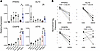 Figure 1
AM-defining transcription factors are expressed in ipAM-L cells. (A) RT-qPCR assessment of mRNAs encoding transcription factors that define tissue-resident alveolar macrophages (PPARγ, KLF4, CEBPB, ATF5) at each stage of the iPSC differentiation process (see Supplemental Figure 1A), normalized to GAPDH. Data are derived from 3 independent iPSC donors, each signified as a different symbol. Unpaired, 2-tailed t test used to assess for significant differences between ipMDM-L and ipAM-L populations; ns, not significant; *P < 0.05, **P < 0.01. (B) RNA levels encoding the transcription factors PPARγ, KLF4, CEBPB, and ATF5 in primary AMs isolated by bronchoalveolar lavage (hAM) and monocyte-derived macrophages (hMDMs) derived from reanalysis of RNA-Seq data published in Campo et al. (27).
To further interrogate the similarity of these iPSC-derived macrophage types to human AMs and MDMs, we compared transcriptional profiles of iPSC macrophages to a published dataset of AMs collected by bronchoalveolar lavage from 6 healthy donors with paired MDMs from the same donors (27). Analysis of these AM-MDM pairs confirmed upregulation PPARG, KLF4, and CEBPB in AMs (Figure 1B). To more thoroughly compare iPSC-derived ipAM-Ls and ipMDM-Ls to these primary human macrophages, we derived iPSCs from 3 donors and subsequently produced macrophages to perform RNA-Seq and compared these data to the ex vivo AMs versus MDMs. Using the 146 (Figure 2) or 736 (Supplemental Figure 3) most differentially expressed genes (DEGs) between iPSC-derived ipMDM-L and ipAM-L cells, we clustered gene expression and observed clear clustering of primary bronchoalveolar lavage–isolated AMs with ipAM-Ls and of MDMs with ipMDM-Ls (Figure 2 and Supplemental Figure 3). Taken together, these data indicate that GM-CSF–dependent differentiation of embryoid body–derived human macrophages results in a gene expression profile that resembles tissue-resident AMs, and that M-CSF–dependent differentiation of embryoid body–derived human macrophages resembles MDMs.
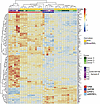 Figure 2
ipAM-Ls and ipMDM-Ls resemble human alveolar and monocyte-derived macrophages in the basal transcriptional state. The heatmap clusters the 146 most significant differentially expressed genes between iPSC-derived GM-CSF (ipAM-L) and M-CSF (ipMDM-L) cells from 3 donors (green shades) and in 6 donors (purple shades) profiled in Campo et al. (27). Also see Supplemental Figure 3 for an expanded 736 gene set.
ipAM-L cells transcriptionally resemble bona fide AMs with Mtb infection. To assess whether human iPSC-derived macrophages resemble their ex vivo AM and MDM counterparts during Mtb infection, we performed RNA-Seq of ipAM-L and ipMDM-L cells infected with Mtb. These transcriptomic profiles were compared against 2 transcriptomic datasets of Mtb-infected macrophages (27, 42). The dataset in Campo et al. was used as a reference since it evaluates the response of primary human AMs isolated by bronchioalveolar lavage to Mtb (27). The Arias et al. dataset was generated from Mtb-infected alveolar-like macrophages differentiated from PBMCs by GM-CSF, TGF-β, and synthetic surfactant (termed here blAM-L) (50) (see Table 1 for macrophage nomenclature for all populations).
With Mtb infection, primary human AMs and blAM-L macrophages had a higher number of DEGs than iPSC-derived macrophages (Supplemental Figure 4). AMs and blAM-L macrophages had 400 DEGs that changed in the same direction in response to Mtb, whereas 154 DEGs underwent transcriptional changes in the opposite direction (Supplemental Figure 4). In contrast, all 69 DEGs shared between the AMs and iPSC-derived AM-L macrophages changed in the same direction (Supplemental Figure 4). blAM-L cells were the most transcriptionally reactive to Mtb infection and, based on the number of overlapping DEGs, more closely resembled ipMDM-L cells rather than ipAM-L cells.
To better characterize the transcriptional responses of these macrophage populations to Mtb infection, pathway enrichment analysis was conducted. Mtb infection induced significant enrichment of genes in the TNF-α signaling pathway by NF-κB and inflammatory response pathways in all macrophage populations assessed (Figure 3). Genes in the IFN-γ response and apoptosis pathways were also upregulated in all macrophage types except for blAM-L macrophages (Figure 3). Comparison of the transcriptional response of Mtb-infected MDMs and ipMDM-Ls revealed highly similar pathway enrichment (Figure 3). Taken together, these data indicate that the transcriptional responses of ipAM-L, ipMDM-L, and blAM-L cells to Mtb resemble those of primary human macrophage counterparts.
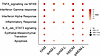 Figure 3
Conserved response of macrophage types to Mtb infection. Normalized enrichment score (NES) plotted for each hallmark pathway induced by Mtb infection for each macrophage type listed in Table 1.
Conserved response of iPSC-derived macrophages to Mtb infection across donors. Although iPSCs and the resulting macrophages derived from different donors will clearly differ due to genetic heterogeneity, to serve as a model of Mtb infection, these cells should share a core response to Mtb infection independent of donor source and differentiation instance. To assess the inter-donor and differentiation variability of the iPSC macrophage model, we differentiated ipAM-Ls and ipMDM-Ls from 3 donors. Macrophages from all donors had comparable uptake of Mtb, and ipMDM-L cells from all donors were generally restrictive of Mtb growth such that bacterial titers did not rise substantially over the input (Figure 4A). In contrast, ipAM-L cells were more permissive for Mtb growth, with bacterial titers rising on day 1 in all donors and further by day 3 in donors 2 and 3, with donor 3 being the most permissive (Figure 4B). Aggregate analysis across donors confirmed that ipAM-L cells are more permissive for tuberculosis growth than ipMDM-L cells (Figure 4C).
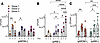 Figure 4
ipAM-Ls are permissive for tuberculosis growth. ipMDM-Ls (A) and ipAM-Ls (B) from 3 iPSC donors were infected with Mtb at a target MOI of 3. CFUs were quantified immediately after infection and 1 and 3 days after infection. Each donor is depicted with a different color. (C) Combined data from all donors for ipMDM-Ls (shaded bar) and ipAM-Ls (clear bar). Statistical significance in all panels is by 2-way ANOVA with correction for multiple comparisons. *P < 0.05, **P < 0.01, ***P <.0001, ****P < 0.00001.
To assess the conservation of the inflammatory response of ipAM-L and ipMDM-L cells to Mtb infection, we measured cytokine and chemokine levels in the supernatants of infected macrophages. Mtb infection induced all measured chemokines and cytokines, regardless of macrophage subtype or donor (Figures 5, A–F), with ipAM-L cells hypoinflammatory for most cytokines, including CXCL1 (Figure 5A), CCL4 (Figure 5B), and TNF (Figure 5C). We observed some inter-donor heterogeneity, including donor-specific differences in IL-1RA (Figure 5D), IL-1α (Figure 5E), and IL-1β (Figure 5F). Overall, these data indicate that ipAM-L and ipMDM-L cells consistently respond to Mtb infection largely independent of iPSC source and that independent derivations from distinct iPSC sources produce macrophages with conserved responses to Mtb infection.
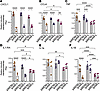 Figure 5
ipAM-L cells are hypoinflammatory with Mtb infection. Cytokine and chemokine responses of ipMDM-L or ipAM-L cells assayed on day 3 of Mtb infection. In each graph, ipMDM-L cells are the shaded bars and ipAM-L cells are clear bars, with donor identity as depicted in Figure 4A. Each y axis is the log2 fold-change of the indicated cytokine of infected/uninfected determined by Luminex (see Methods) for CXCL-1 (A), CCL4 (B), TNF (C), IL-1RA (D) IL-1α (E), and IL-1β (F). For all panels, 2-way ANOVA was used to assess variance of the samples based on infection status and within a macrophage population. *P < 0.05, **P < 0.01, ***P < 0.0001, ****P < 0.00001.
ipAM-L and ipMDM-L cells differ in itaconate production. Having established a human iPSC-derived macrophage system to study Mtb-macrophage interactions in distinct macrophage types, we sought to use this system to understand the role of itaconate in human macrophages generally and AMs specifically. We first evaluated the expression of ACOD1, encoded by ACOD1, in ipMDM-L and ipAM-L cells by stimulation with 100 ng/mL of LPS and immunoblotting using an anti-ACOD1 antibody. ACOD1 was not detected in unstimulated macrophages of either type (Figure 6A), but LPS stimulation strongly induced ACOD1 protein expression. ipMDM-Ls produced approximately 2 times higher levels of ACOD1 than ipAM-Ls (Figure 6, A and B). To confirm that itaconate production is dependent on ACOD1 in human iPSC-derived macrophages, we generated an ACOD1-deficient iPSC line using CRISPR gene editing. Two different disruptions of exon 3 were confirmed by Sanger sequencing (Supplemental Figure 5). ipMDM-L and ipAM-L cells were generated from ACOD1–/– iPSCs, indicating that itaconate is not required for macrophage development in vitro. Immunoblotting for ACOD1 in LPS-stimulated ACOD1-KO macrophages of both types confirmed the absence of ACOD1 protein after LPS stimulation (Figure 6C).
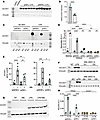 Figure 6
Human macrophages are feeble producers of itaconate with Mtb infection. (A and B) Expression of ACOD1 protein in iPSC-derived macrophage subtypes. Anti-ACOD1/Vinculin immunoblot of ipMDM-L or ipAM-L cells after 6 hours of stimulation with LPS (100 ng/mL) (A) and normalized quantitation of ACOD1 protein levels (B). ****P < 0.0001 by unpaired, 2-tailed t test.(C) Production of ACOD1–/– macrophages. ipMDM-Ls and ipAM-Ls were differentiated from CRISPR-edited iPSCs (see Supplemental Figure 5) or isogenic control cells. Anti-ACOD1 immunoblot of ipMDM-L and ipAM-L cells derived from ACOD1-deficient iPSCs or isogenic controls stimulated with LPS as in A and B. (D) Human macrophage production of itaconate. GC-MS quantification of itaconate produced by mouse BMDMs, ipMDM-Ls, ipAM-Ls, or ACOD1–/– ipMDM-Ls and ipAM-Ls without (–) or with (+) 6 hours of LPS stimulation. Itaconate levels are graphed AU by normalization to total protein levels; 2-way ANOVA used to assess variance of the samples within the same treatment group and based on stimulation status. ****P < 0.0001. (E) Gene counts of ACOD1 mRNA after 4 hours or 24 hours without (–) or with (+) Mtb infection of ipMDM-Ls or ipAM-Ls. Data derived from 3 donors in biological duplicates. ***P < 0.005 ****P < 0.0001 by 2-way ANOVA. (F) Anti-ACOD1/Vinculin immunoblot of WT ipMDM-L cells after no treatment (NT), LPS stimulation (100 ng/mL), or Mtb infection at MOI of 3 and assayed at days 1 and 2 (top), or days 0, 3, and 5 (bottom). (G) Anti-ACOD1/Vinculin immunoblot of WT ipMDM-L cells after no treatment (NT), 4 hours of LPS stimulation (100 ng/mL), or infection with Mtb at MOI of 10 for 4 hours, or both. (H) GC-MS quantification of itaconate produced by ipMDM-Ls and ipAM-Ls after 4 hours of infection with Mtb (MOI 10) or LPS (100 ng/mL). Itaconate levels were normalized to total protein levels.
To determine whether the difference in ACOD1 protein found in LPS-stimulated ipMDM-L and ipAM-L cells was reflected in itaconate production, and to confirm that ACOD1–/– macrophages do not produce itaconate, we measured itaconate levels in macrophages by gas chromatography–mass spectrometry (GC-MS). ipMDM-L cells produced higher levels of itaconate compared with ipAM-L cells by a factor of 3- to 4-fold (Figure 6D). Itaconate levels in LPS-stimulated ACOD1-deficient macrophages were similar to unstimulated cells, as assessed by GC-MS (Figure 6D), and other Krebs cycle intermediates were not substantially affected by ACOD1 deletion (Supplemental Figure 7). To better understand the differences in itaconate production between human and murine macrophages, we stimulated murine BMDMs with LPS and observed 20-fold more itaconate than activated ipMDM-Ls and 50-fold more itaconate than activated ipAM-Ls (Figure 6D). These data demonstrate that human macrophages, despite strong induction of ACOD1 by LPS, produce substantially less itaconate than murine macrophages. iPSC-derived ipMDM-L cells produce more itaconate than alveolar-like macrophages, and CRISPR modification of iPSCs can be utilized to produce ACOD1-deficient macrophages.
Attenuated itaconate production in Mtb-infected human macrophages. LPS is a strong inducer of ACOD1 expression in both mouse (41, 51) and human macrophages (Figure 6A), but whether Mtb infection is an equivalently robust inducer of the enzyme is less clear. Prior data in murine BMDMs indicated that Mtb infection did induce mRNA encoding ACOD1, albeit to a lower level than LPS (52). We first assessed whether ACOD1 transcript was induced in Mtb-infected ipMDM-L and ipAM-L cells by quantitating ACOD1 mRNA in the RNA-Seq datasets presented above and found detectable ACOD1 RNA by 4 hours of infection, which was maintained for at least 24 hours (Figure 6E). Infected ipMDM-L cells had a substantially higher induction of ACOD1 mRNA at both time points compared with ipAM-L cells, which weakly induced the transcript (Figure 6E). However, although immunoblotting with anti ACOD1 antibodies again detected expression with LPS stimulation, Mtb infection at MOI of 3 did not induce detectable ACOD1 protein over either a 2-day or an extended 5-day infection (Figure 6F). Even at the nonphysiological MOI of 10, we did not observe ACOD1 protein, although LPS was still able to induce ACOD1 in Mtb-infected macrophages, indicating that Mtb was not actively inhibiting expression (Figure 6G). Measurement of itaconate in Mtb-infected macrophages revealed that itaconate levels did not rise above the level in uninfected cells during the first 4 hours of Mtb infection, but LPS stimulation still resulted in quantifiable levels (Figure 6H), thus paralleling the protein expression data. These data indicate that Mtb infection of human macrophages weakly induces the transcript encoding the ACOD1 protein and does not result in detectable itaconate production under the conditions tested.
Itaconate deficiency impairs bacterial control by ipAM-Ls but not ipMDM-Ls. To assess the role of itaconate in macrophage control of Mtb, we assessed the capacity of ACOD1-deficient macrophages to control bacterial replication and produce cytokines and chemokines. ACOD1 deficiency had no effect on bacterial control in ipMDM-L cells (Figure 7A). However, ipAM-Ls were more permissive of bacterial growth than the ipMDM-Ls on day 5, and ACOD1 deficiency exacerbated this effect, indicating that this effect of itaconate on Mtb growth is specific to alveolar-like macrophages (Figure 7A). This result is surprising insofar as itaconate is postulated to exert a direct antimicrobial effect on intracellular bacteria, yet ipAM-L cells produce less ACOD1 protein and itaconate than ipMDM-L cells.
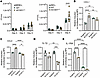 Figure 7
Macrophage type–specific roles of itaconate on Mtb control and inflammatory responses. (A) Mtb CFUs quantified from WT (green symbols) and ACOD1–/– (gold symbols) ipMDM-Ls (shaded bars) or ipAM-Ls (clear bars), infected at an MOI of 3, by day of infection (B and C). Relative concentration of CXCL1 (B) or CCL4 (C) produced by WT or ACOD1 –/– ipMDM-Ls (shaded bars) and ipAM-Ls (clear bars) on day 3 of a Mtb infection. (D and E) Relative concentration of IL-1β (D) and IL-1RA (E) produced by WT and ACOD1–/– ipMDM-Ls and ipAM-Ls on day 3 of Mtb infection. ****P < 0.0001 by 2-way ANOVA with correction for multiple comparisons.
To verify the concentrations of itaconate required to inhibit Mtb growth in vitro, Mtb was grown in oleic acid-albumin-dextrose-catalase (7H9-OADC) or media with propionate as a sole carbon source (albumin-NaCl and 10 mM sodium propionate [7H9-ANP]) supplemented with itaconate in a range of concentrations from 5 μM to 15 mM. We found 3 mM itaconate in 7H9-OADC slowed Mtb growth, and 15 mM itaconate completely inhibited growth (Supplemental Figure 6A). Itaconate was more potent in ANP media, inhibiting growth at 625 μM (Supplemental Figure 6A). To exclude media acidification as a cause of growth inhibition by itaconate, which has been noted previously (53), we buffered itaconate-supplemented media with 100 mM 3-(N-morpholino)propanesulfonic acid (MOPS) and observed that Mtb was capable of replication in 7H9-OADC even with 15 mM itaconate (Supplemental Figure 6B). In buffered 7H9-ANP, Mtb growth was completely inhibited by 3 mM itaconate or greater and partially inhibited at 125 μM, indicating that the potency of itaconate for Mtb growth inhibition is modulated by both pH and carbon source (Supplemental Figure 6B).
Macrophage subtype–specific effects of itaconate on inflammatory responses to Mtb. Since itaconate has complex effects on mouse macrophage inflammatory pathways, we determined the effect of itaconate deficiency on Mtb-driven macrophage inflammatory responses by measuring chemokines and cytokines in Mtb-infected macrophage supernatants. Although ACOD1-deficient macrophages produced cytokines and chemokines in response to Mtb, CXCL1 and CCL4 levels were higher in ACOD1-deficient ipMDM-L cells than isogenic control cells, with no effect in ipAM-L cells (Figure 7, B and C). In contrast, IL-1β production was lower in ACOD1-deficient ipAM-L cells compared with isogenic controls, with no effect in ipMDM-L cells (Figure 7D). IL-1RA required ACOD1 for full expression in both macrophage types, although ipMDM-L cells more strongly induced this protein with infection (Figure 7E).
To better understand how ACOD1 deficiency affects the transcriptional response of human iPSC-derived ipMDM-L and ipAM-L cells, we performed RNA-Seq after 4 hours of Mtb infection and compared these data to prior experiments infecting murine ACOD1-deficient BMDMs (39). We focused on the TNF and type I IFN pathways based on the centrality of these macrophage responses to Mtb immunity (54–56) and prior reports that itaconate suppresses the TNF pathway in murine BMDMs (39). Mtb infection of WT ipMDM-L cells induced type I IFN response genes more vigorously than ipAM-L cells (Figure 8A). Similarly, infection of ipMDM-L cells broadly induced genes in the hallmark TNF/NF-κb pathway to a greater degree than in ipAM-L cells, whereas ipAM-L cells were relatively blunted in this response (Supplemental Figure 8A). In ACOD1-KO ipMDM-L cells, transcripts in both the TNF and type I IFN pathways were strongly overexpressed with tuberculosis infection compared with isogenic controls (Figures 8A and Supplemental Figure 8A). However, ACOD1 deficiency had little effect on either the TNF or type I IFN pathways in ipAM-L cells (Figure 8A and Supplemental Figure 8A). These results demonstrate that ACOD1 negatively regulates expression of both the TNF and type I IFN responses with Mtb infection, but that this function is limited to MDM-L cells and is not operative in AM-L cells. Prior data from ACOD1-deficient mouse BMDMs revealed similar hyper-induction of the TNF pathway, suggesting that murine BMDMs resemble ipMDM-L cells in response to Mtb. We reanalyzed this murine BMDM dataset, focusing specifically on type I IFN pathway genes, and found similar overexpression of this pathway (Supplemental Figure 8B), further buttressing the similarly between ipMDM-L cells and murine BMDMs with respect to the function of itaconate in suppressing macrophage responses to Mtb infection.
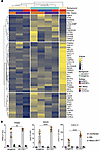 Figure 8
Itaconate negatively regulates the type I IFN response to Mtb in ipMDM-L but not ipAM-L cells. (A) Heatmap depicting z score of hallmark type I IFN gene expression in ipMDM-L and ipAM-L cells in the presence or absence of Mtb. Partitioning is based on k-means clustering. (B) Hyper-induction of the type I IFN pathway in itaconate-deficient macrophages is due to phagosomal permeabilization by Mtb esx-1. RT-qPCR quantifying Trim5, Isg20, and Cxcl11 transcripts, normalized to GAPDH, in ipMDM-Ls in response to infection by WT Mtb or MtbΔrv3877 (lacking the esx-1 secretion system) for 4 hours. **P < 0.01, ****P < 0.0001 by 2-way ANOVA with correction for multiple comparisons. Data are shown as mean ± SD.
To confirm these results and determine the mechanism of type I IFN pathway hyper-induction in ACOD1-deficient cells, we quantitated the transcripts of the IFN-stimulated genes (ISGs) TRIM5, ISG20, and CXCL11 by RT-qPCR. ACOD1–/– ipMDM-L cells accumulated higher levels of TRIM5, ISG20, and CXCL11 transcripts upon Mtb infection compared with isogenic ipMDM-L cells, confirming the pattern observed by RNA-Seq (Figure 8B). We postulated that itaconate may be modulating the induction of the ISG response that is derived through the previously established pathways of phagosomal permeabilization. To assess this, we infected ipMDM-L cells with MtbΔrv3877, an Mtb strain with a deletion of eccD1, a core component of the Esx1 secretion system. Mtb lacking the Esx-1 secretion system cannot permeabilize the phagosome and does not induce the type I IFN pathway in macrophages (57–60). Infection with the MtbΔrv3877 strain completely abolished the hyperexpression of these IFN target genes in both WT and ACOD1-deficient ipMDM-L cells (Figure 8B). Taken together, these data indicate that the effects of itaconate on the macrophage ISG response proceeds through previously established pathways of phagosomal permeabilization.


